
Best Time to Visit Mount Rainier: Will the Mountain Be Out?


Wondering the best time to go to Mount Rainier to catch the national park at its most stunning?
Every summer, my greatest ambition is to catch wildflowers at peak bloom — a worthwhile pursuit to see the “most extravagantly beautiful of all the alpine gardens,” as famed naturalist John Muir once said.
While the time to enjoy subalpine trails is relatively short (July – October), Mount Rainier has attractions for every season: spring waterfalls, summer meadows, fall colors, and winter snow.
As a local who visits year-round, even when my rain jacket’s taking a beating, I’ve done amazing hikes through forest trails to thundering waterfalls.
If you’re planning your first trip and looking for insider tips on the best time to visit Mount Rainier, you’re in the right place.
Whether you’re chasing clear summit views, wildflower meadows, or fall color, this guide breaks down what to expect in every season — and things to do if the Mountain isn’t out.
Let’s go!
Guided Day Trip to Rainier
➜ Book this top-rated tour and enjoy round-trip transportation from Seattle and a stress-free experience with a professional guide.

Rainier has five distinct areas: Longmire, Paradise, Ohanapecosh, Sunrise, and Carbon River (closed). Longmire and Paradise are open year-round, while Paradise and Sunrise are the most popular.
Best Time to Visit Mount Rainier
If you can choose any week on the calendar, mid-July to mid-August is generally the best time of year to visit Mount Rainier.
Here’s why I visit weekly during this peak period: trails and lakes are typically snow-free, meadows fill with wildflowers, and the weather is reliably good — increasing your chances of seeing the Mountain.
Early fall is stunning too, and best for smaller crowds.
But if I could visit only once a year, I’d choose late July, when the landscape is at its most lush, waterfalls are flowing strong, and surrounding peaks are still capped in snow.

If you’re visiting outside wildflower season or in less-than-perfect conditions, don’t worry.
I’ve visited this park in November, December, and January, as well as in summer and early fall, and it’s glorious year-round — especially when the Mountain is out (local speak for when it’s visible).
You’ll have the quintessential Mount Rainier experience if you catch close-up mountain views and sweeping panoramas of the surrounding alpine landscape — exactly what makes it iconic.
That’s possible no matter the time of year.
Visiting Rainier in winter, I strap on my microspikes or snowshoes and hike toward Edith Creek past families gathered near the Paradise Visitor Center, where kids throw snowballs, laugh, and play in the snow.

Even on rainy days, I’ve seen groups piling out of warm cars with smiles on their faces, excited to see waterfalls or views of the Nisqually River in Longmire.
I share the best Mount Rainier activities for each season below.
Need help with trip planning?
I offer custom itinerary planning services to help you save hours (or days!) of research and plan your trip with confidence.
When to Go to Rainier for Mountain Views
Unfortunately, there’s no guarantee you’ll see the Mountain. Cloud cover often obscures Mount Rainier, even on seemingly clear sunny days.
It’s not uncommon for lenticular clouds, which often look like flying saucers, to form over the summit, and thick morning fog can block views well into the day.
But the longer you stay, the greater chance you give yourself for mountain views.
Yes, July through early September gives you the best shot at clear skies, but even then, the Mountain doesn’t always show. I’ve been at Rainier in January when visitors got clear panoramic views, and in July when they caught just a brief glimpse before clouds rolled in.
Before every visit, I check the Mountain Forecast website. It shows conditions at different elevations and tells me if the Mountain is out.

Is There a Worst Time to Visit Mount Rainier?
There isn’t a single “worst” time to visit Mount Rainier, but some months require you to watch the forecast more than others.
I’ve lived in Western Washington most of my life, and we get clear days for mountain visibility in every season, even during the wettest months.
Historically, the wettest weather hits from mid-October through November, and again from March to May — though I’ve hiked in fantastic weather in all of those months.
Day tours from Seattle to Rainier run year-round — check reviews here and you’ll see people having an amazing time in every season.
What to Do When the Mountain Isn’t Out
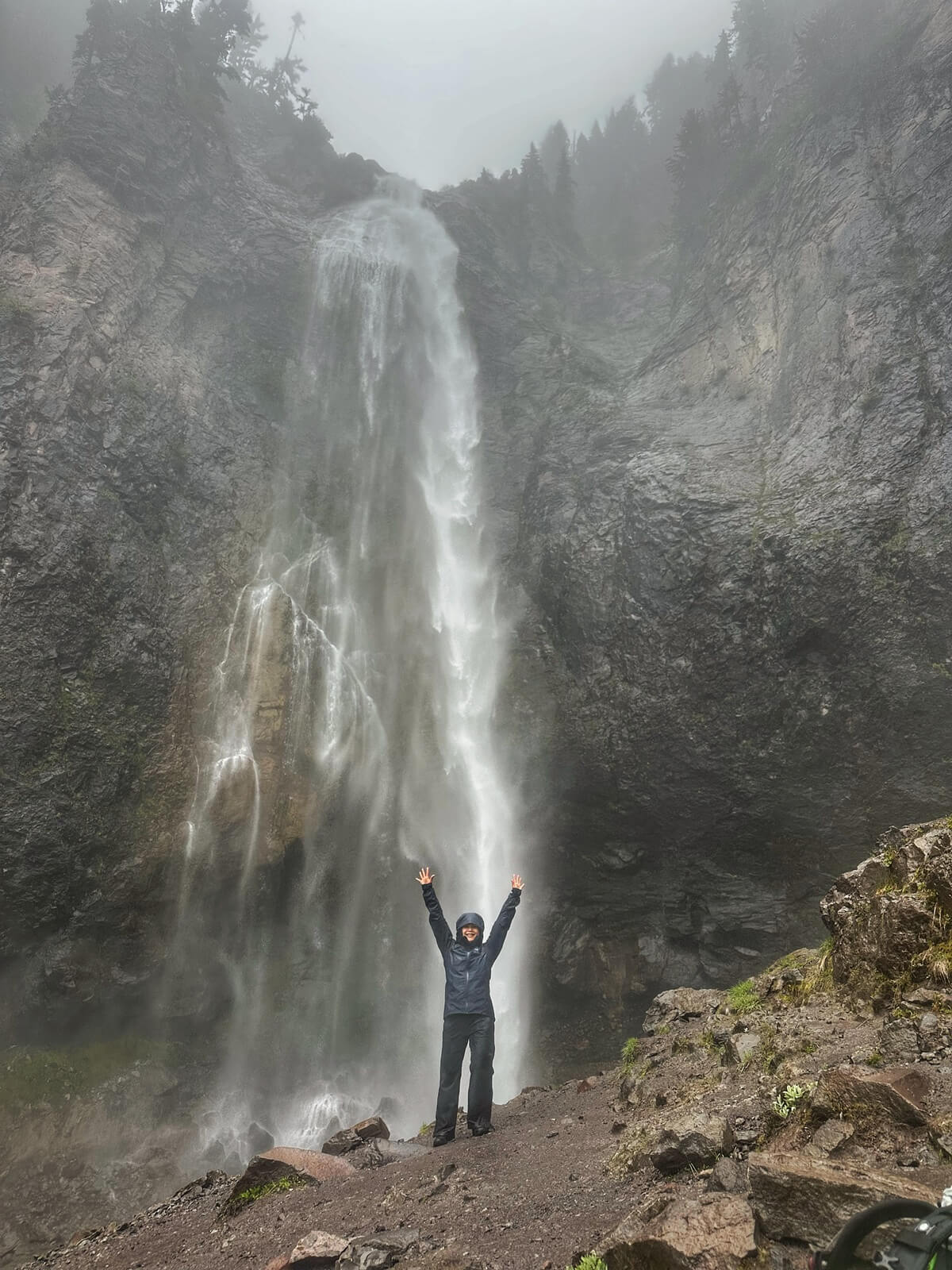
There’s so much to do at Mount Rainier, even when it rains. On one rainy birthday in June, I pivoted by hiking forest trails in Longmire instead of Paradise since both visitor areas are near one another.
I’ll never forget the dramatic view of Comet Falls as we hiked through the forested valley to reach it. The power we felt near its base was incredible.
What to Do if It’s Cloudy or Rainy in Paradise
One late July morning, I hiked the Moraine Trail in Paradise, the park’s most popular area.
Despite the cloud cover, I got a breathtaking view of the glacier valley at the end of the trail, then watched five marmots eat and play around me. I even watched two of them rumble which was awesome.
Here are other things you can do at Mount Rainier when the weather’s bad:
- Hike the Skyline Trail to Edith Creek and Myrtle Falls
- Stop at Inspiration Point for sweeping valley views
- Walk the easy trails around Reflection Lakes
- Head to Narada Falls
- Cross Glacier Bridge for a dramatic perspective
- Explore Longmire’s historic forest trails and waterfalls

What to Do if It’s Cloudy or Rainy in Sunrise
We got lucky that the clouds finally broke when we arrived at Second Burroughs in late July. But we already had multiple Plan Bs in place which included the Sunrise corridor hikes below:
- Palisades Lake Trail (bring bug spray!)
- Glacier Basin Trail
- Eastside Trail to Stafford Falls
- Tipsoo Lake (an easy walk)
When to See Wildflowers at Mount Rainier
Wildflower season at Mount Rainier typically peaks from mid-July to mid-August, though the exact timing shifts with snowmelt and weather patterns.
In my experience, the last week in July through the first week in August is a reliable time for stunning wildflower displays.
See Mount Rainier’s wildflower report on the NPS website for real-time updates.

Best Places to See Wildflowers
Wildflowers line the roads leading to the Paradise and Sunrise visitor centers, and you’ll find masses of blooms on the hiking trails starting from both main parking areas.
Top Wildflower Hikes at Mount Rainier:
- Edith Creek (Paradise) – A short walk from the visitor center, continue walking over a picturesque bridge leading to expansive meadows filled with wildflowers.
- Sunrise Nature Trail (Sunrise) – My 70-year-old mom and I marveled at the blooming pasqueflower seedheads along this easy loop with panoramic views.
- Indian Henry’s Hunting Ground (Longmire) – After a challenging climb through old-growth forest, you’re rewarded with panoramic mountain views and meadow blooms.
- Spray Park (Carbon River) – This hike is steep but worth every step. In summer, the meadows and trails burst with color.***CLOSED

When Do Wildflowers Bloom at Each Elevation?
There’s nothing like landing on a trail during peak bloom without even trying.
That happened to us on our Eagle Peak hike in mid-July, when we emerged from the trees and were floored by a burst of color blanketing the saddle slopes.
But if you want to time it right, here’s what I track every year:
- Lower elevations (Longmire, Ohanapecosh): late June to early July
- Mid elevations (Paradise, Sunrise): mid-to-late July
- High trails (Burroughs Mountain & Berkeley Park): late July to early August
Exact bloom timing depends on the year’s weather and snowpack.

Tips to Avoid & Manage Summer Crowds
If you’re hoping to avoid the crowds, your best bet is to visit in the off-season.
But if you still want to hike the subalpine trails around Paradise and Sunrise, aim for mid-September to early October — when summer crowds have thinned, but the snow hasn’t yet returned.
The first time I visited Rainier in early fall, I couldn’t believe how vivid the reds, oranges, and golds were.
If the peak summer months are when you plan to visit, here are some tips to help you manage the crowds:
- Plan your visit for Monday through Thursday to avoid the weekend warriors like myself.
- Arrive early — getting to the Nisqually Entrance before 8am helps you find parking.
- Skip the drive entirely by staying at Paradise Inn.
- Book the National Park Inn in Longmire for a quieter overnight inside the park. You’ll drive just 20 minutes to Paradise and skip the entrance lines altogether.
- Visit after 4 or 5pm to avoid long lines, and with daylight lasting until 9pm, you’ll still have time to explore.
One of my favorite Rainier hacks, and something I recommend to all my itinerary planning clients, is visiting later in the day.
As you drive up to the visitor center, you’ll pass cars and groups leaving the park, which means less congestion on the trails. Plus, the late afternoon light is especially beautiful for photography and views.
Hike Less-Traveled Trails
- In Paradise, I passed only one group on the Moraine Trail on a late July weekend and only a handful of people on the Alta Vista Trail during the same trip.
- In Sunrise, we passed just a few groups on the Eastside Trail to three incredible waterfalls.
SUMMER TRAVEL TIP:
To avoid congestion, stay in Packwood and use the Stevens Canyon Entrance instead of the Nisqually gate, which also leads to Paradise.
Explore Sunrise
For a more relaxed experience, enter through the White River Entrance and head to Sunrise, which is far less crowded than Paradise.
On the same summer weekend, I watched cars circling the Paradise parking lot mid-afternoon Saturday — then found open parking spots at Sunrise at the same time the next day.
Have a Plan B ready
In the Sunrise region, you can take a scenic drive on Chinook Pass with a stop near Tipsoo Lake, or ride the gondola at Crystal Mountain for excellent views of Mount Rainier.
Mount Rainier by Season: Conditions & Activities
Access depends on the season, road conditions, and closures. Generally, Longmire and Paradise areas are accessible year‑round, though roads close if they’re icy.
No matter the season, check the status of Rainier’s roads before you go.
From Nov 1st – May 1st, you must carry tire chains in your vehicle, even if you have AWD and there’s no snow on the ground.
Spring (March – May)
Spring Travel Tips
✔ Plan for Longmire & Paradise.
✔ Higher elevation trails remain snow-covered; lower elevation trails begin to thaw.
✔ Be prepared for snow and muddy terrain.
March – April
Most of March is winter. Even after the 21st, you’ll still need to bring winter hiking gear.
Waterproof hiking boots, gaiters, and microspikes are essential. I once experienced a scary moment in April, route-finding in wet socks while the sun was going down, and I’ll never again forget to bring my gaiters.
Bringing snowshoes widens the activities and trails you can choose from. Without them, you may reach a point where your only option is to turn around—unless you don’t mind post-holing, when you sink deep into soft snow with each step, often up to your knees or thighs.


I wear mountaineering boots and crampons on the challenging Camp Muir hike, pictured above, especially on its steeper, icy terrain. Microspikes will suffice for most visitors doing easy-to-moderate snow hikes in Paradise or Longmire.
The Longmire General Store sells microspikes and rents out snowshoes.
Top Spring Hikes:
- Narada Falls via Lower Lakes Trail (Paradise): A short, scenic hike that offers spectacular views of Narada Falls.
- Carter Falls and Madcap Falls (Longmire): A moderate trail through trees with a river crossing and forested scenery along the way.***CLOSED
- Silver Falls Loop (Ohanapecosh): A scenic loop trail featuring Silver Falls. In spring, parking at the Stevens Canyon gate adds about 2 miles to your hike.
May
Higher elevation trails remain snow-covered while lower elevation trails begin to thaw. Snowmelt in spring at Mount Rainier is why rivers and waterfalls rush and roar.
Stevens Canyon Road and Chinook Pass (Hwy 410) typically open around Memorial Day weekend (weather permitting), with portions of Sunrise Road opening around the same time.
Summer (June – August)
Summer Travel Tips
✔ The Sunrise corridor generally opens in early July; check the NPS website for exact dates.
✔ Late summer and early fall can bring wildfire smoke, which may affect visibility and air quality.
June to Mid-July
When I visit Paradise in June, most of the landscape is still covered in snow, even the trailheads. Reflection Lake, one of Paradise’s top destinations, typically stays frozen until mid‑July.
While this period is too early for wildflowers in the Paradise meadows, I’ve seen delightful forest wildflowers in the lush landscapes at lower elevations on my way to rushing waterfalls.
While crowds pick up in June, there’s noticeably less congestion overall compared to the peak months of July and August.

The hikes that can be done in spring can be enjoyed this time of year, too, with the bonus of longer days for exploring.
Best Early Summer Hikes:
- Rampart Ridge Loop (Longmire): Hike this moderate loop trail clockwise for views of Eagle Peak and Rainier on clear days.
- Eagle Peak Trail (Longmire): A steep trail that shines this time of year featuring panoramic views of the Tatoosh Range and the south face of Rainier.
- Shriner Peak Trail (Ohanapecosh): Your reward for this steep, strenuous hike is spectacular views of Rainier, Adams, Hood, and St Helens.
Yes, it rains in summer, especially in early June. Rain in July and August isn’t typical, but it can happen. It’s wise to bring a rain jacket, no matter the season. You can always keep the tags on and return it.
Mid-July to August
Peak hiking and camping season runs from mid-July through early September.
Nearly all trails are snow-free, roads are open, and days are long, making this the best time to go to Mount Rainier to experience the park’s full range of areas and activities.
A top hikes list in peak summer isn’t even necessary because my best advice is this: start on any trail from Paradise or Sunrise, and you’ll have an amazing time.
Best Peak Summer Hikes:
- Comet Falls & Van Trump Park (Longmire): A must-do hike offering excellent views of the Tatoosh Range, Mount Adams, St Helens, Rainier, glaciers, and wildflower meadows.
- Burroughs Mountain Trail (Sunrise): A challenging hike with otherworldly views of the mountain’s eastern face from the Sunrise area.
- Tolmie Peak Trail (Carbon River): This moderate hike is a local favorite, offering sweeping views of Rainier and Eunice Lake from an old fire lookout.***CLOSED

The park receives the most visitors during this period, but this is when Mount Rainier truly shines so I believe dealing with crowds is worth it.
Fall (Late September – November)
Fall Travel Tips
✔ Early fall can feel like summer, while winter conditions may begin as early as mid-October.
✔ The Sunrise corridor generally closes sometime in October.
✔ Stevens Canyon and Sunrise roads close once snow or ice sets in.
Late September – mid-October
Peak fall colors at Mount Rainier typically appear late September through early October, making this one of the most beautiful times to hike. Vibrant crimson and striking oranges and yellow fill the meadows and forests, glowing brightly on sunny days.
The views are breathtaking — I once spent six hours on the Skyline Trail just soaking in the autumn scenery as a farewell to summer.
While the season isn’t as busy as summer, the week before snow and road closures begin bustles with visitors.

Top Fall Hikes:
- Skyline Trail (Paradise): Stunning fall foliage, in-your-face Rainier views, and panoramas of the Tatoosh Range make the tough elevation gain worth it.
- Naches Peak Loop (Sunrise): This popular, easy trail features fall colors and sweeping Rainier and Cascade Mountain views.
- Spray Park Trail to Mount Pleasant (Carbon River): Steep but rewarding, with waterfalls, fall colors, and mountain views.***CLOSED
Late-October – November
As fall deepens into late October, the landscape gradually shifts toward winter.
By November, much of the park shifts to winter operations. Hours at the Paradise Visitor Center become limited (often weekends only, if the road to Paradise is open).
Always check the park’s schedule before planning your visit, and bring a rain jacket!
Winter (December – February)
Winter Travel Tips
✔ Longmire and Paradise remain open, though Paradise Valley Road closes when conditions are icy.
✔ Check the NPS site to know the time you must leave Paradise and exit the Longmire gate.
✔ Confirm with a ranger — the gate closing time may change due to weather conditions.
Winter at Mount Rainier means snow and all the ways to enjoy it, from snowshoeing and skiing to building snowmen. You can sign up for a ranger-guided snowshoe walk on weekends at Paradise or book a guided tour from Seattle.
The higher you go, the less snowshoe tracks you see. Near Glacier Vista, we saw rolling blankets of thick white snow, unsullied by boot tracks.
Longmire was home base for us doing our winter stay at the National Park Inn, which meant we got to wake up and end our days with views of the Mountain from the porch.

Best Winter Snowshoe Hikes in Paradise:
- Nisqually Vista Trail: A short, easy, stunning trail perfect for kids or adults just learning to snowshoe.
- Narada Falls to Reflection Lakes: A moderate snowshoe trail offering incredible winter views of Narada Falls and frozen Reflection Lakes.
- Mazama Ridge: A moderate snowshoe route with breathtaking panoramic views of Rainier, Adams, and St Helens.
If Paradise is closed due to icy roads, head to Longmire. You can check out the museum, walk to the suspension bridge for Nisqually River views, or hike the Trail of the Shadows.
Gear & Safety
Winter weather can change quickly, so bring adequate gear, even on easier trails. I always bring snowshoes, even if recent trip reports suggest that microspikes are sufficient.
You can rent snowshoes and cross-country skis at the Longmire General Store, but supplies are limited.
My winter gear list includes:
- Insulated boots
- Microspikes
- Trekking poles
- Gaiters
- Extra socks
- Sunglasses (for snow glare)
- Sunscreen
- Headlamp with extra batteries
My winter safety checklist includes the following:
- Checking the weather forecast before you go.
- Knowing avalanche‑risk zones and avoid them.
- Speaking with a ranger for up‑to‑date conditions.
- Bringing extra layers and snacks.
Ask me anything!
Book a 15-minute call to get clarity on one key decision with a local travel expert. Sessions start at $40.00.
Mount Rainier Forecast for Each Visitor Area
Always check current conditions before your visit, as weather can vary widely from day to day and by elevation.
Use these forecast links to help you pack smarter and set realistic expectations:
*All forecast links are provided by the NPS website.

Timed Entry Reservations
2026 Update: Mount Rainier may not use a Timed Entry Reservation system this year.
The National Park Service first piloted a Timed Entry Reservation system in 2024 to manage summer crowds. In 2025, reservations were required only for the Sunrise visitor area.
When Timed Entry has been in place, here’s how it worked:
- Reservations were booked in advance on Recreation.gov.
- Visitors paid a $2.00 non-refundable fee for the reservation and also needed a park entrance pass.
- Entry was controlled during peak daytime hours, typically 7am–5pm.
Outside of those windows, you could enter without a reservation. I still saw long entrance lines on summer weekends near those cutoff times.
I’ll continue to update this page so you know what applies to your trip.

FAQs: Best Time to Go to Mount Rainier
Here are common questions travelers ask when deciding when to visit Mount Rainier National Park.
★ When is the best time to visit Mt Rainier wildflowers?
Mid-July to early August is the best time to see wildflowers at Mount Rainier. For the most reliable display of blooms like purple lupine and scarlet paintbrush, aim for late July. The meadows near Paradise and Sunrise put on spectacular shows that don’t require strenuous hikes.
★ When is the best time to avoid crowds at Mount Rainier?
To avoid crowds during peak summer months, visit Monday through Thursday. You can also explore less crowded areas like Sunrise, Longmire, or Ohanapecosh. Consider visiting in late September through early October, when the park sees fewer visitors and offers fantastic fall foliage.
★ When can I hike without snow at Mount Rainier?
Most high‑elevation trails near Paradise and Sunrise are snow‑free from mid‑July through early to mid‑October, making this the best window for most popular hikes. In June or early July, lower‑elevation routes around Longmire often melt earlier and may be snow‑free sooner.
★ What are the best activities at Mount Rainier in each season?
In spring, waterfall hikes are impressive as snowmelt results in rushing waters. Summer is ideal for wildflower hikes, long days of exploring, and camping. Fall brings vibrant foliage, perfect for hiking and photography. In winter, snowshoeing and skiing around Paradise are the top activities.
★ What time of day is best to visit Mount Rainier for clear views?
Mornings offer the best chance for clear views of Rainier, although some mornings feature low-lying fog. As the day progresses, clouds can build up, covering the peak. If your schedule allows, check Mountain Forecast before heading up and plan your hike for a day with predicted clear skies.

Ready to Visit Mount Rainier?
If you’ve picked your dates and are ready to start planning your trip, here are a few ways I can help:
Helpful Posts
- Best towns for first‑time visitors — pick your home base
- 15 recommended places to stay — my top lodging picks (from cozy cabins to classic inns)
Personal Trip Support
I can also work with you one‑on‑one to build a custom trip plan or answer your most pressing planning questions.
➡️ Personalized planning starts at just $40.
Whether you want a full itinerary or just a quick planning session, I’m here to help you make the most of your visit!
RELATED TRIP PLANNING POSTS:
➥ How to Visit Mount Rainier & Plan the Perfect Trip Length
➥ Best Time to Visit Mount Rainier: Will the Mountain Be Out?
➥ 17 BEST Things to Do at Mount Rainier (Non-Hikers Too!)
➥ 7 BEST Towns Near Mount Rainier for First-Time Visitors
➥ 15 BEST Places to Stay Near Mount Rainier (& Places to Skip!)
➥ National Park Inn Review: Pros, Cons & Why I’d Return
➥ A First-Timer’s Guide to Paradise at Mt Rainier (Hikes & Attractions)
➥ Mount Rainier 1-Day Itinerary (Best Hikes & Stops)
➥ Skyline Loop Trail Guide: 10 Reasons It’s WA’s Best Day Hike
➥ 10 Tips to Avoid Crowds at Mount Rainier in Peak Season

Skip the guesswork, stress, and hours of research—let me help you plan your itinerary!
