
Trail of the Shadows at Mt Rainier: Who It’s Best For & What You’ll See


If your time at Mount Rainier is limited, is Trail of the Shadows worth squeezing in, or should you spend it somewhere more iconic?
There’s no quick answer to this because it depends on the season you’re visiting, what you want to prioritize, and how you’re building your day.
When I plan Mount Rainier trips with first-time visitors, I often find a way to work Trail of the Shadows into their itinerary, especially as a stop on their way out of Paradise or as a back-up plan in case the Mountain isn’t out.
This short, easy loop is located in Longmire near the National Park Inn. But don’t let its accessibility fool you into thinking it’s just another forest hike.
I did it in late June and spent 50 minutes walking a trail I could have easily done in half the time.
I stopped often to take in everything that makes this trail so interesting: ridgeline and open meadow views, 19th-century structures, bubbling springs, and the massive trees the area is known for.
If you’re unsure whether the Trail of the Shadows is worth your time, I’ll show you what this loop offers, who it’s best for, and how to fit it into your Rainier itinerary.
➜ Staying at the National Park Inn? The loop begins just across the road, making the inn the most convenient place to stay for exploring Longmire trails.
Trail of the Shadows Quick Guide
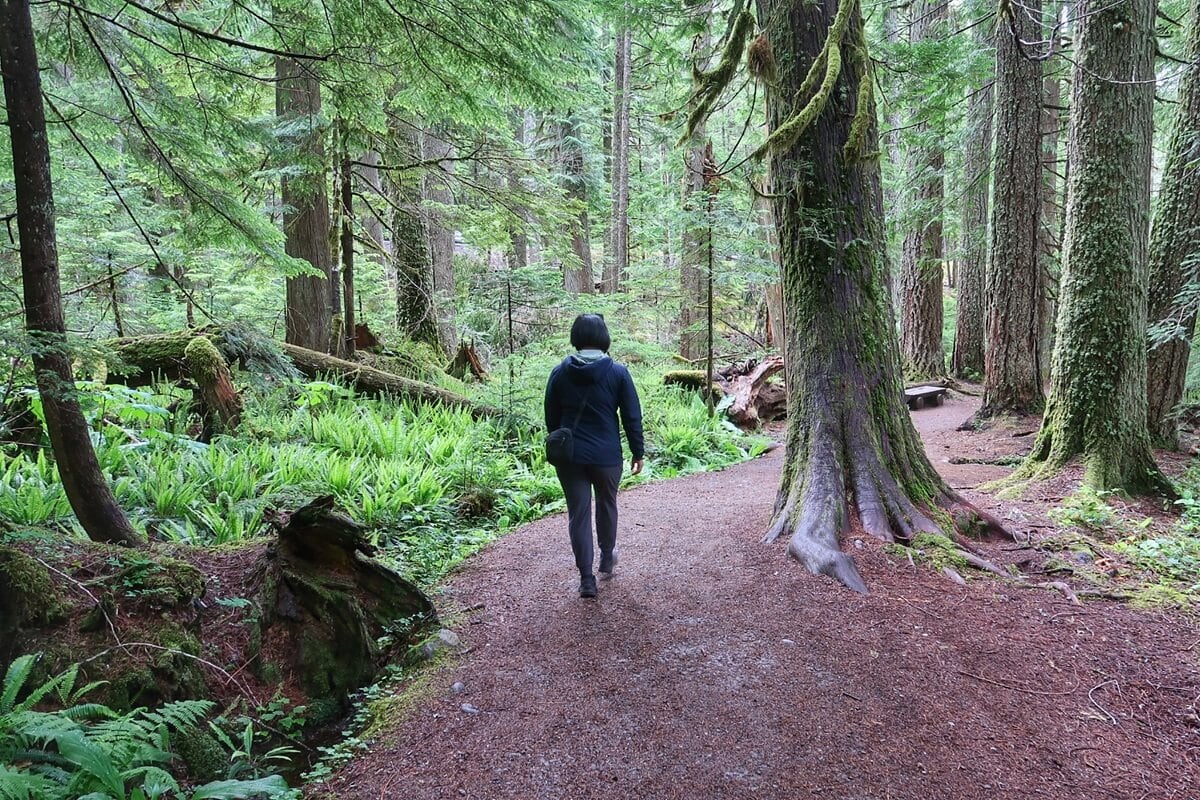
My hiking partner Jenna and I hiked Trail of the Shadows right after breakfast at the National Park Inn, and it was the perfect way to ease into our day in Longmire.
We finished our coffee on the porch, walked down the steps and across the road, and were on the trail in minutes. This easy access why I recommend staying at the inn.
- Difficulty: Easy
- Hike Length: 0.7-mile loop
- Elevation Gain: Minimal
- Time to Complete: 20–30 minutes if you move steadily. I spent closer to 50 minutes because I stopped often to read interpretive signs and explore the springs.
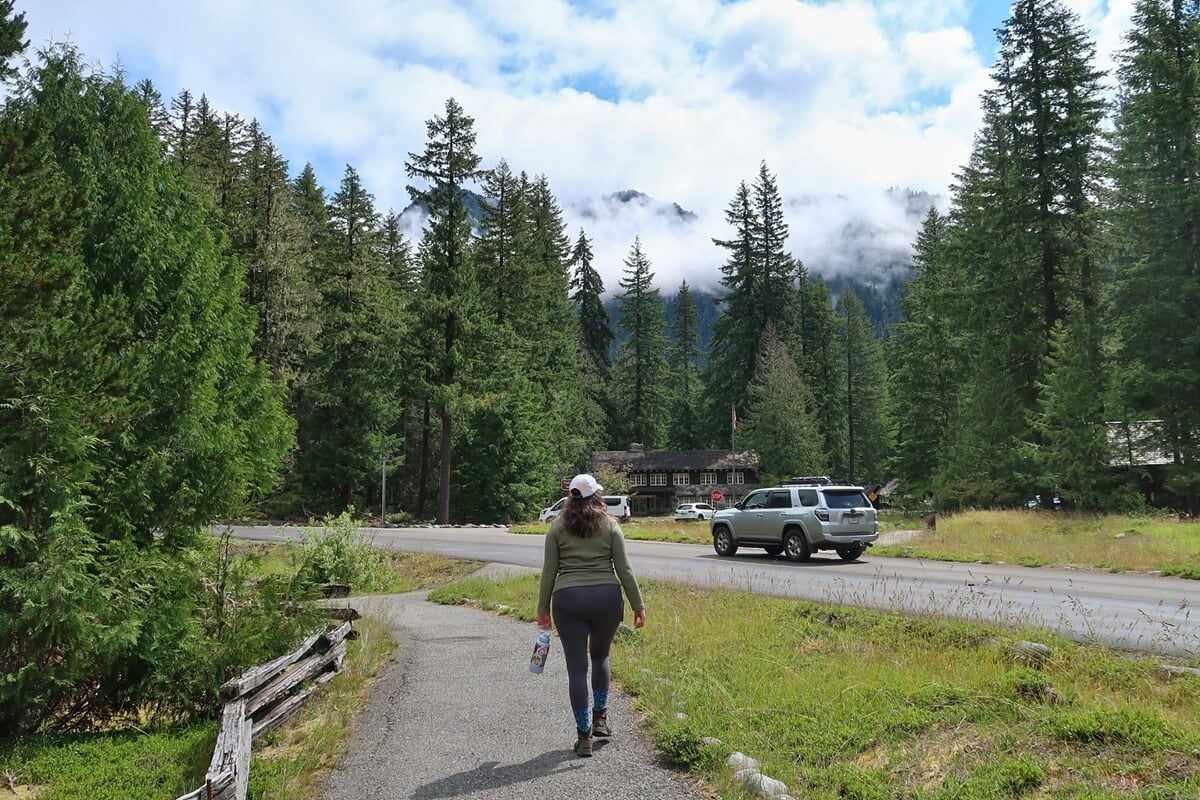
- Location: Longmire Historic District — the historic southwest entrance area of the park that you’ll pass on the drive up to Paradise.
- Parking: Park in the Longmire lot behind the inn and museum. In summer, it can fill by mid-morning on sunny weekends.
- Best Time to Hike: Accessible year-round. I hiked it in late spring when the ferns were bright green and the forest felt especially lush after the snowmelt.
- Accessibility: Packed dirt with short boardwalk sections. There are some exposed roots and uneven footing, so it’s not fully wheelchair accessible, but it’s one of the most approachable trails in the park.
- Amenities: Restrooms, the Longmire Museum, Wilderness Information Center, the National Park Inn, and the Longmire General Store are all within a short walk.
TRAVEL TIP: I rarely suggest doing Trail of the Shadows before Paradise. Prioritize getting a parking spot at Paradise early in the day, then stop in Longmire on your way out when you’re ready for something easier.
I explain this kind of planning order in more detail in my Rainier Planning Playbook.
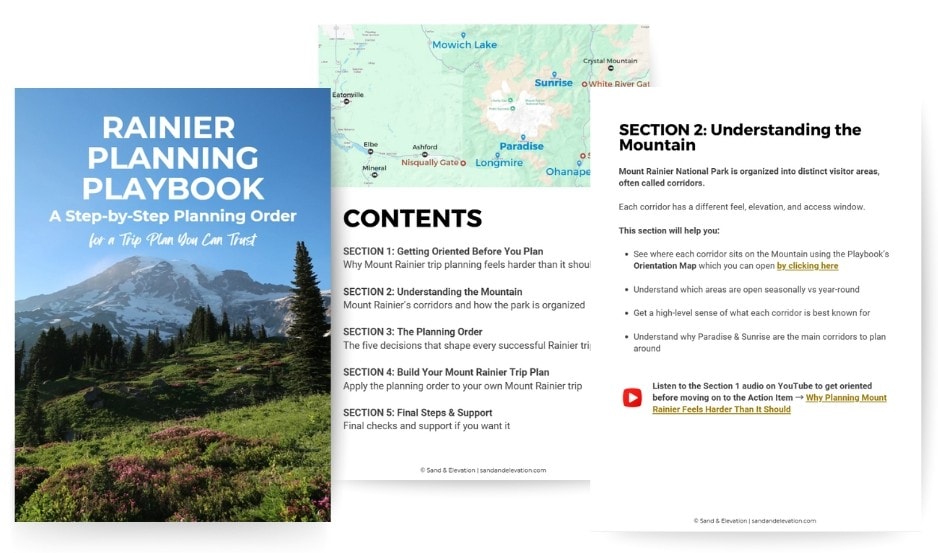
You'll learn how Rainier's visitor areas, entrances, and base towns fit together — so you can build a trip plan that works.
Why the Trail of the Shadows Is Worth Your Time
I knew I wouldn’t get panoramic mountain views on this hike, but this loop surprised me the first time I walked it.
It was an unexpected immersive history-and-ecosystem experience.
You can hear water bubbling up from the ground before you even see it, and standing over orange-colored springs feels like you’ve stepped into a living science lesson.
You also get a glimpse into Longmire’s past.
Peeking inside the small cabin of James Longmire, the early pioneer who gave Longmire its name, I couldn’t help but imagine what life looked like when people first settled here.
As you continue along the loop, the landscape shifts into something that feels almost tropical.
The wetland environment is home to lush, broad-leafed plants you won’t see on most Washington trails. Compared to Paradise’s wide-open mountain vistas, it’s a completely different side of Mount Rainier.
If you’re building a one-day Rainier itinerary and want contrast — high alpine views at Paradise and forest immersion in Longmire — this trail is an easy way to get that without needing a lot of time.
Who This Trail Is Best For
Trail of the Shadows is a great fit for families, multi-generational groups, and anyone seeking one of the best easy hikes at Mount Rainier. It’s excellent for early morning walkers and guests at the National Park Inn.
It’s also worth it if you’re curious to see Rainier’s lowland forests, wetlands, and the 250-year-old trees that anchor this part of the park.
Hike the Trail of Shadows when:
- Clouds hide the summit
- Paradise parking is full
- Other visitor areas are closed
- You want an easy hike after a big day in Paradise
- You’re not yet ready to leave the park
Because the Longmire visitor area sits at lower elevation, this trail is often snow-free when Paradise still has lingering snow.
Who Should Skip It
- Adrenaline hikers
- Summit-view seekers
- Visitors with only 2-3 hours total in the park
- Photographers seeking high-alpine views
Yes, you can see Mount Rainier from Trail of the Shadows on a clear day, but the real experience here is the forest, springs, and history along the trail.
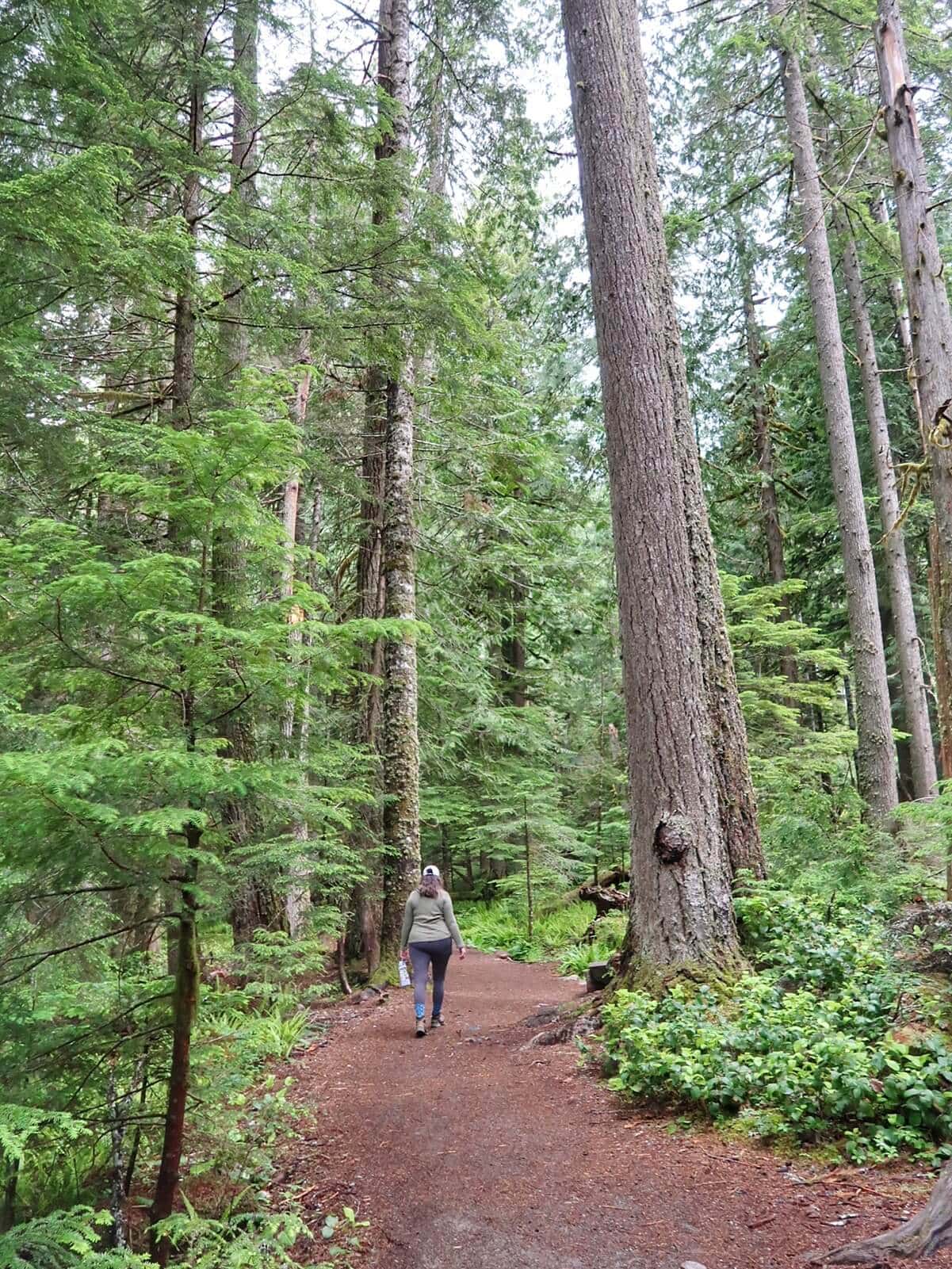
What to Expect on the Trail of the Shadows Loop
Here’s how the loop unfolds once you step onto the trail.
Start the Trail Counter-Clockwise
Although we saw groups start the loop clockwise, the trail signage clearly indicates starting counter-clockwise.
We followed that recommendation, and it was the right choice. The interpretive placards are arranged to tell a story sequentially, and the experience makes far more sense when you encounter them in order.
Meadow Overlook & Rampart Ridge Views
Early in the walk, a short spur trail branches off from the main path.
It leads to an expansive viewing area overlooking a meadow, with Rampart Ridge rising behind it. One placard explained old glacier formation and lava flow.
We paused here for a while, reading the placards and listening to birdsong while enjoying the entire viewpoint to ourselves.
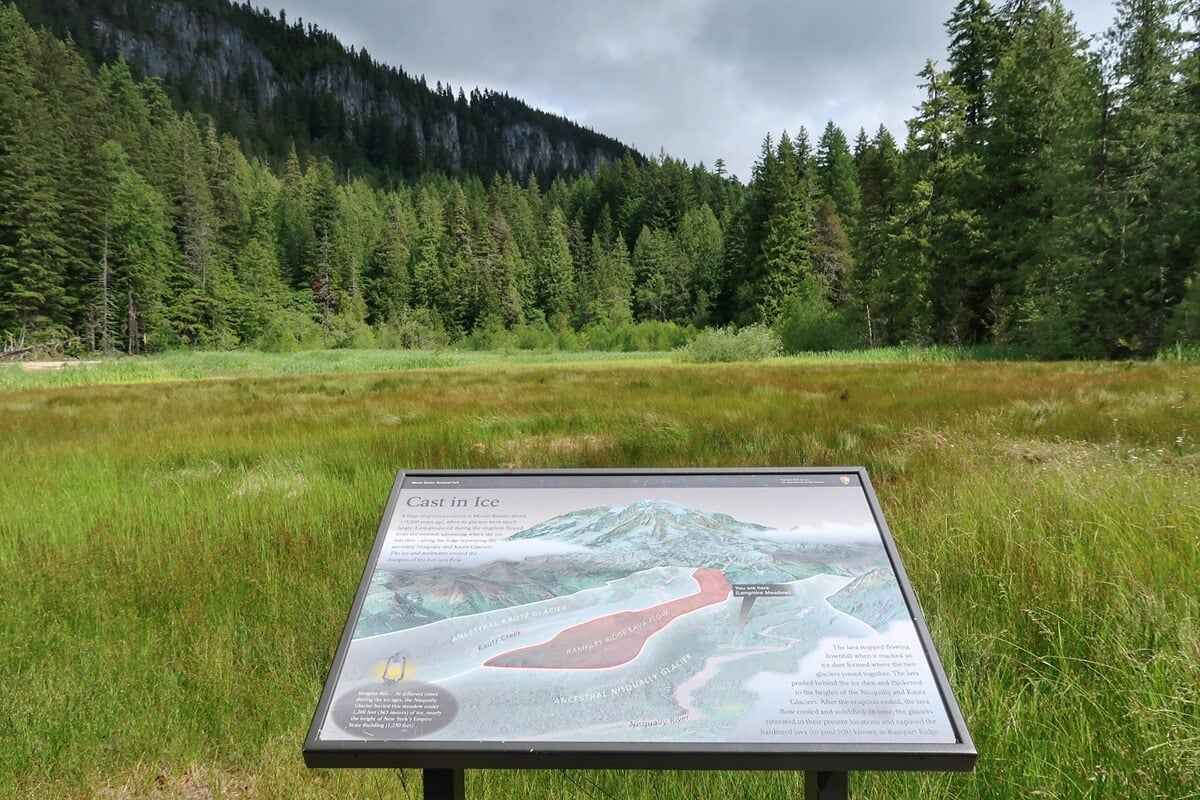
TRAVEL TIP: If you’re really short on time and can’t do the entire loop, this stop gives you open meadow views beneath the hardened lava known as Rampart Ridge. On a clear day, you’ll even catch a glimpse of Mount Rainier from here.
Longmire Medical Springs Remnants
Back on the main trail, it wasn’t too long before we encountered a remnant of the Longmire Medical Springs Resort, established by James Longmire in the 1880s.
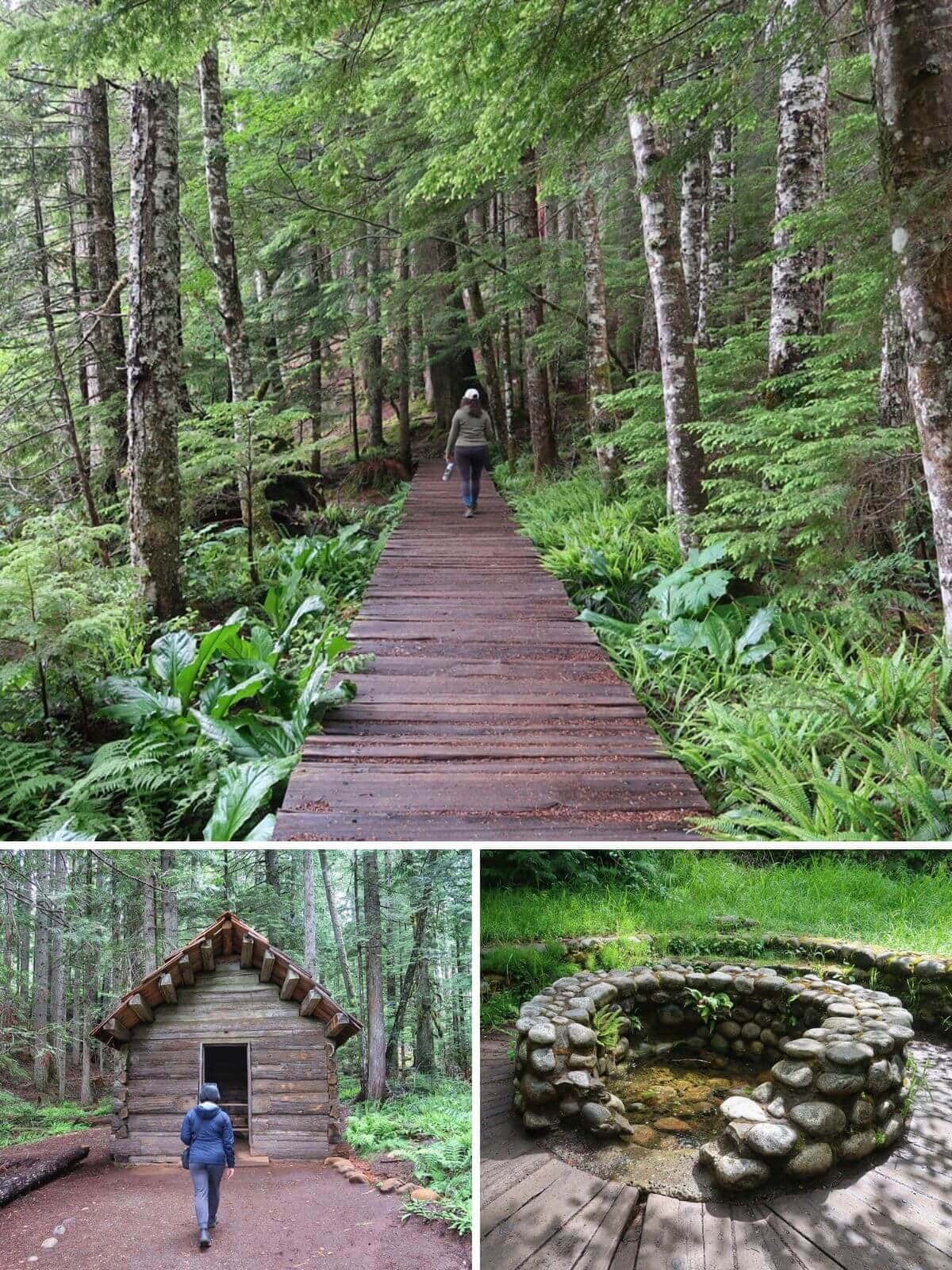
Curved stone walls form a pathway leading to a hot spring that is still actively seeping from beneath the forest floor. Stone seating surrounds the spring, all set within dense, green forest.
The scene was enchanting and captured exactly what makes this trail distinct. No other easy hike at Rainier combines geothermal features, early park history, and lowland forest scenery in one short loop.
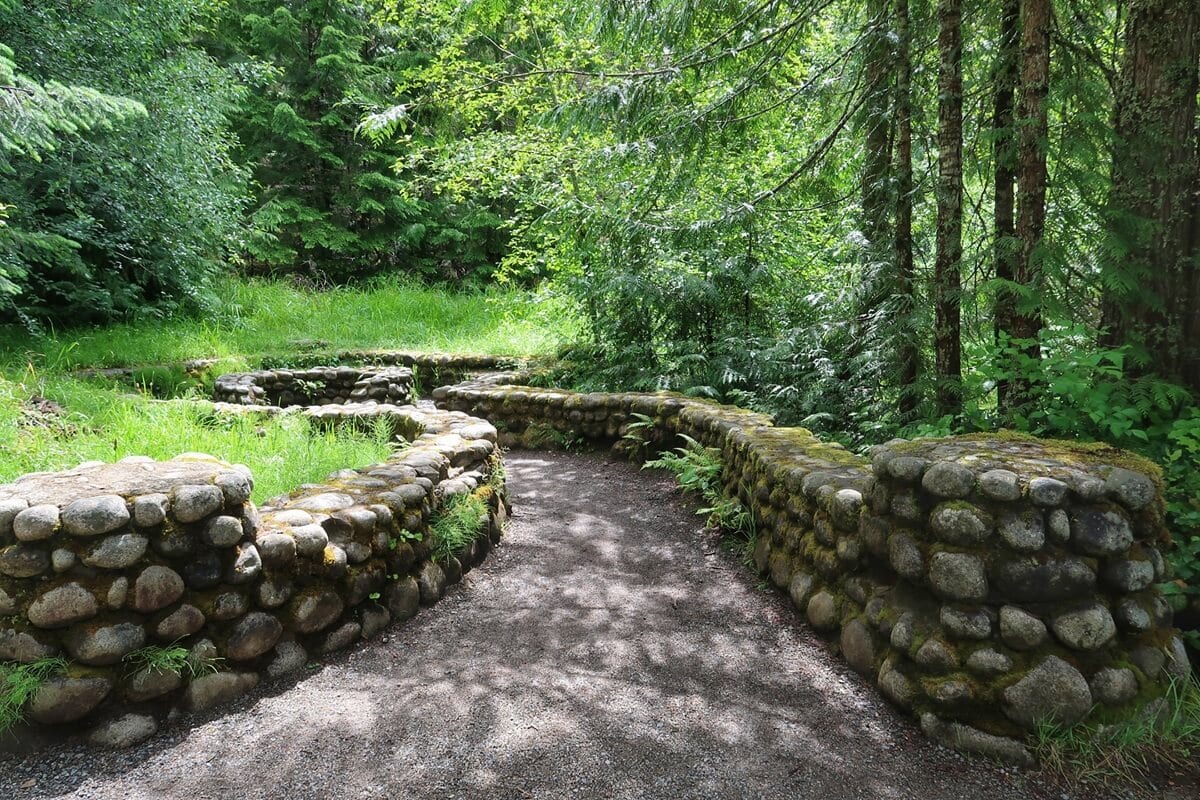
Surprisingly, the man-made elements didn’t detract from the trail’s beauty. They anchor the landscape in real human history and add another layer of interest to what is already a peaceful forest walk.
The springs are fragile, so admire them without touching or entering the water.
Fern-Filled Forest Before Longmire Cabin
As you continue, the wetness of the land creates a tropical-like environment. The foliage and plant life here are unlike any other trail I’ve been on at Rainier.
But one section stood out to me above the rest.
Right before reaching the Longmire Cabin, the forest floor is blanketed in vivid green ferns beneath towering old-growth trees.
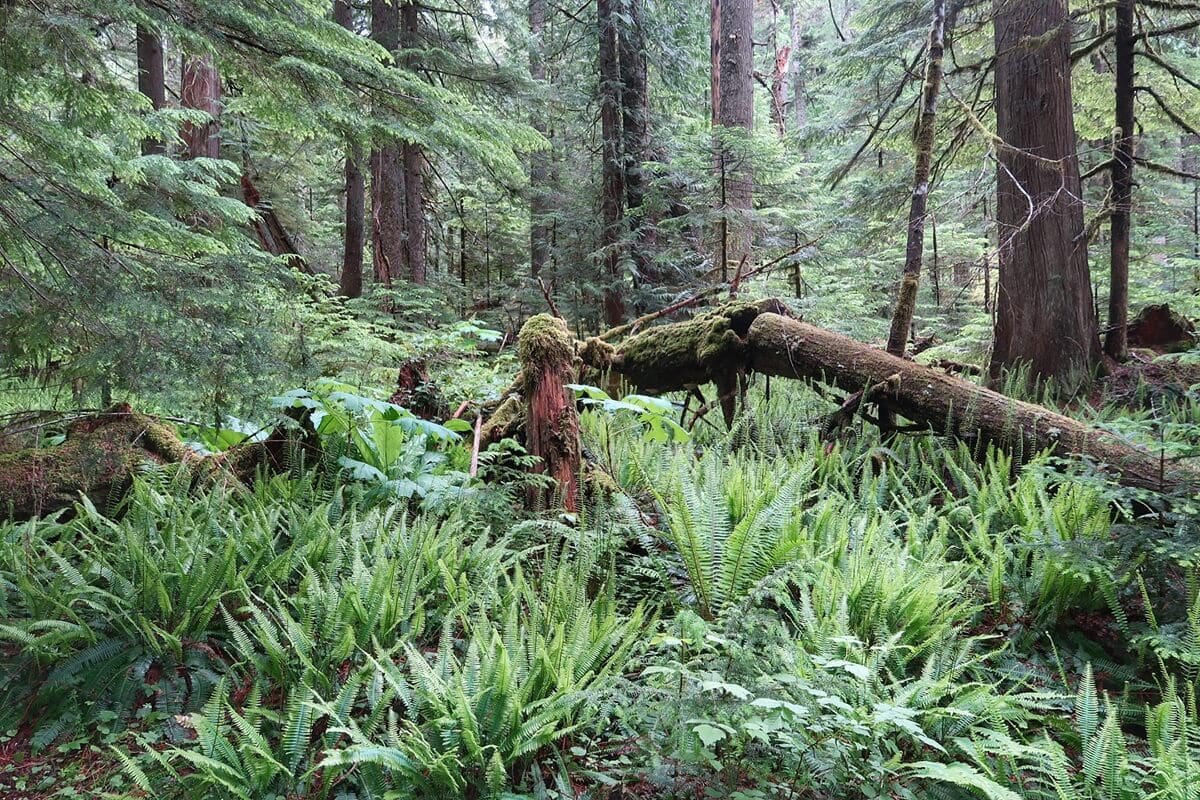
This stretch alone makes the trail worth doing if you love lush forest environments — something you won’t get at Paradise, Rainier most popular area, or at Sunrise.
Walking up to the cabin and peeking inside felt like time traveling. It makes you pause and imagine what life was like here more than a century ago.
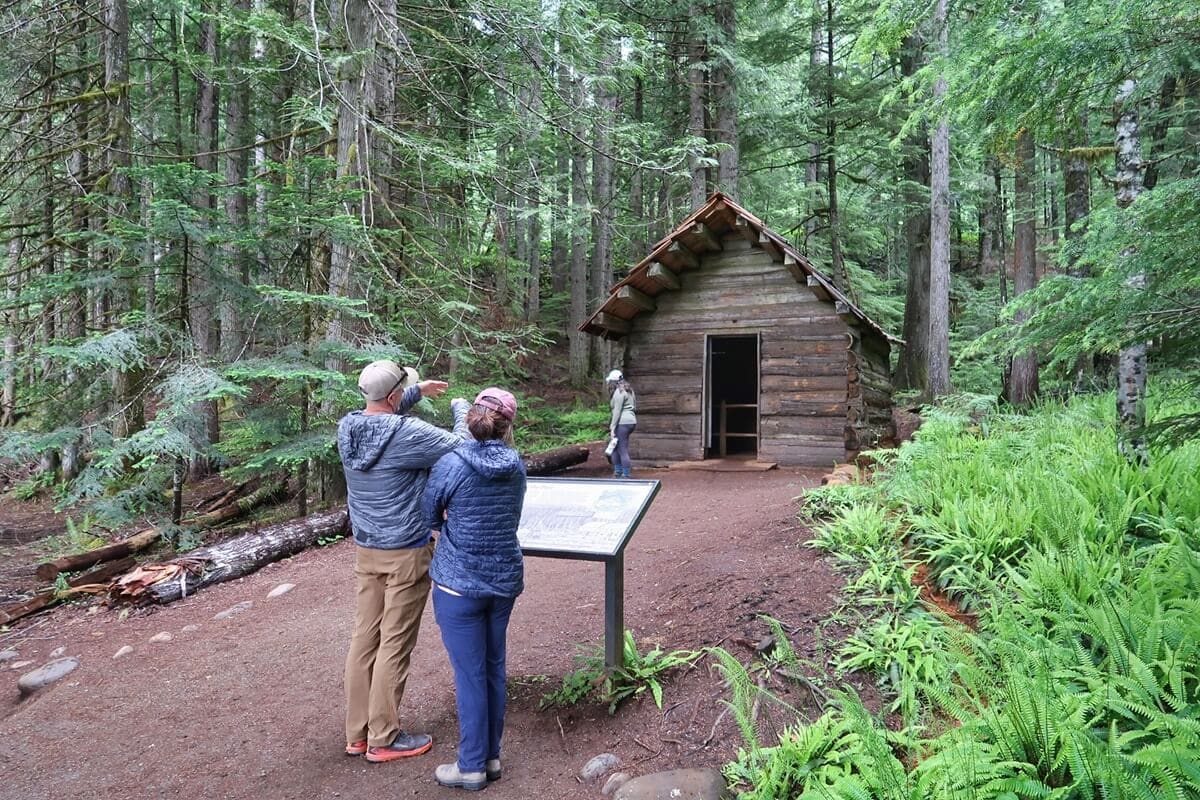
Iron Mike Springs, Old-Growth Trees & Birds
Beyond the cabin, the forest feels dense and alive, forcing you to slow down and take it in.
Interpretive placards explain the reddish-brown color of the mineral springs historically known as “Iron Mike,” while birdsong fills the forest. The sound and sight of birds were constant.
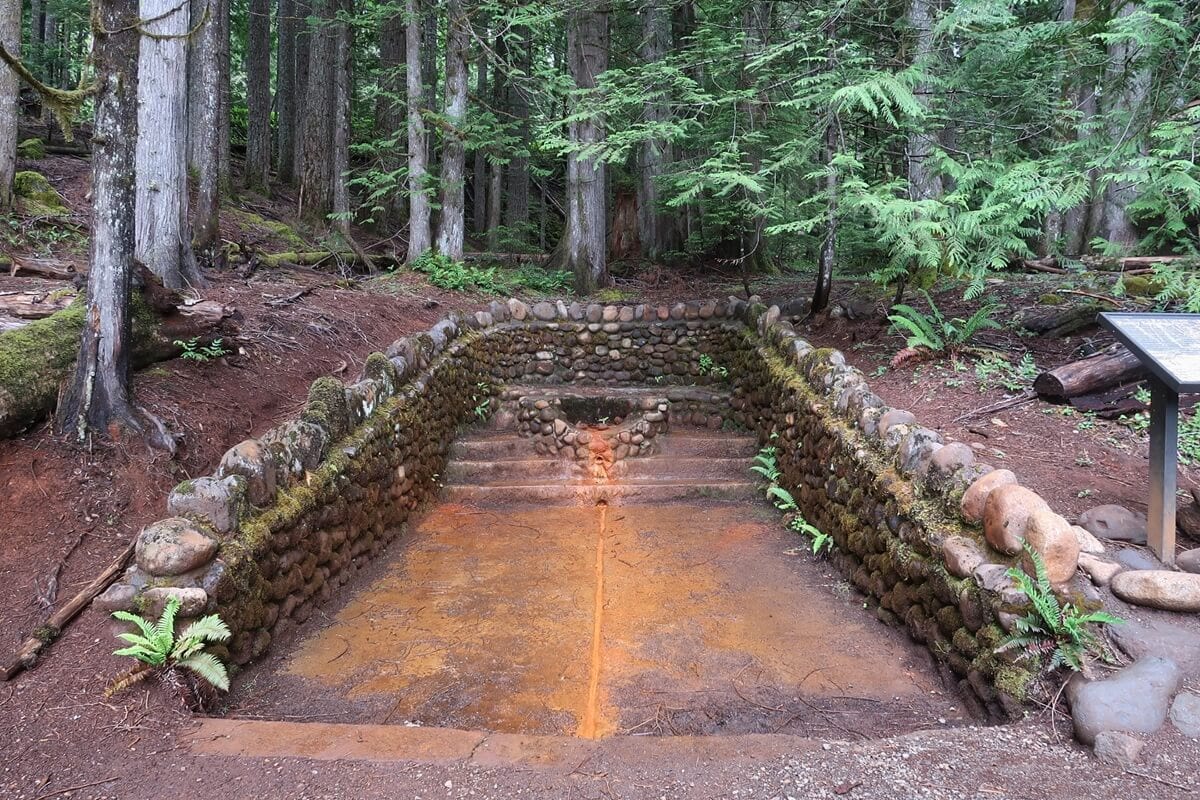
Bridge crossings and the constant sound of water trickling reinforce how alive this landscape feels. Along the trail, you can hear and even see mineral water surfacing through the soil.
The old-growth trees here are remarkable, protecting the soil from eroding and providing structure for wildlife habitat, even when they break or fall.
The Edge Place & Final Overlook
Near the end of the loop, another short spur trail leads to a bench overlooking yet another mineral spring known as the Travertine Mound. The spring itself was ugly and beautiful at the same time.
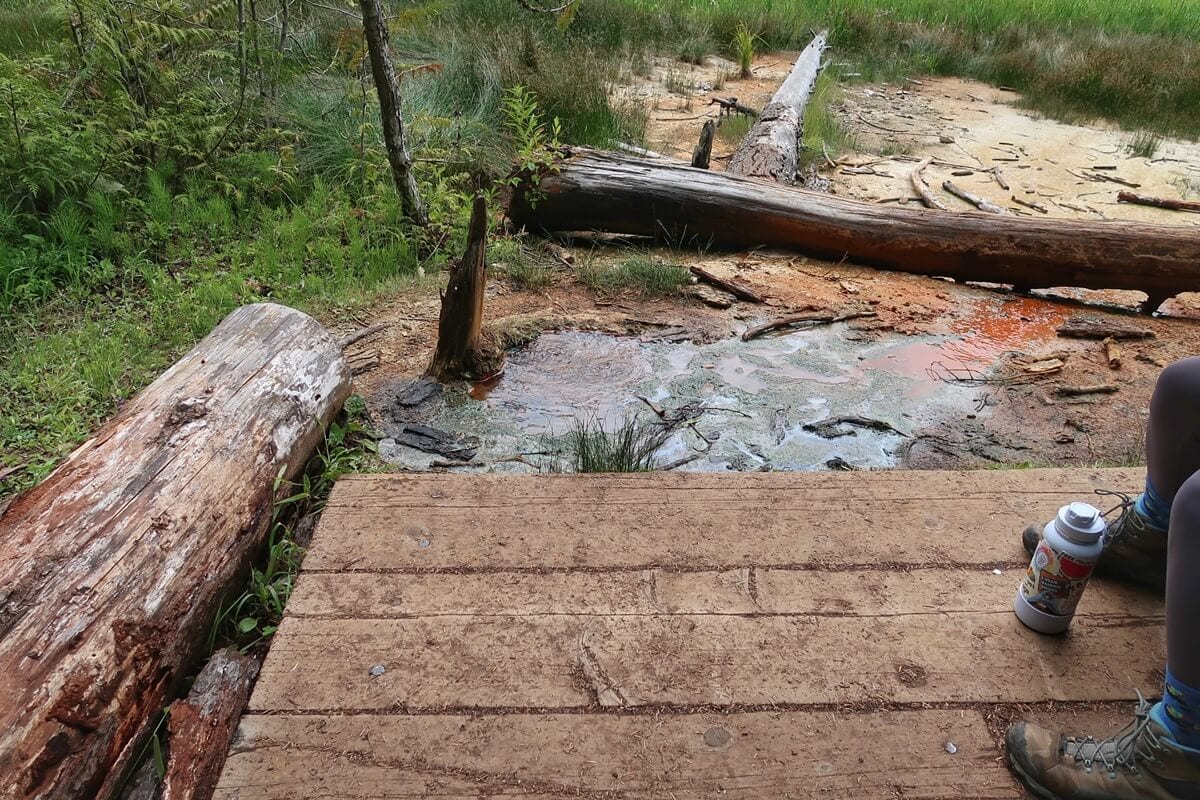
The view offered a different perspective of the wetland meadow. We sat there for a while, taking in the sights and sounds.
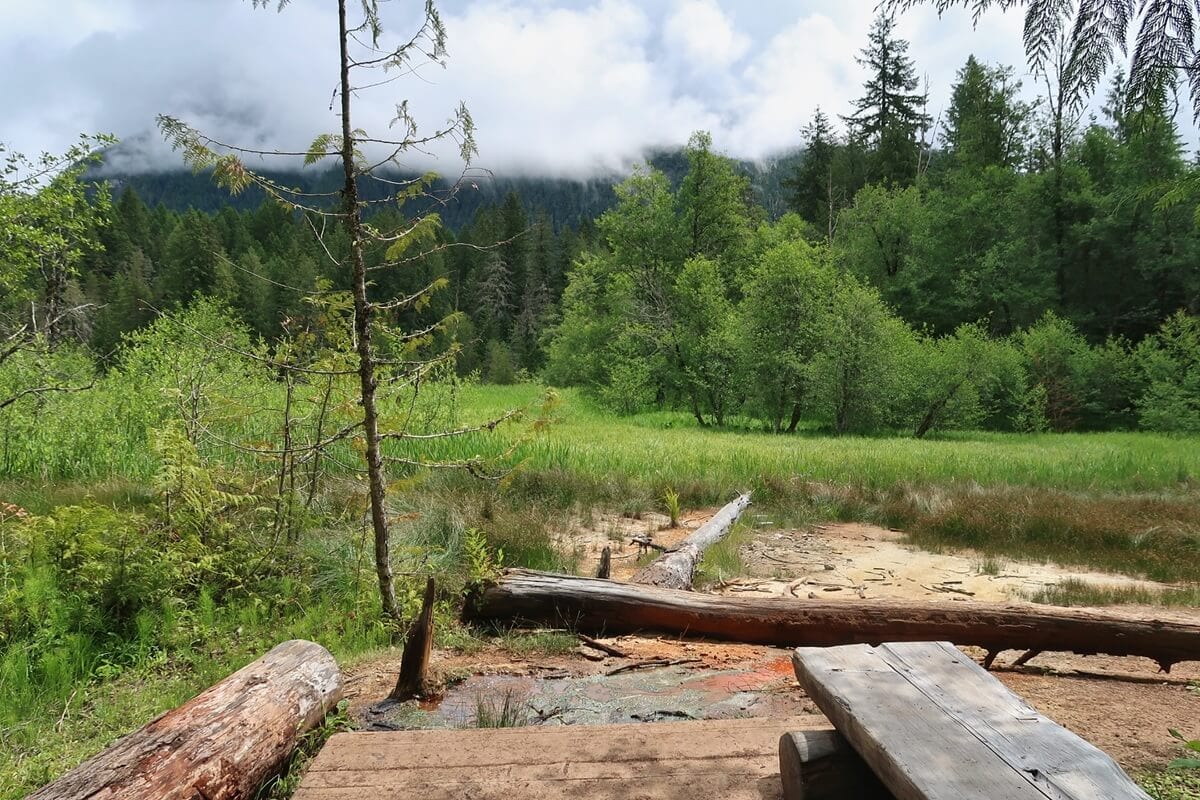
One phrase appeared repeatedly on the interpretive signs: edge place.
This edge environment — where forest and meadow meet — allows more plant and animal species to thrive than either environment could support alone.
That idea stayed with me as we finished the loop.

get clarity & confidence
Stop second-guessing your itinerary.
Let’s build a custom trip that gets you the most from your time and money.
Timing Matters on This Trail
The time of year you hike Trail of the Shadows dramatically changes how it feels.
Because Longmire sits at a lower elevation than Paradise, this trail becomes snow-free weeks, if not months, before higher elevation trails.
On our late June hike, many deer ferns were already out of dormancy, while some fiddleheads were still unfurling. Devil’s club and other foliage looked fresh and new, and sweet wildflowers lined the trail.
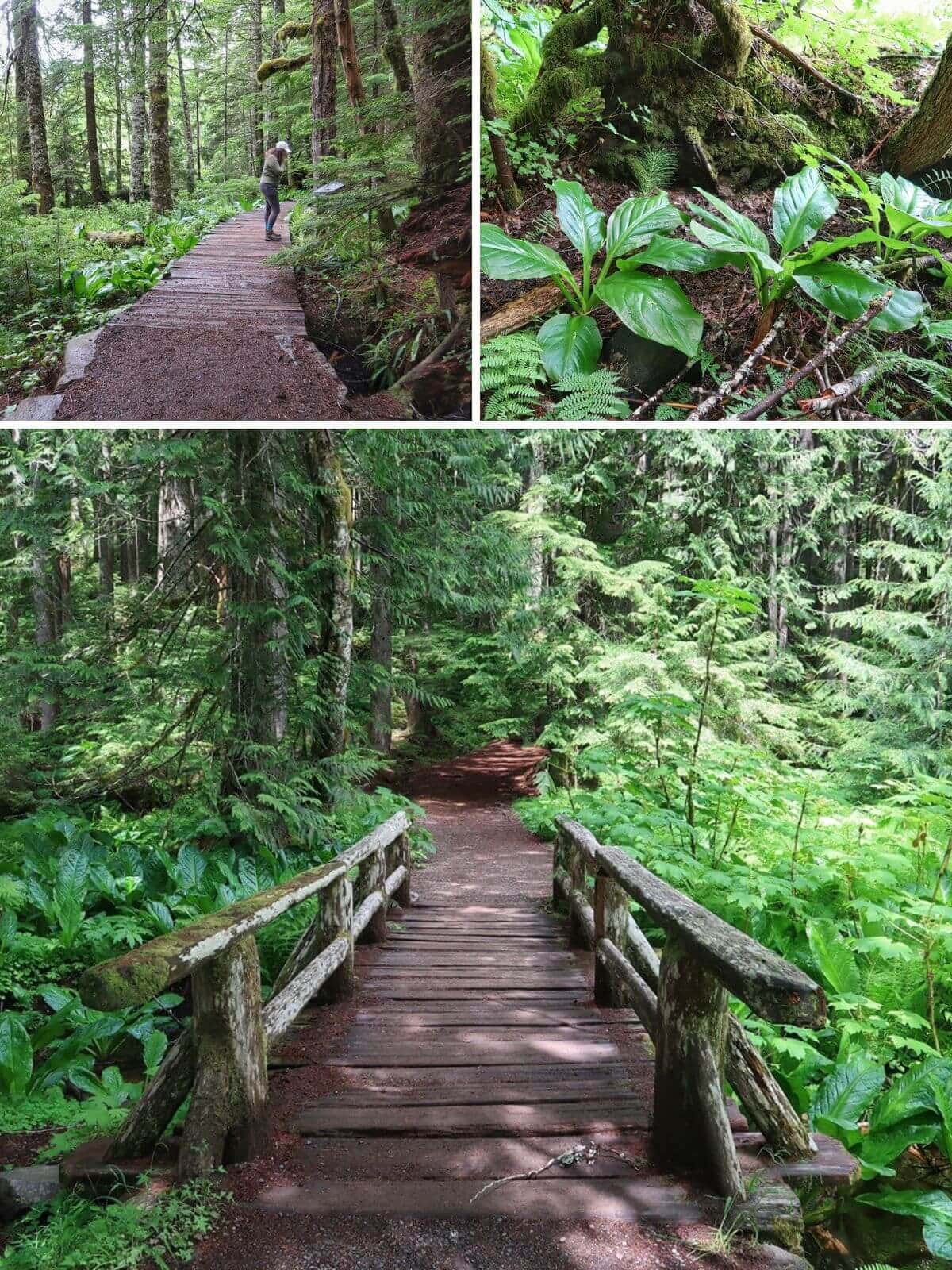
The vivid green you see only in spring was everywhere.
By late summer, the greens dull and the wetland feel softens. If vibrant foliage is what you’re after, earlier is better.
Longmire Attractions & Things to Do
If you’re already stopping for the Trail of the Shadows, it’s easy to turn Longmire into more than a quick stretch-your-legs stop.
Visit the Longmire Museum
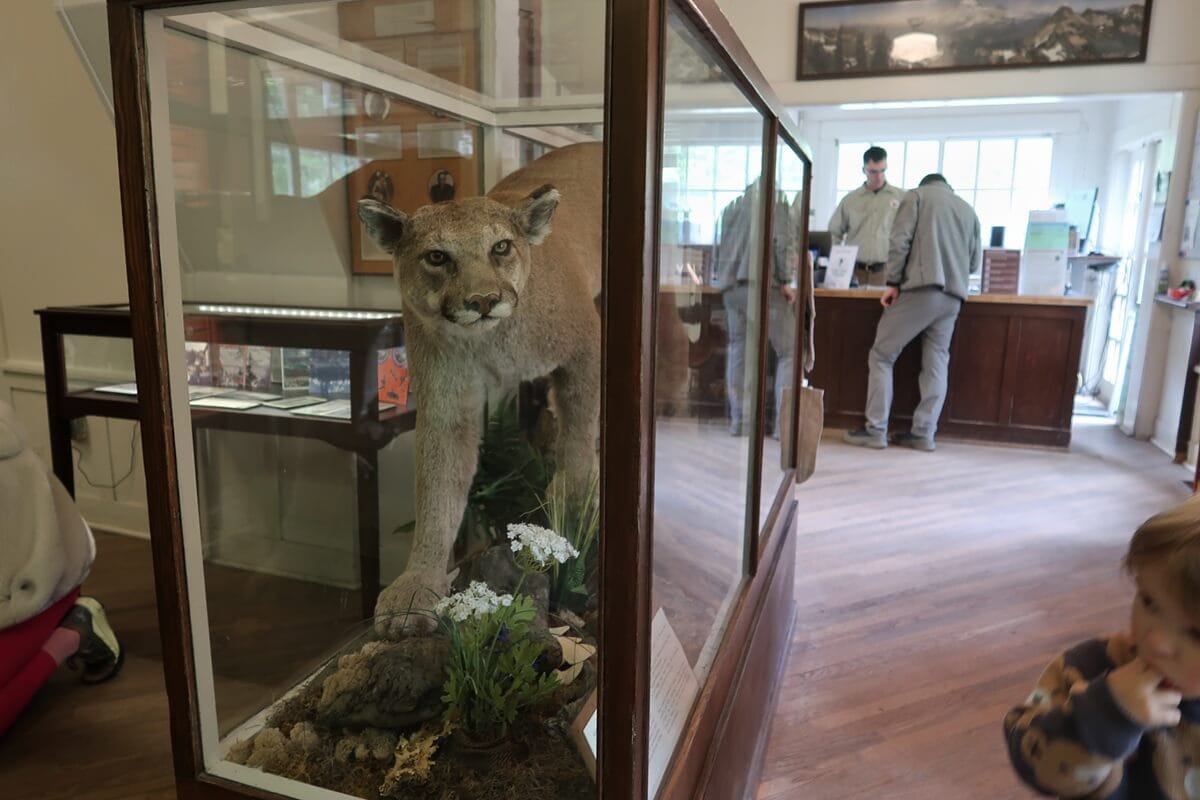
Just a short walk from the trailhead, the museum is where you can learn about the park’s early history, its glaciers, wildlife, and early mountaineers.
Seeing a cougar’s face up close stopped me in my tracks. They’re so elusive I’ll probably never see one like that in the wild.
If you’re traveling with kids who love animals, this stop is one they’ll get a kick out of.
Stop at the National Park Inn
Even if you’re not staying overnight, the inn is worth a quick visit to see the black and white photos on the walls.
As someone who’s attempted to summit Rainier twice and is gear-obsessed, I’m always amazed to see women in skirts climbing high on the mountain.
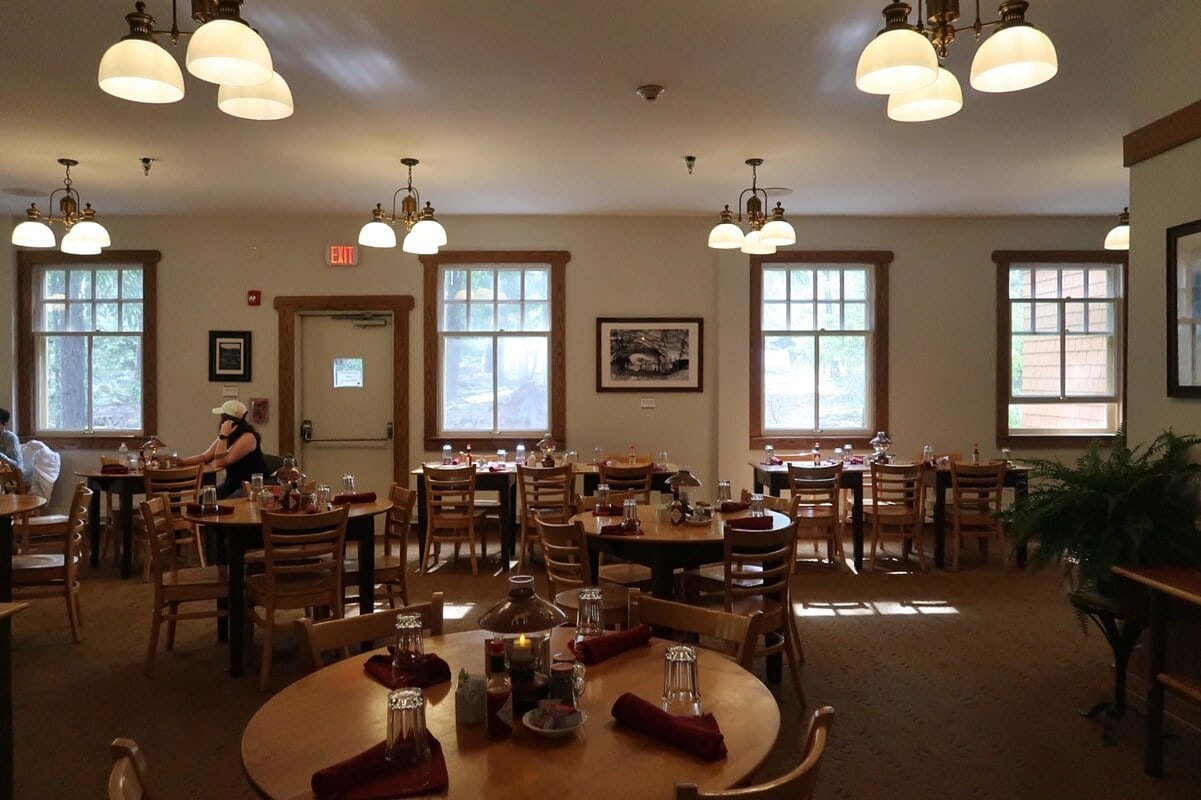
You can also grab breakfast, lunch, or dinner in the dining room, but check dining hours before you go since the restaurant closes between services.
Walk the Historic District
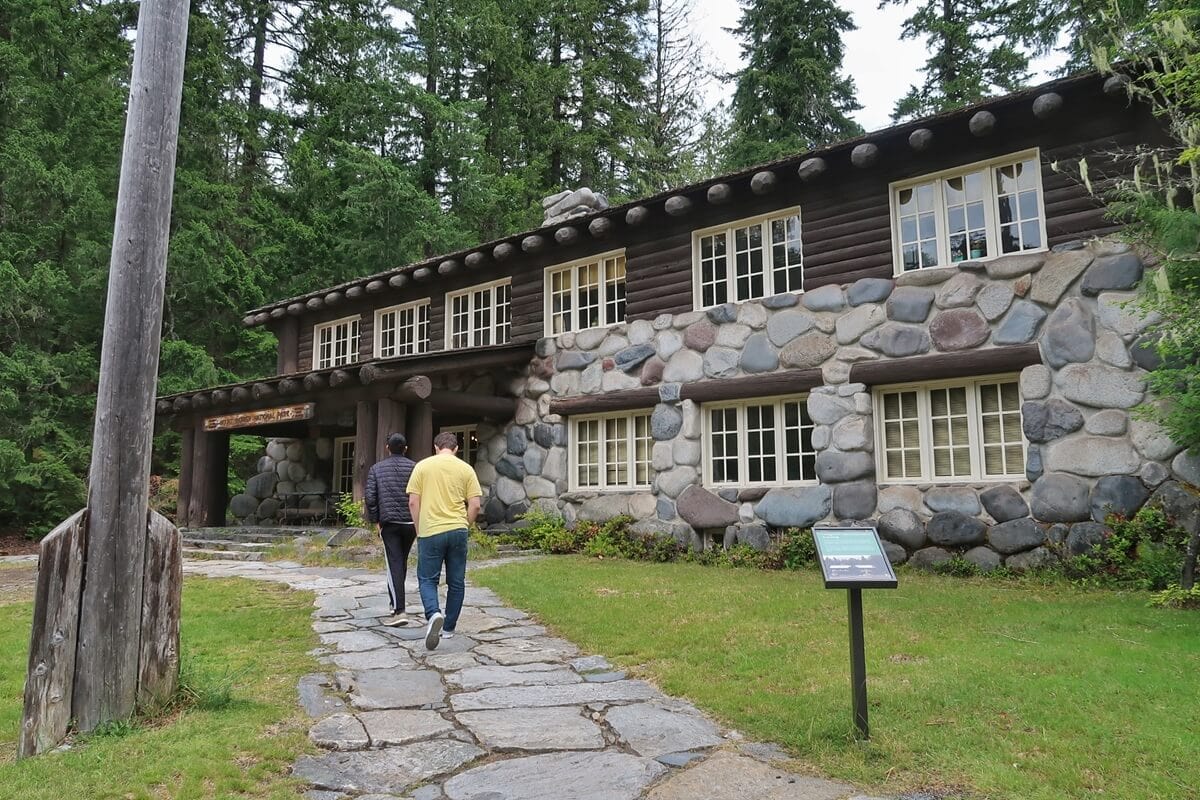
Longmire feels different from other areas of the park because so much early park architecture still remains.
Take a few minutes to wander in and out of buildings. Jenna and I wandered into the Administration Building, intrigued by its exterior stonework which we learned is made from glacial boulders.
Inside, we chatted with a ranger and learned that his favorite view of Rainier from Longmire is across from the community building.
Longmire also sits along the Paradise Road corridor, making it easy to pair this stop with nearby waterfalls on your way in or out.
Plan the Rest of Your Mount Rainier Trip
Trail of the Shadows isn’t the most dramatic hike in Mount Rainier — but for first-time visitors trying to build a balanced day, it’s one of the smartest.
If you’re planning your Rainier trip and feel overwhelmed trying to decide between Paradise, Sunrise, and Longmire, my Rainier Planning Playbook offers clarity on which areas to prioritize and how to fit them into one cohesive plan.
It walks you through the exact planning order I use with clients and helps you decide where to base yourself, how long to stay, and which visitor areas complement each other instead of competing for your time.
👉🏽 See what’s inside the Playbook.
And if you’d rather talk it through, I also offer custom trip planning consultations where we build your itinerary together based on your travel style, dates, and priorities.
👉🏽 See how we can work together.
RELATED TRIP PLANNING POSTS:
➥ How to Visit Mount Rainier & Plan the Perfect Trip Length
➥ Best Time to Visit Mount Rainier: Will the Mountain Be Out?
➥ 17 BEST Things to Do at Mount Rainier (Non-Hikers Too!)
➥ 7 BEST Towns Near Mount Rainier for First-Time Visitors
➥ 15 BEST Places to Stay Near Mount Rainier (& Places to Skip!)
➥ National Park Inn Review: Pros, Cons & Why I’d Return
➥ A First-Timer’s Guide to Paradise at Mt Rainier (Hikes & Attractions)
➥ Longmire Mount Rainier: What to Do, When to Visit & Why It’s Worth It
➥ Mount Rainier 1-Day Itinerary (Best Hikes & Stops)
➥ Skyline Loop Trail Guide: 10 Reasons It’s WA’s Best Day Hike
➥ 10 Tips to Avoid Crowds at Mount Rainier in Peak Season

Skip the guesswork, stress, and hours of research—let me help you plan your itinerary!
