
Mount Rainier in Winter (Access, Roads & What to Expect)


If you’re wondering whether visiting Mount Rainier in winter is worth dealing with icy roads and unpredictable weather, I get it.
Winter requires more planning. There’s no way around it.
You have to be ready to put chains on your tires, especially if you’re headed to Paradise. And having the right gear like waterproof layers and microspikes or snowshoes means you won’t have to turn around earlier than you want to.
But that extra effort is a small trade-off to see mountains blanketed in white, frozen waterfalls, and the chance to make new tracks in fresh snow.
The good news is that you don’t need to snowshoe or hike far to have an incredible experience.
I visited Mount Rainier three times this past winter and saw this firsthand on each visit.
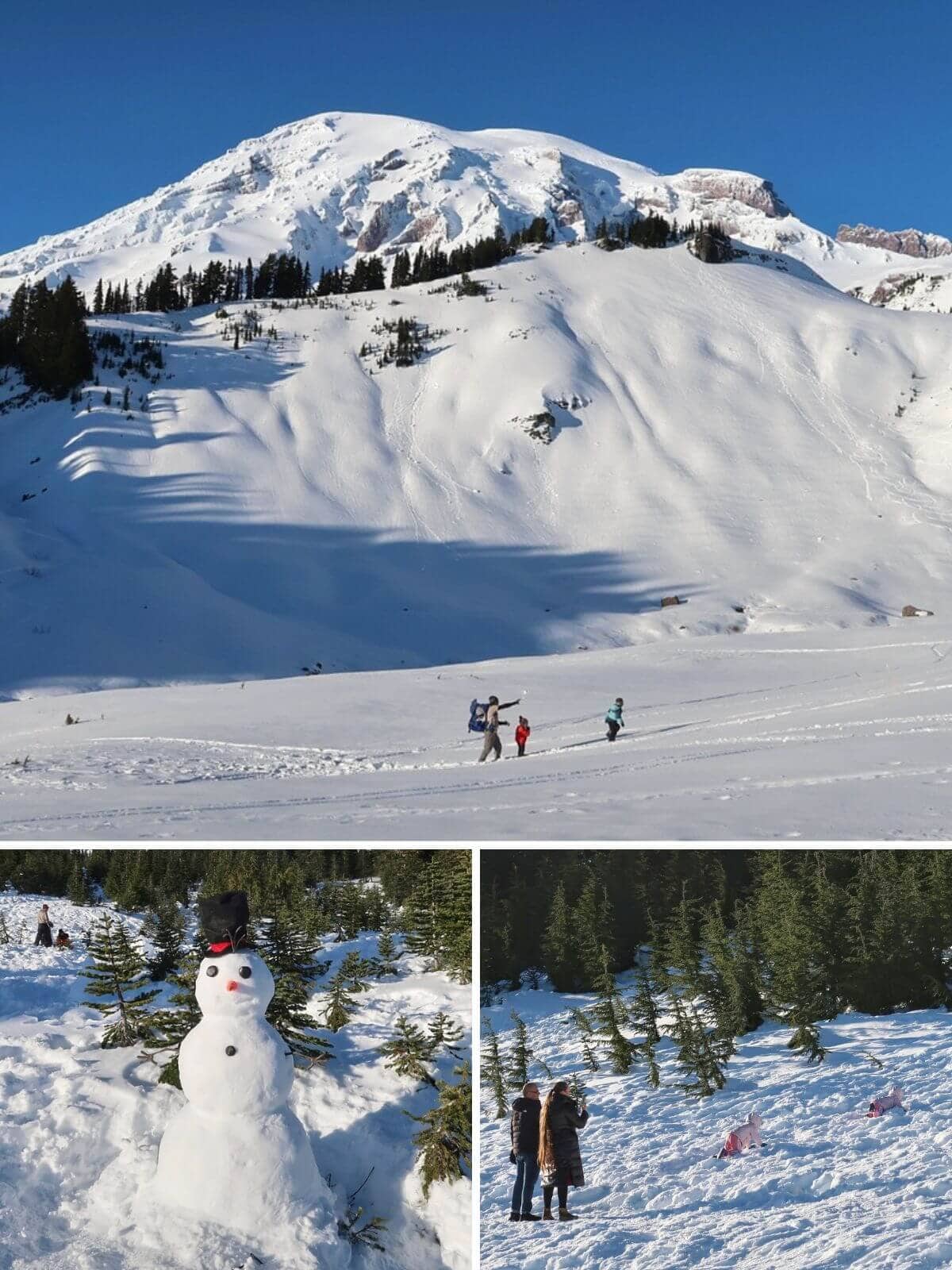
Some of the happiest visitors were families near the Paradise visitor center simply playing in the snow: throwing snowballs, building snowmen, and soaking it all in.
Even when the Mountain wasn’t out, we still had a fantastic time taking in Nisqually River views and waterfalls—and I saw plenty of smiles despite the rain.
➥ Whether you’re planning a winter day trip to Rainier or considering an overnight stay, here’s what you need to know for a stress-free experience: how winter access works, what the roads are actually like, where to get snowshoes or tire chains, and what to do—even when it’s cloudy.
Rainier has five distinct areas: Longmire, Paradise, Ohanapecosh, Sunrise, and Carbon River (closed). Longmire and Paradise are open year-round, while Paradise and Sunrise are the most popular.
Is Mount Rainier Worth Visiting in Winter?
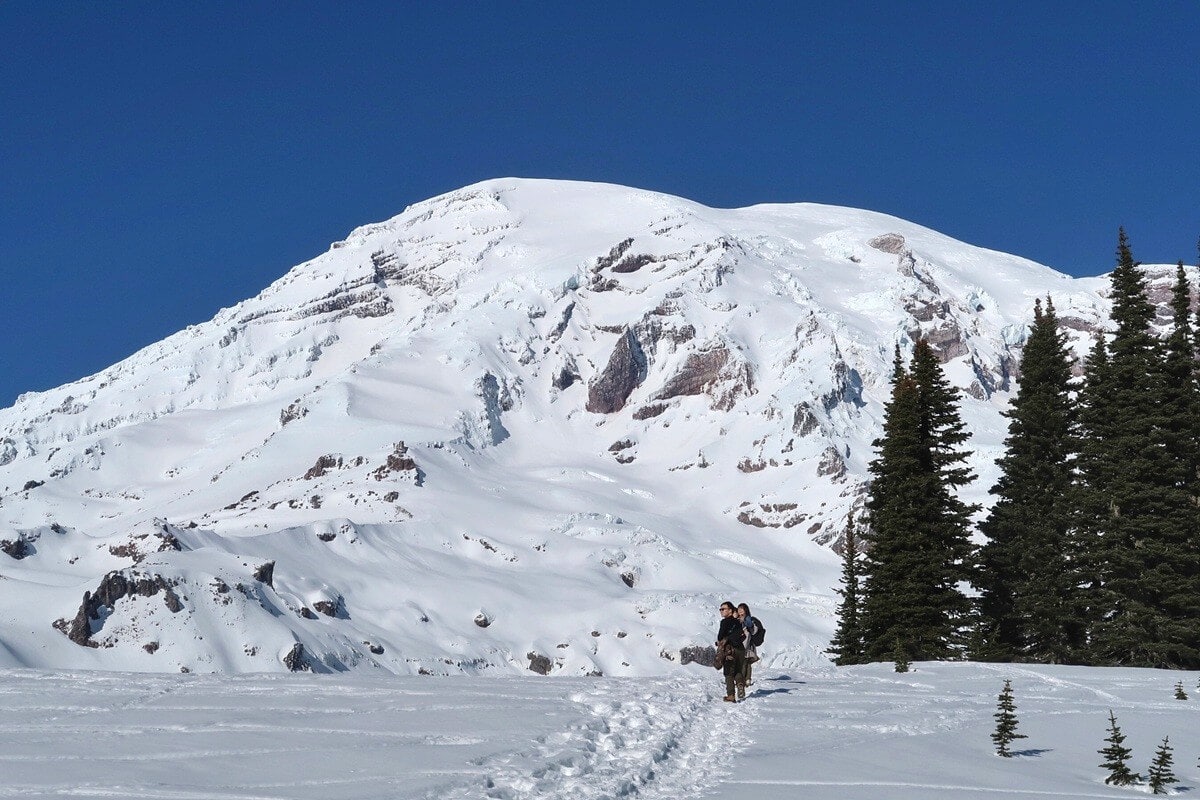
Yes, Mount Rainier is worth visiting in winter, even if you don’t hike or snowshoe. A short walk on snow-covered Paradise trails near the visitor center gives you panoramic views of Rainier and the Tatoosh Range—exactly what makes winter special here.
If the gate to Paradise is closed, it’s still worth a trip to spend time in Longmire, especially on a clear day. Seeing Rainier rise above the treeline is enough to make you feel like you got what you came for.
If you’re short on time, even a quick visit can feel complete.
On the first day of our 3-day winter trip, Colby and I had just over an hour at Paradise. That was enough time to hike part of the Skyline Trail toward Edith Creek and the basin beyond and return feeling completely satisfied.
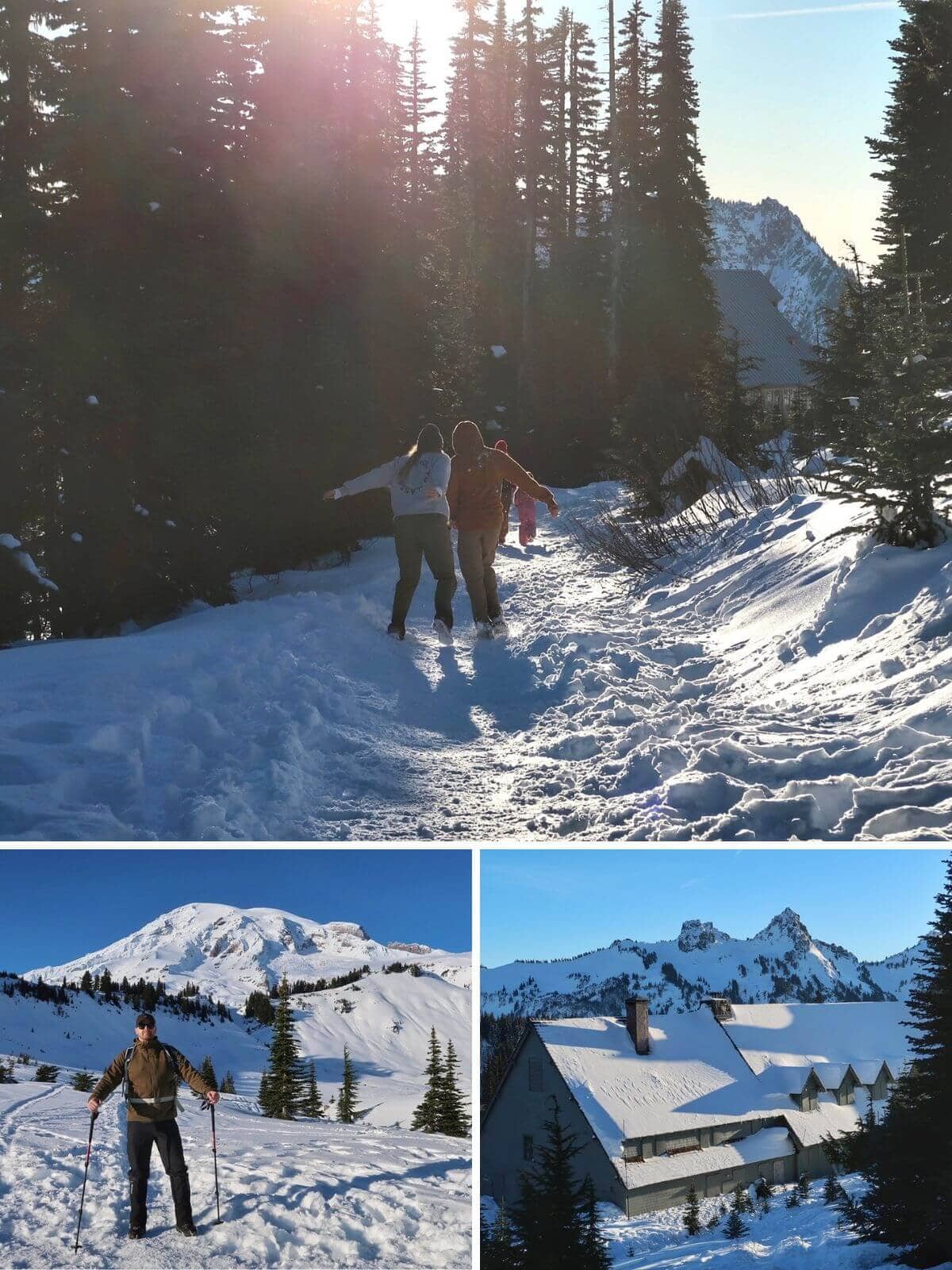
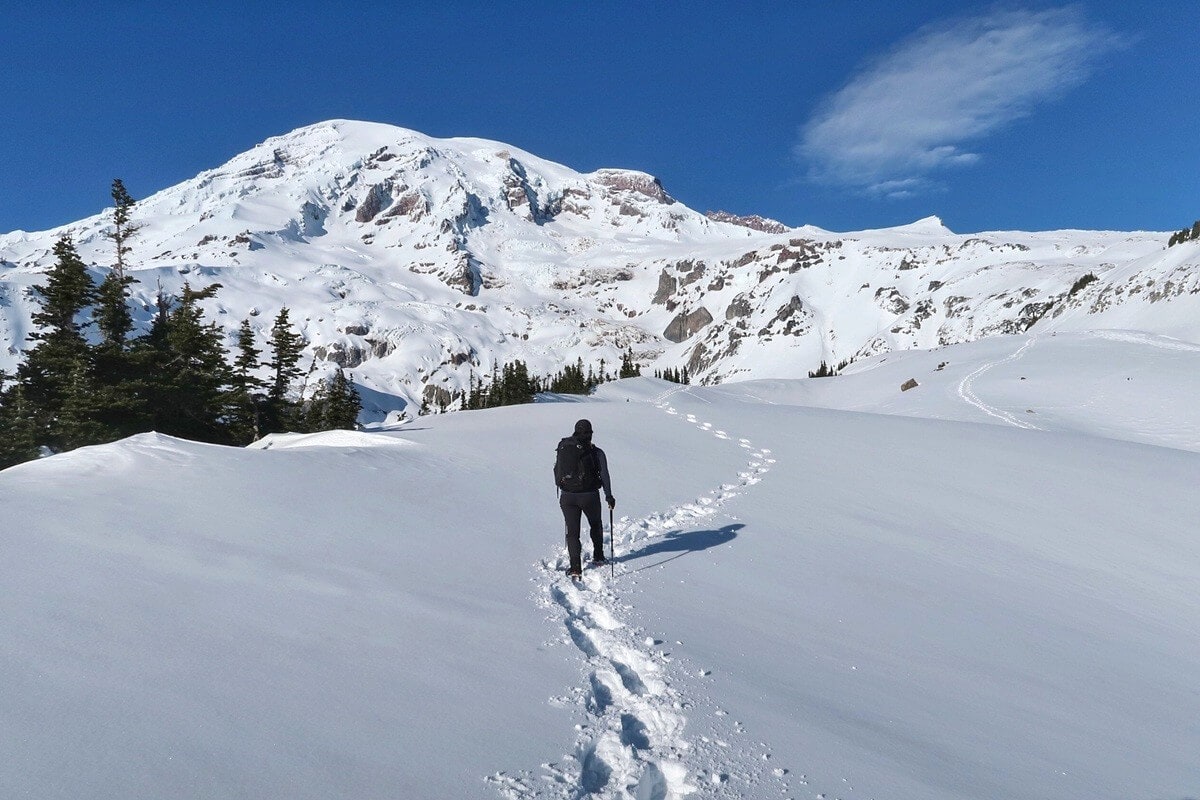
Winter visits offer a version of the park you don’t see in summer. Snowshoeing a little over a mile the next day, we saw stretches of rolling, untouched snow near Glacier Vista.
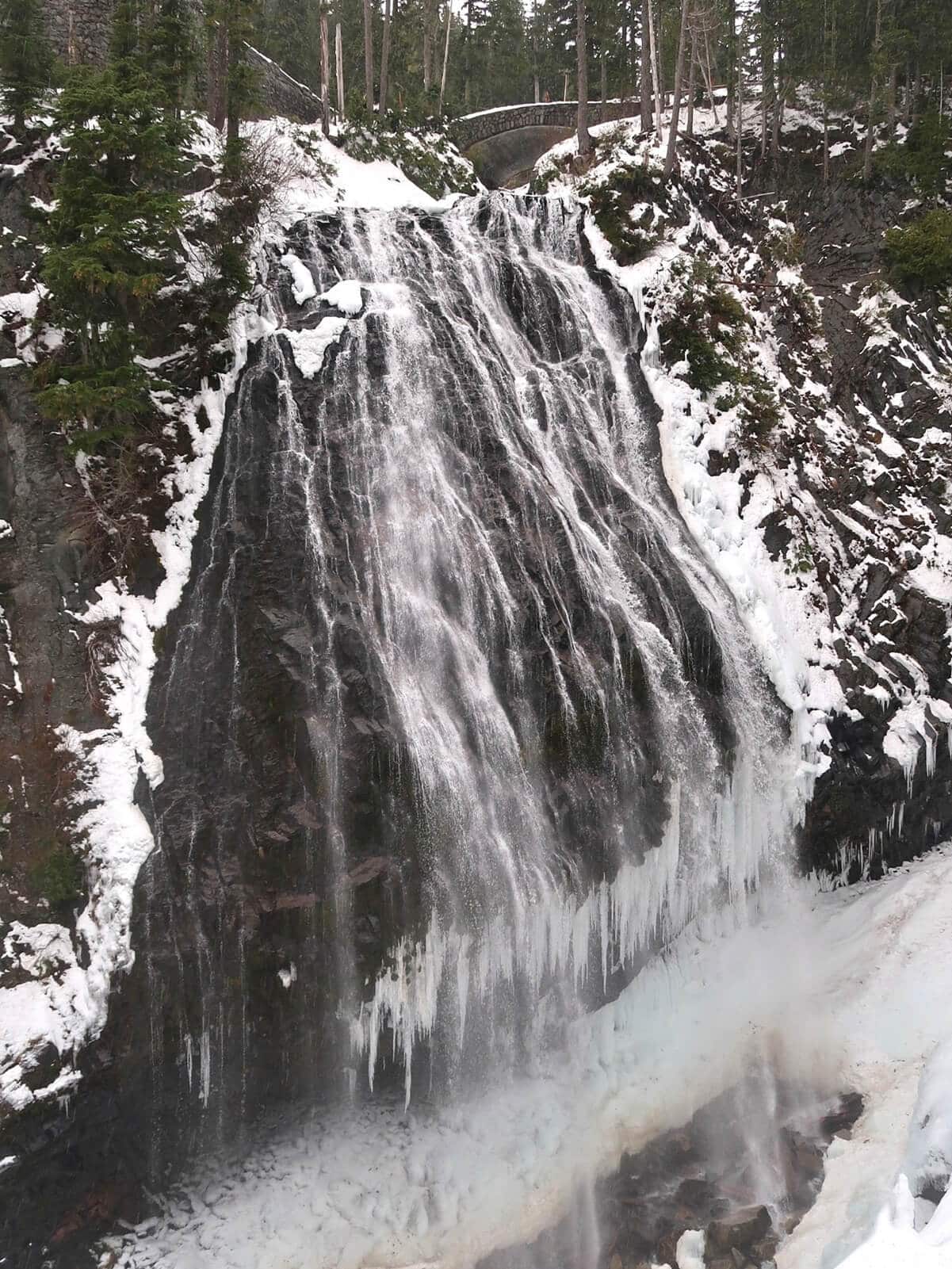
And even though it rained on our last day, we put on our layers and still had an incredible time. We explored the river basin near the Carter Falls trailhead, made scenic stops along Paradise Valley Road, and saw icicles formed at the base of Narada Falls.
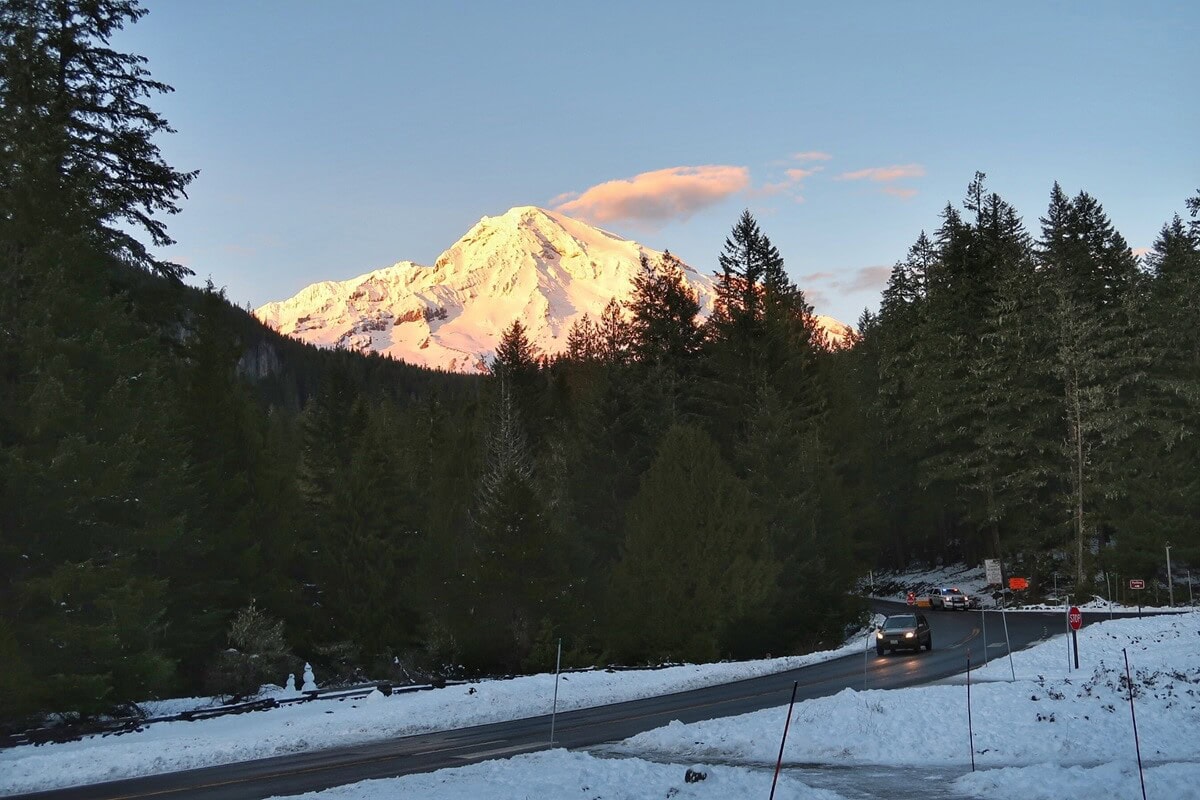
If you stay overnight at the National Park Inn in Longmire like we did, the inn’s porch becomes a place to slow down and watch the Mountain change colors—from creamy yellow in the morning to soft pink at sunset.
Mount Rainier Winter Quick Planning Guide
- What’s open in winter: Longmire’s Historic District is open daily year-round. Paradise access depends on gate openings (see below). Paradise visitor center is open on weekends.
- Best time to visit: Any day with a clear forecast and Paradise access so you can see the Mountain and high-elevation views.
- Which entrance to use: Nisqually
- Drive time from Seattle: ~2 hours to the Nisqually Entrance, plus 30-40 minutes to reach Paradise depending on road conditions.
- Park entrance fee: America the Beautiful Pass
- Chain requirements: From Nov 1st to May 1st, you’re required to carry chains, even AWD/4WD vehicles. On all 3 of my winter trips, putting them on wasn’t required, even on days when I thought it would be.
- What to bring: Bring microspikes or yaks to walk trails with confidence. Snowshoes become necessary the higher you go.
- Where to rent snowshoes and tire chains (Ashford): Whittaker Mountaineering
- Where to rent snowshoes or buy traction devices (Longmire): Longmire General Store
- Cell service: Limited, so download maps in advance.
Longmire to Paradise Winter Road Access
The road to Paradise is controlled by a gate at Longmire which closes every night.
I check the status every evening before and morning of my visit to know exactly when it will open and close. But these times can change depending on the weather and road conditions.
Here’s what happened on all three of my winter trips:
- Gate opened at 9am or 10am
- Uphill gate closed at 3pm
- Downhill gate closed at 4pm
These times are different from the typical gate schedule on the NPS website.
The gate is within eyesight from the National Park Inn, so we saw exactly when the gate to Paradise opened and closed each day.
Winter Access to Paradise at Mount Rainier
Paradise access changes from year to year and even week to week depending on weather, staffing, and road conditions.
In winter 2024-2025, the NPS site showed Paradise as open only on weekends. In winter 2025–2026, it showed it as open daily, but I noticed a trend of the gate being closed on Tuesdays and Wednesdays.
While we don’t yet know what will happen for winter 2026–2027, plan your Rainier trip for Thursday through Monday if you’re coming for just the day.
Always check the NPS road status page the day before and the morning of your visit or call 360-569-6575. The one time I called, a ranger actually answered and gave me gate info that hadn’t yet been updated on the NPS site.

Skip driving on icy roads and dealing with tire chains, and let someone else handle the drive and gate timing.
How to Get to Mt Rainier in Winter (Map, Routes & Road Conditions)
The map below shows the most common routes to get into Mount Rainier National Park in winter.
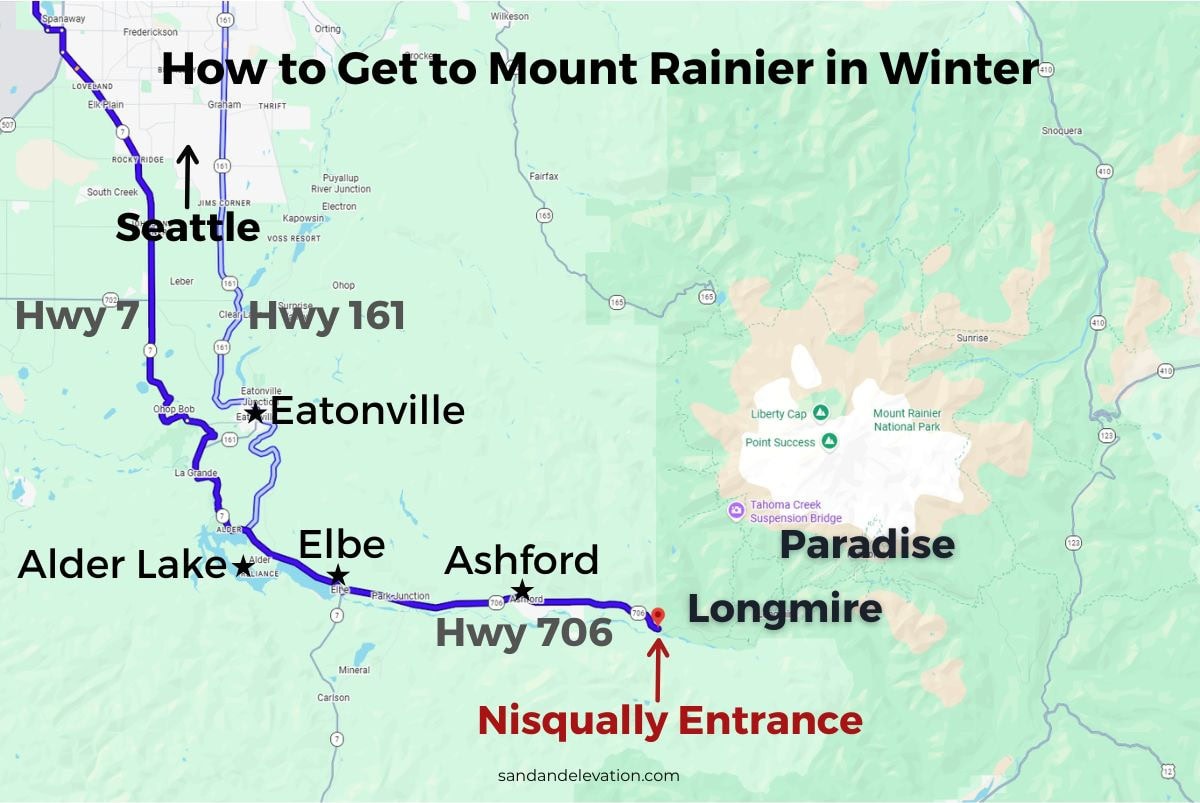
Driving to Mount Rainier for Winter Visits
With the Carbon River area of the park closed, winter visitors will head to Longmire or Paradise via the Nisqually Entrance.
Coming from the Olympic Peninsula region, I cross the Narrows Bridge and through Tacoma, heading south on I-5 to Highway 7.
If you’re driving from Seattle or the surrounding area, you can:
- drive south on I-5 to Highway 7, or
- drive through Eatonville to Highway 7
Highway 7, also labeled Mountain Hwy E and National Park Hwy on Google Maps, is where the drive starts to feel like you’re heading into the mountains. On clear days, I still get a little giddy seeing Rainier rise above the landscape.
As you approach the park, you’ll pass Alder Lake, which offers jaw-dropping lake views, especially in the early morning when it’s misty.
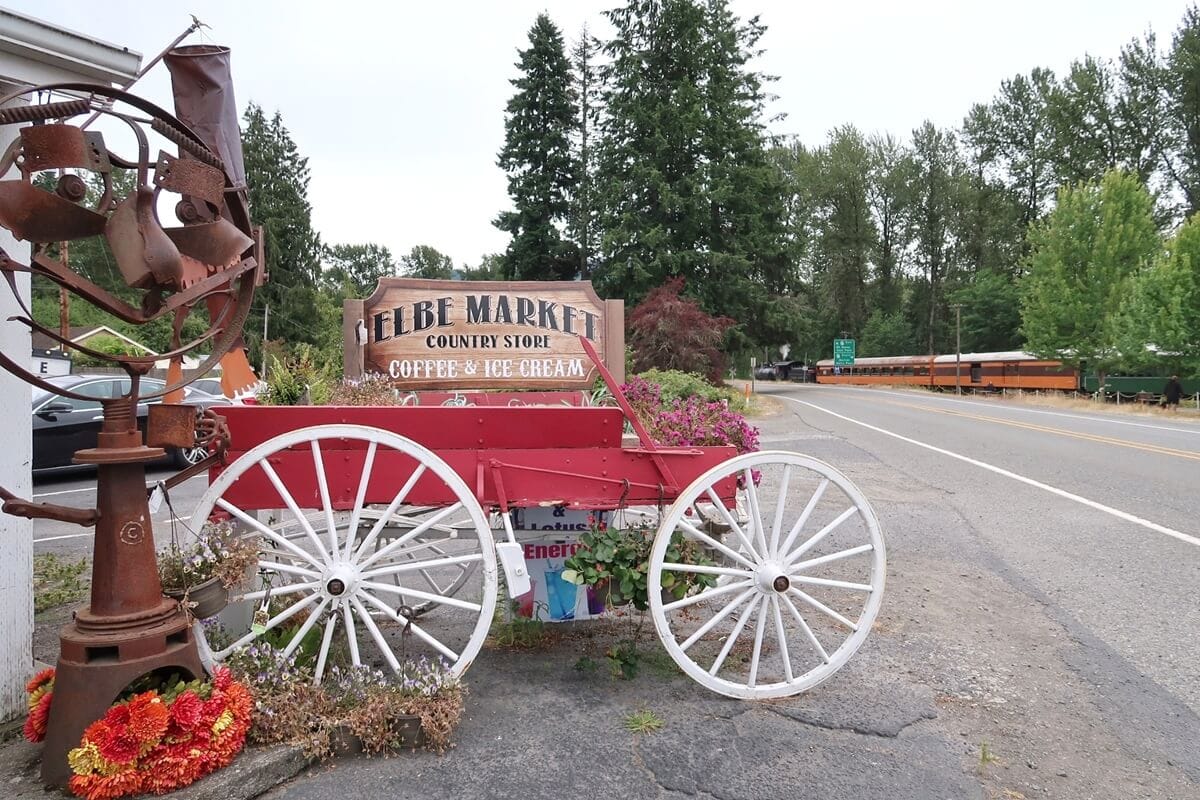
If you have extra time, you can make a quick stop in Elbe just before Ashford to see the small historic church or hop on the Mt. Rainier Scenic Railroad. This small town is so compelling that I pulled over on my first drive into the park to eat a meal inside an old railroad car.
Ashford is the last town before the Nisqually Entrance and a great place to fuel up, grab food, or stay overnight. It’s the most convenient town for visiting Mount Rainier in winter.
Which Mount Rainier Entrance Is Open in Winter?
Use the Nisqually Entrance. It’s the only entrance open in winter to get to Longmire and Paradise.
Winter Tire Chain Requirements at Mount Rainier
You’re required to carry tire chains in winter, even if you have AWD or 4WD, and even when it’s sunny.
When I drove into the park, the ranger at the entrance asked if I had them, but didn’t actually check. Even so, I wouldn’t risk being turned away at the gate after driving over two hours to get to Rainier.
You can either buy and return them or rent them from Whittaker Mountaineering in Ashford.
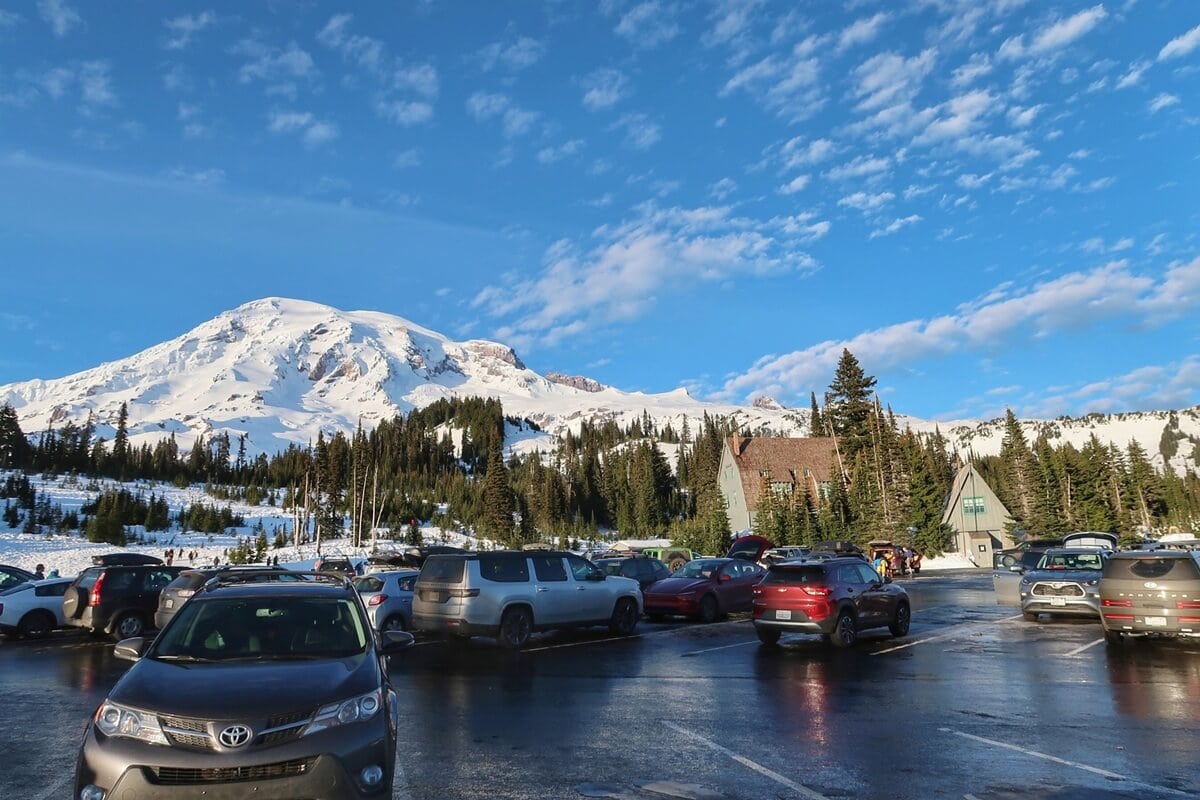
There’s a designated pull-off area along Paradise Valley Road where you can safely put chains on if conditions require it.
I saw visitors putting them on even though it wasn’t required to do so on my winter trips. Don’t hesitate to put them on if they’ll make you feel more confident while driving.
Winter Road Conditions at Mount Rainier
Road conditions in winter vary a lot depending on recent weather and time of day.
The good thing about Paradise Valley Road is that you don’t drive next to big drop-offs without guardrails like you do on Sunrise Road.
This makes me feel much more comfortable driving on winter mornings when I encounter icy sections, which typically happen a few minutes past Longmire, especially in shaded areas.
Roads are plowed and maintained, but they’re not always bare, so it’s important to take your time and drive at a pace that feels comfortable.
You can always pull over at the next pullout to let cars pass.
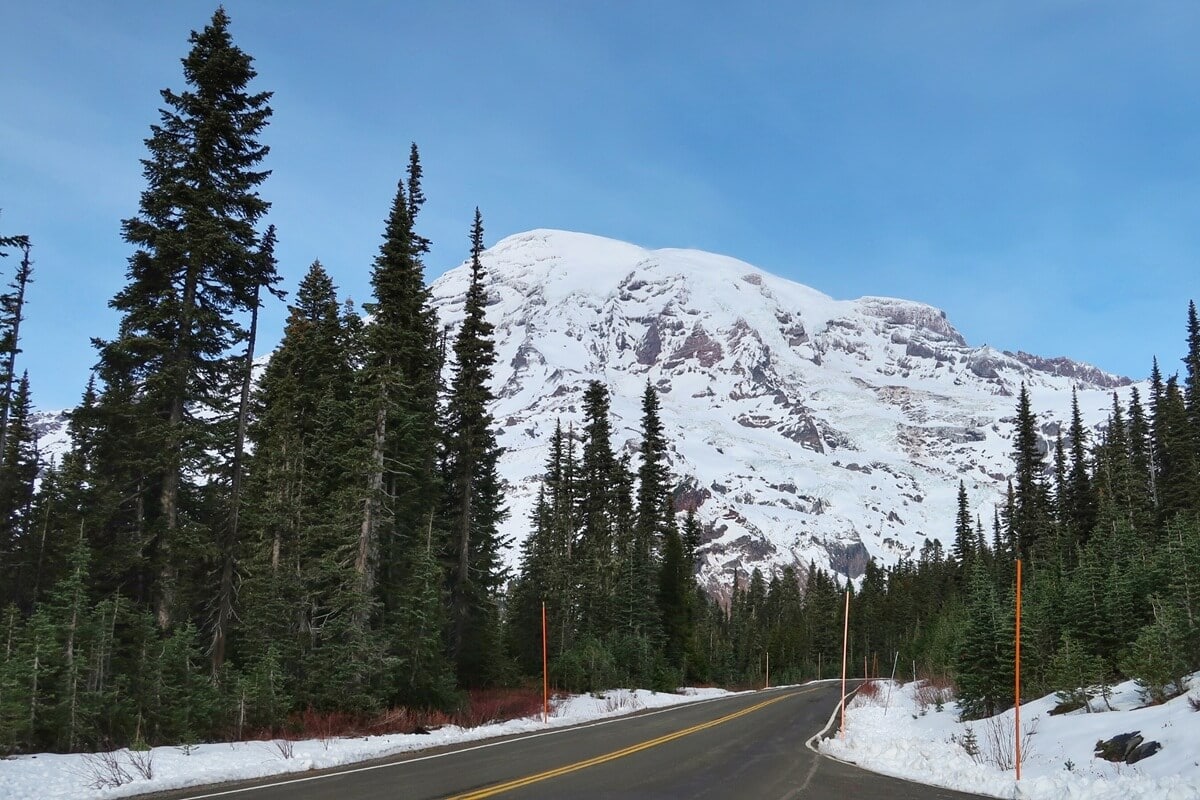
I wish this didn’t need to be said, but I see it all the time. Refrain from driving right on the bumper of the car in front of you.
I always leave a lot of room in front of me, especially as I make my way out of Paradise.
Parking at Mount Rainier on Winter Trips
Parking at Paradise is more relaxed than in summer, but the main lot next to the visitor center fills up on clear days and weekends. If it does, the second lower lot is just a short walk to the visitor center.
The bigger thing to plan around is timing your visit with the gate hours rather than worrying about parking. Give yourself enough time to head back down before the gate closes.
On my last winter visit with my hiking partner Jenna, we had to push our pace to get back to my car in time to make it past the Longmire gate by 4pm.

get clarity & confidence
Stop second-guessing your itinerary.
Let’s build a custom trip that gets you the most from your time and money.
Things to Do at Mount Rainier in Winter
Here are the best Mount Rainier activities in winter, including easy ways to enjoy the snow.
Winter Recreation at Paradise
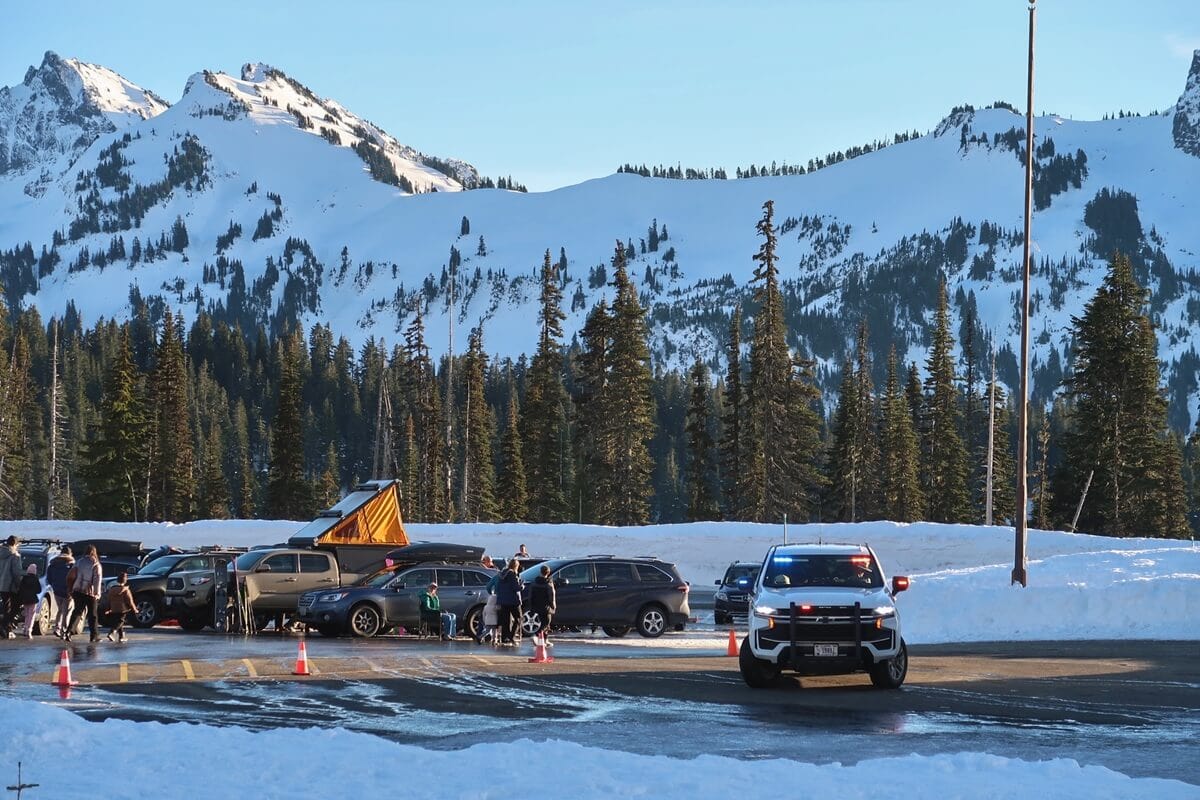
The first thing I noticed after we parked near the visitor center was the number of people who were hanging out near the parking lot. Just being in the snow and throwing snowballs was enough for them to have a great time.
The second thing I noticed was the presence of rangers.
One ranger was in the Paradise Ranger Station with the window open, facing the parking lot. Another was in a truck parked near the bathrooms. I always pack my ten essentials and show up prepared with the right gear, but seeing them was reassuring.
Easy Winter Hikes at Mount Rainier
I wouldn’t worry too much about choosing the perfect hike ahead of time.
When you start from the Muir Steps, you’ll immediately see well-trodden trails cutting through the snow, made by other visitors.
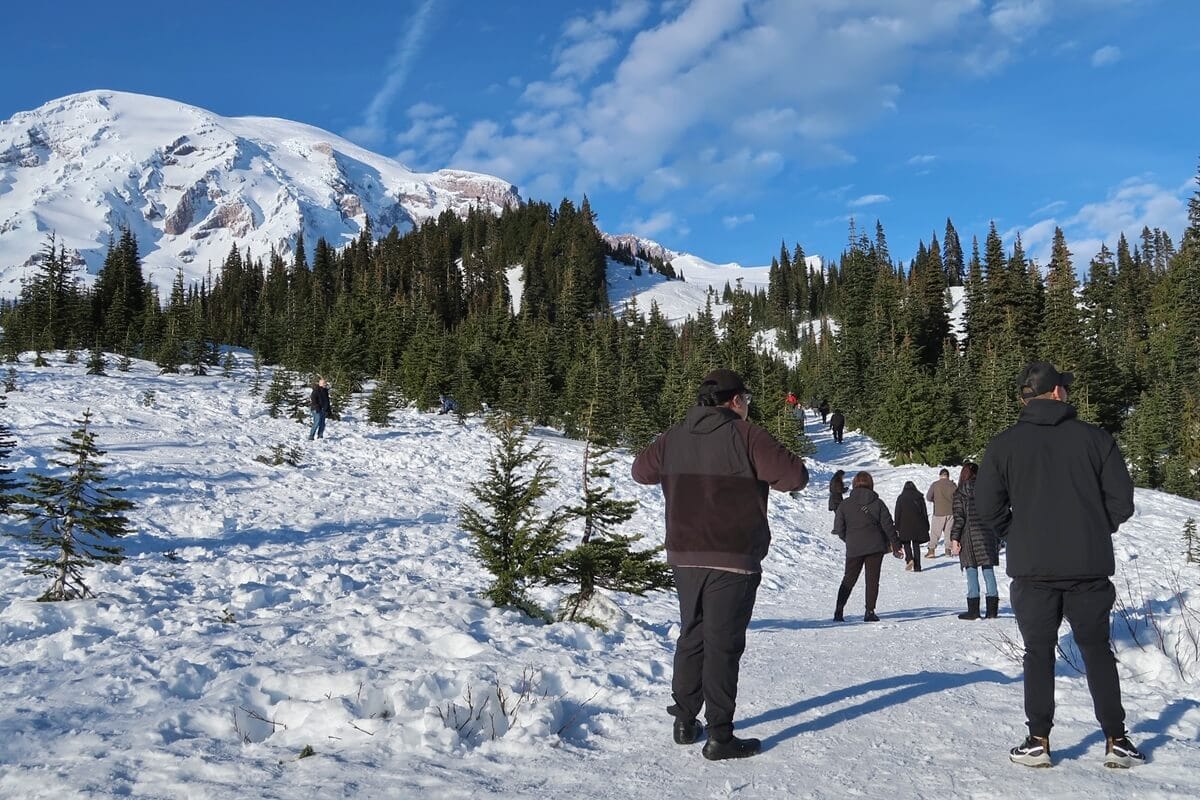
Many visitors naturally follow the Skyline Trail to Myrtle Falls and Edith Creek, which starts with a gentle grade. You might get away with not wearing microspikes or snowshoes because of how much foot traffic this trail gets.
On my November trip, I turned around in my spikes as soon as I started to post-hole, regretting that I couldn’t go higher without snowshoes. But not before I got this fantastic view of the Tatoosh Range.

Another easy winter hike is the Nisqually Vista Trail. Jenna and I put on our snowshoes because it was warm and the snow was slushy. But we saw others who didn’t and managed just fine without them, even if their shoes and pants got wet.
Download AllTrails maps to your phone so you can make your way back safely without relying on others or cell service. I do this before every trip.
Ranger-Guided Snowshoe Walks
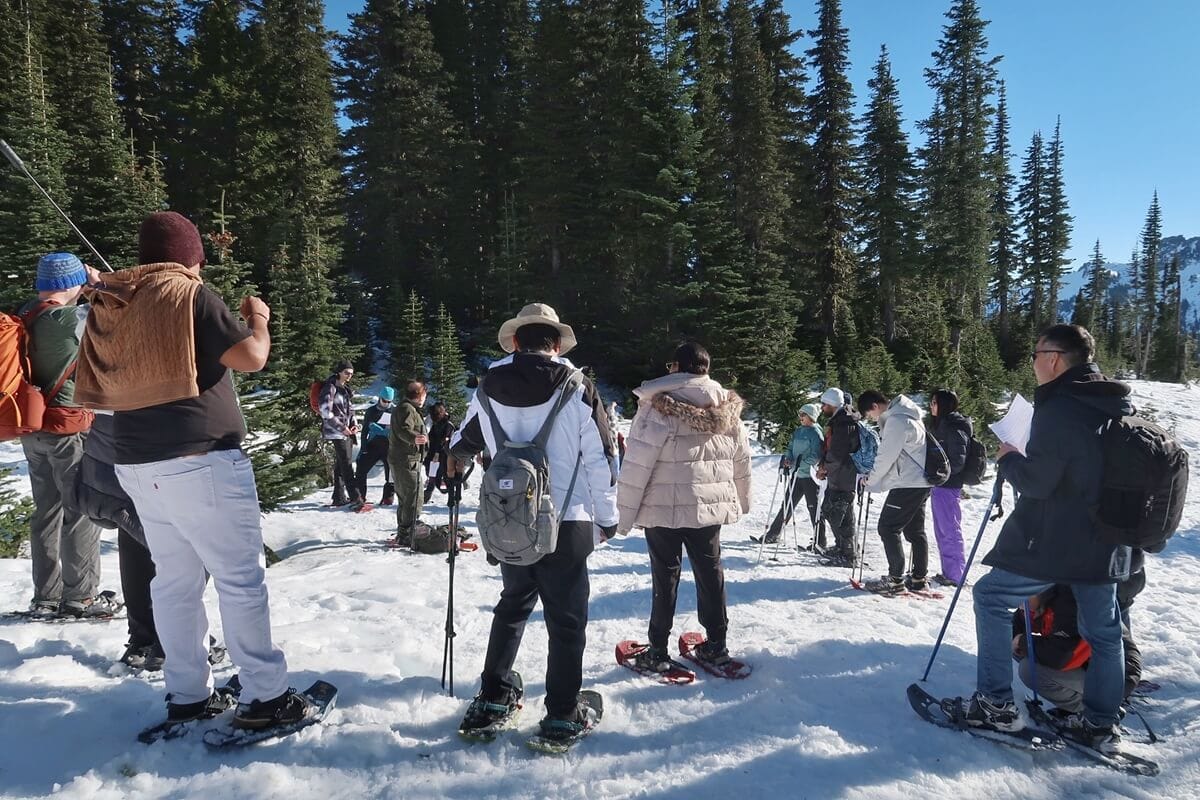
On my last winter trip, we parked in the second lower lot near the Nisqually Vista Trail and paused as we passed a group on a ranger-guided snowshoe walk.
I listened in as the ranger talked about how changing weather patterns are making conditions at Paradise less predictable.
Later that afternoon, I went inside the visitor center and learned the details. These guided walks are only available on Saturdays and Sundays from January through March or April. You can sign up starting at 10am and they provide snowshoes.
Sledding at Mount Rainier
Officially, sledding isn’t allowed anywhere in the park. I spoke with a ranger who said that’s been the case for the past few years because there’s no area to sled safely without the risk of hitting pavement.
Unofficially, I’ve seen families with kids on sleds on the slope just above the second parking lot. But the ranger wasn’t lying. I watched a kid get going so fast that he sled off the snow and landed on the asphalt parking lot.
He quickly popped up and was okay, but the situation didn’t seem safe.
What to Do at Mount Rainier if It’s Rainy or Cloudy
Rainy or cloudy weather is often a reality when visiting Mount Rainier in winter, but it doesn’t mean you can’t have a great day.
When clouds rolled in on the last day of our trip, we shifted our focus to lower elevation stops along Paradise Valley Road, where you can still see waterfalls and river views.
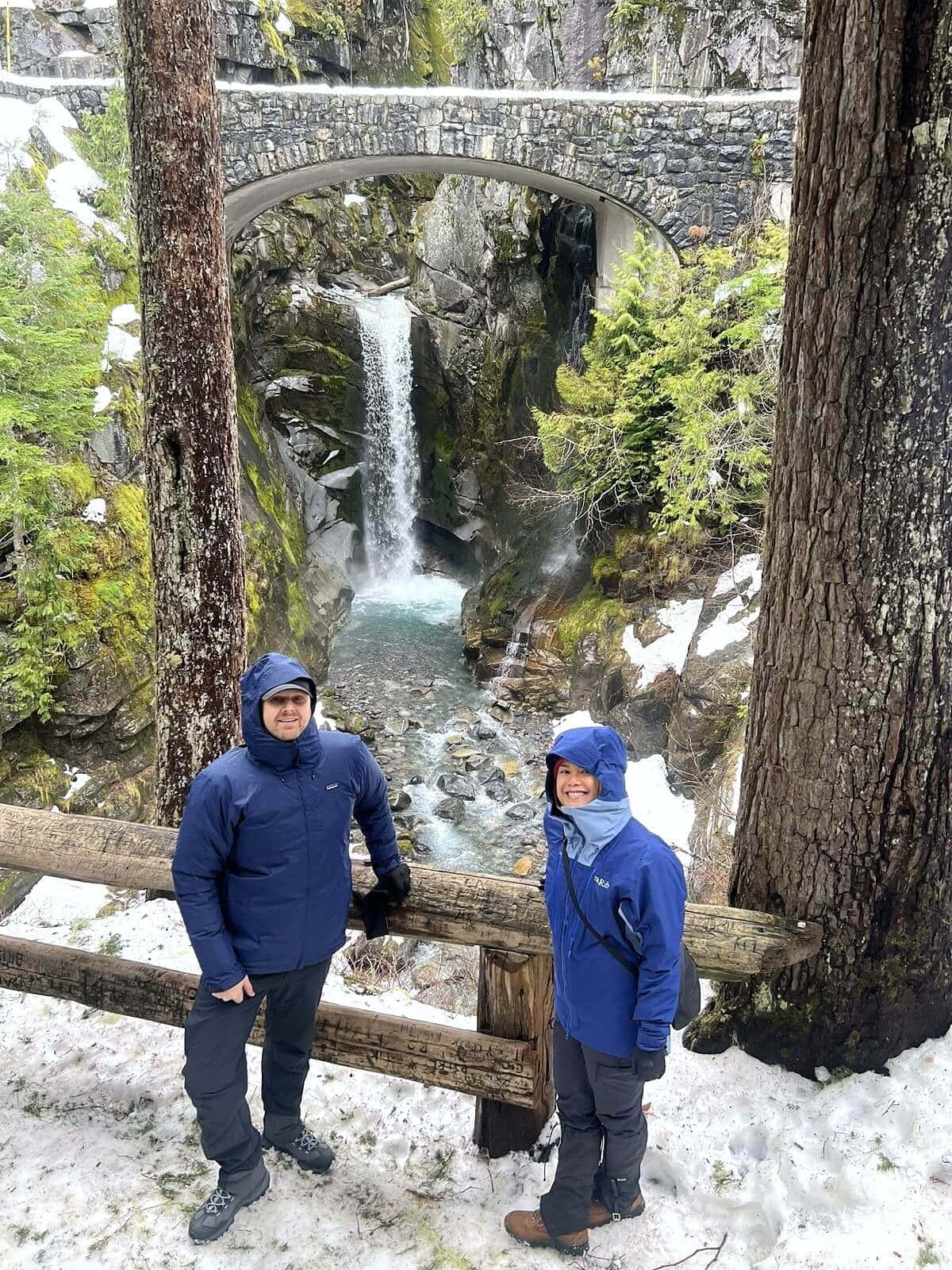
Here’s our Mount Rainier winter itinerary from the day the Mountain was covered in clouds:
- Longmire Historic District to the Nisqually Suspension Bridge
- River basin near the Carter Falls trailhead
- Christine Falls
- Narada Falls
- National Park Inn for one last mountain view from the porch
Colby still gave this day, rain and all, a 9/10 rating. It was probably easier to give a high rating after two blue-sky days.
But for many day visitors, that rainy, cloudy day was all they got. And yet, I still saw smiles and genuine enjoyment everywhere, even while people were bundled up in the drizzle.
Explore the Longmire Historic District if Paradise is closed due to icy roads.
You can walk to the suspension bridge for Nisqually River views, hike the Trail of the Shadows loop, or hike the Wonderland Trail for an excellent view of the mountain from the river basin.
Two excellent stops to make on your drive out are the Twin Firs Trail and the Kautz Creek Overlook.
How Much Time Do You Need in Winter? Day Trip vs Overnight
If one day is all you have, you can have an excellent time, especially if Paradise is open and you get high-elevation views.
A day trip works well if you show up prepared with everything you need to make the most of your time. Even if you’re not a big hiker, I still recommend bringing microspikes because the hike down to the base of Narada Falls is steep, even though it’s short.
Why You Should Stay Overnight in Winter
An overnight stay in winter is a better fit if you want a more relaxed pace and the ability to adjust your plans around conditions.
Staying overnight means you’re not rushing to see everything before the gate closes, which matters when driving on icy roads.
It also gives you time to explore different areas.
When Jenna and I stayed at Mountain Meadows Inn in Ashford, we snowshoed the Narada Falls Loop on day one, giving us a chance to see all of the waterfalls along the Paradise River and eat lunch at the edge of frozen Reflection Lake.
The next day, we snowshoed the Nisqually Vista Trail.
Considering the shorter time window in winter because of the gate closure, we couldn’t have done both trails in one day without added stress.
Why Flexibility With Your Dates Matters
Even if you’re doing a day trip, the advice I share with my itinerary clients is to be flexible with dates, if possible.
This is especially true if you’re staying overnight, since it gives you the ability to adjust your trip around the best weather window.
I was relieved that I had no problems changing our dates when we stayed at the National Park Inn over the holidays, because it meant we got two glorious, sunny days.

Where to Stay Near Mount Rainier for a Winter Visit
The National Park Inn is the only lodging option inside the park, while Ashford offers everything from cabins to vacation rentals.
Why Stay at the National Park Inn in Winter
Colby and I loved being able to see the view from the porch of the National Park Inn anytime we wanted, especially when the light was the most beautiful.
We appreciated being able to see exactly when the gate opened and closed, and getting to Paradise with just a short drive made it super convenient.
Why Stay at Mountain Meadows Inn in Ashford
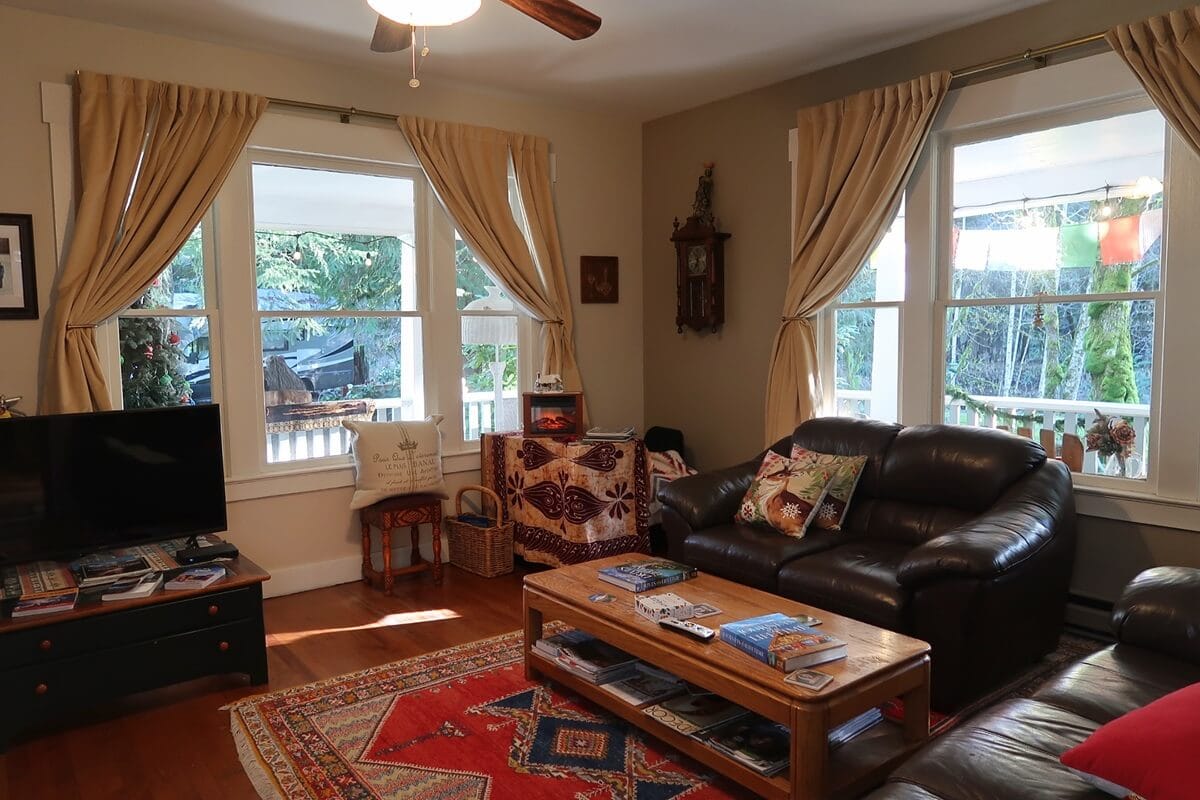
Mountain Meadows Inn is the coziest, most welcoming place I’ve stayed in Ashford. There was homemade granola on the counter, a shelf in the fridge with breakfast foods just for us, and a setup to make s’mores.
We were so comfortable relaxing on the wraparound porch in the morning that we ended up hitting the trails later than planned.
What to Pack & Tips for Winter Safety
Colby and I stayed dry and comfortable even in steady rain because we had the right layers. Our insulated layers worn underneath waterproof shells made the biggest difference.
The snow wasn’t always icy, especially in open areas where it was warmer, but we still ran into icy patches in shaded sections of trail. Having microspikes meant we didn’t have to second-guess our footing on the way down from Edith Creek.
On my November trip, I counted eight people slipping as I made my way from the Muir Steps down to Myrtle Falls because their footwear wasn’t adequate, which really shows how much of a difference traction makes.
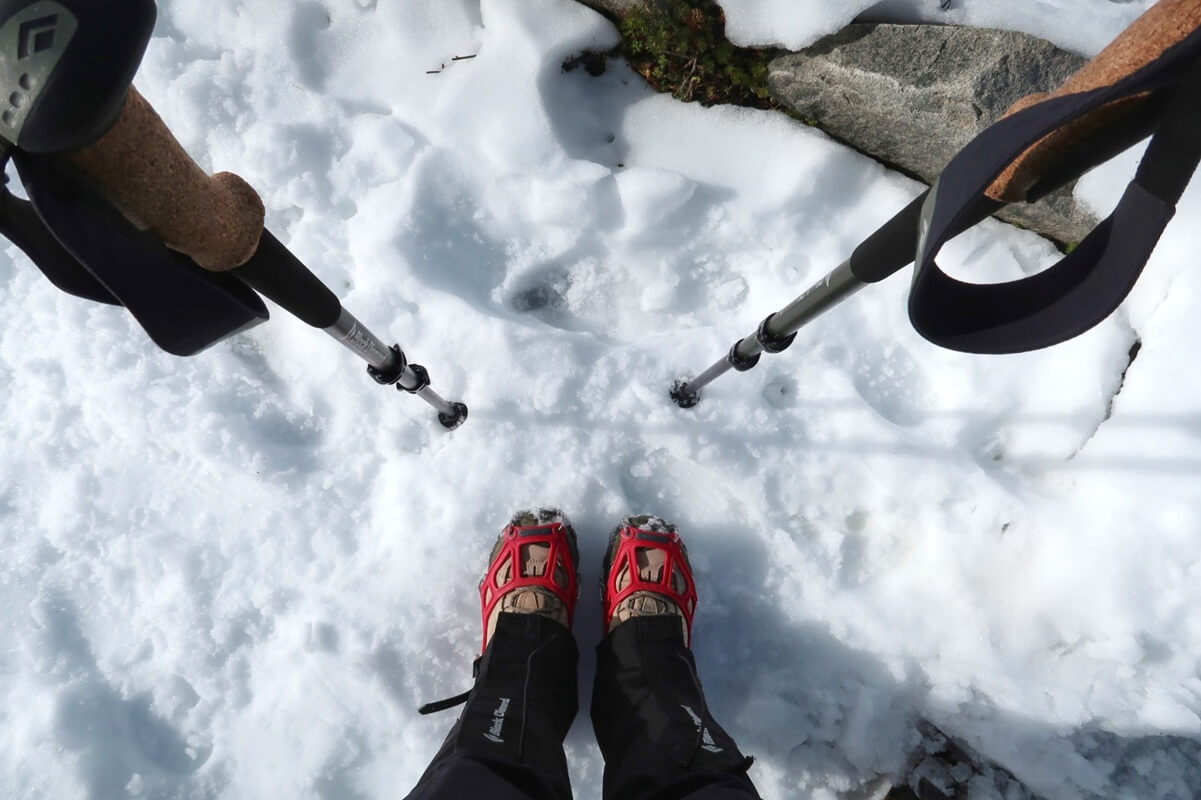
The Longmire General Store sells traction devices and rents snowshoes.
Double check that the chains you purchase or rent will work with the size of your tires. Had I simply trusted the competent-seeming cashier where I purchased mine, I wouldn’t have been able to put mine on should I have needed them.
I even considered practicing putting them on before our trip, but I just reviewed the manual to make sure I had everything I needed.
My winter safety checklist includes:
- Checking the weather forecast before I go
- Knowing avalanche‑risk zones and avoiding them
- Speaking with a ranger about current conditions
- Bringing extra layers and snacks
Ready to Plan a Winter Trip to Mount Rainier?
If you want to experience snow-covered landscapes and mountain views, a winter trip to Mount Rainier will absolutely deliver, especially if you can stay flexible with your timing.
If you’re uncomfortable driving in winter conditions, consider booking a tour so you can still experience the park without the stress of navigating icy roads.
If you’re still unsure about timing, road conditions, or how to structure your day, I can help you sort that out.
In a one-on-one trip planning consultation, we can talk through your plan, answer your biggest questions, and help you feel confident heading into your trip.
RELATED TRIP PLANNING POSTS:
➥ How to Visit Mount Rainier & Plan the Perfect Trip Length
➥ Best Time to Visit Mount Rainier: Will the Mountain Be Out?
➥ 17 BEST Things to Do at Mount Rainier (Non-Hikers Too!)
➥ 7 BEST Towns Near Mount Rainier for First-Time Visitors
➥ 15 BEST Places to Stay Near Mount Rainier (& Places to Skip!)
➥ National Park Inn Review: Pros, Cons & Why I’d Return
➥ A First-Timer’s Guide to Paradise at Mt Rainier (Hikes & Attractions)
➥ Longmire Mount Rainier: What to Do, When to Visit & Why It’s Worth It
➥ Mount Rainier 1-Day Itinerary (Best Hikes & Stops)
➥ Skyline Loop Trail Guide: 10 Reasons It’s WA’s Best Day Hike
➥ 10 Tips to Avoid Crowds at Mount Rainier in Peak Season
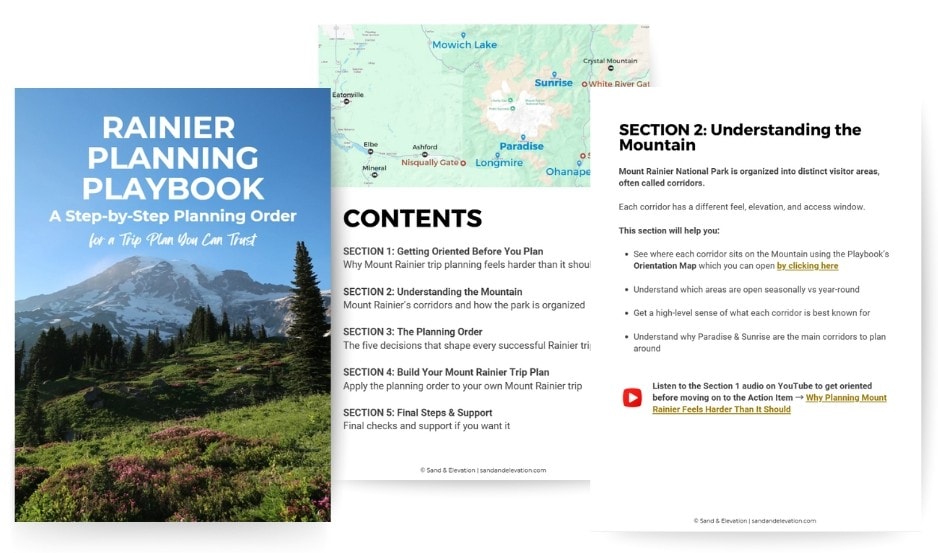
You'll learn how Rainier's visitor areas, entrances, and base towns fit together — so you can build a trip plan that works.
