
Spring in Olympic National Park: Best Places to Visit in March, April & May


Wondering if a trip to Olympic National Park in spring is worth the chance of rain? The answer is yes—as long as you’re prepared.
Fewer crowds give Olympic an intimate feel that many first-time visitors come to appreciate.
I visit Olympic National Park year-round, and I love off-season trips because the park feels alive with change.
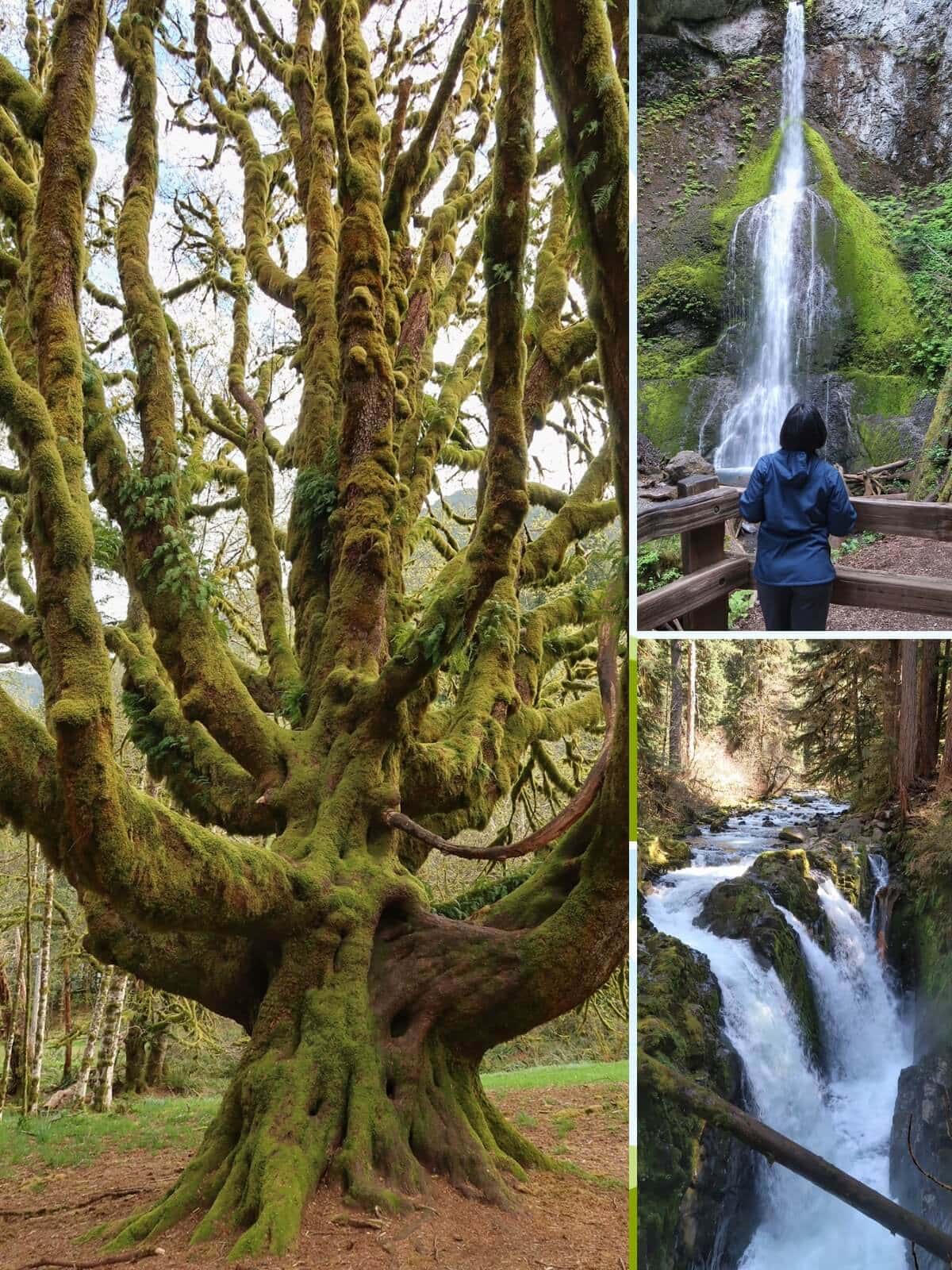
In spring, forest floors are saturated and untamed, moss glows, and waterfalls surge with snowmelt. Budding leaves and trillium blooms signal that the hiking season is just beginning.
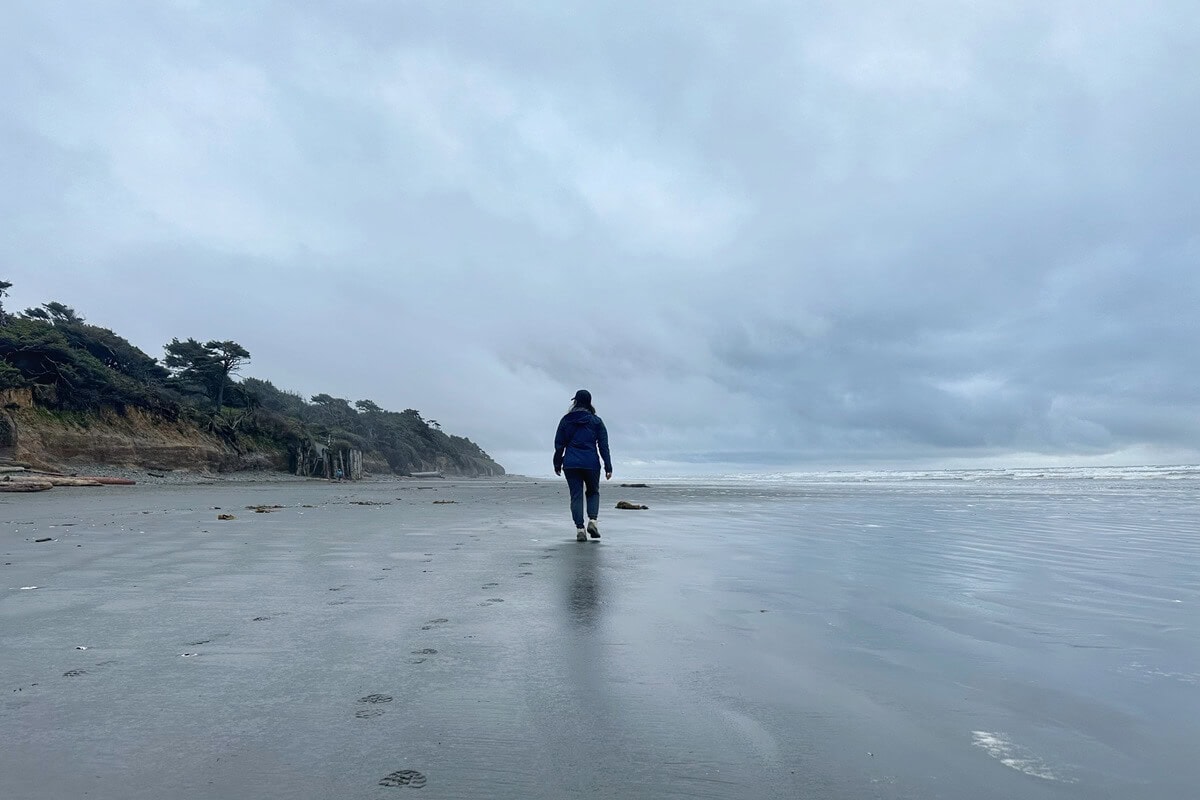
Along the coast, the contrast of dense and light gray skies stretching over crashing waves and forested cliffs is more striking than a walk on the beach under summer sun.
While spring visits require more weather preparedness, we locals know there’s no such thing as bad weather, only bad gear.
➥ Keep reading to learn how I build flexible trips to Olympic National Park in March, April, or May—including where to go, how and when to pivot based on the weather, a detailed map of easy hikes and top spring attractions, and seasonal tips.
Olympic National Park in Spring: Pros & Cons
Spring is a season of transition. Early spring feels like winter, while late spring feels like summer.
One year, I hiked Mount Storm King on the first and third weekends in March. Early on, I turned around on a snow-covered trail, while two weeks later, I sat at the summit with fellow hikers wearing t-shirts under a blue-sky day.
Here’s a list of seasonal considerations to help you plan your Olympic National Park trip.
Pros
- Fewer people. Popular spots like Hurricane Ridge and the Hoh Rainforest are less busy than peak summer season.
- Waterfalls at their fullest. Snowmelt fuels dramatic flows more powerful than in summer or fall. I’ve visited Sol Duc Falls in spring and fall, and the difference is remarkable.
- Fresh spring foliage. New growth and budding leaves get me so excited for the hiking season to come.
- Seasonal blooms. Skunk cabbage in wetlands and trillium along forest trails bloom only in spring. I was stunned on the Ancient Groves Nature Trail in April when I came across a bog with over a hundred skunk cabbage in bloom.
- Better light for photography. Overcast skies bring out rich greens and textures.
- Lower accommodation pricing. Shoulder-season rates make stays more affordable. I take advantage of off-season BOGO deals at Lake Quinault Lodge.
Want to skip the driving and planning?
Book a guided tour so you can simply enjoy your trip without worrying about driving, parking, or logistics.
Cons
- Unpredictable weather. Rain is common, and conditions can shift quickly. At La Push one May, we wore winter jackets on Friday, but by Sunday, we saw a group of shirtless teenagers playing frisbee on the beach.
- Road closures or delays. Winter storms and heavy rain can cause temporary washouts and erosion. Always check park alerts and conditions before your visit.
- Lingering winter at higher elevations. Snow and ice can persist well into spring, especially in March.
- Limited access to alpine areas. Some Hurricane Ridge roads and trails remain closed until early summer.
- Mud on trails. Lowland hikes can be wet and messy, especially after sustained rain. I always plan for mud.
Here’s a short video to help you visualize why spring is an excellent time to visit Olympic.

Places to Visit in Olympic National Park in March, April & May
Most first-time visitors start their trip based out of Port Angeles, then drive west on Highway 101 towards the coast.
Hurricane Ridge (Weather & Timing Dependent)
- Heart O’ the Hills Entrance Station is 16 min from downtown Port Angeles
There’s nothing quite like seeing the Olympic Mountains blanketed in snow to remind me how special Hurricane Ridge is, especially when clouds move through the valleys below.
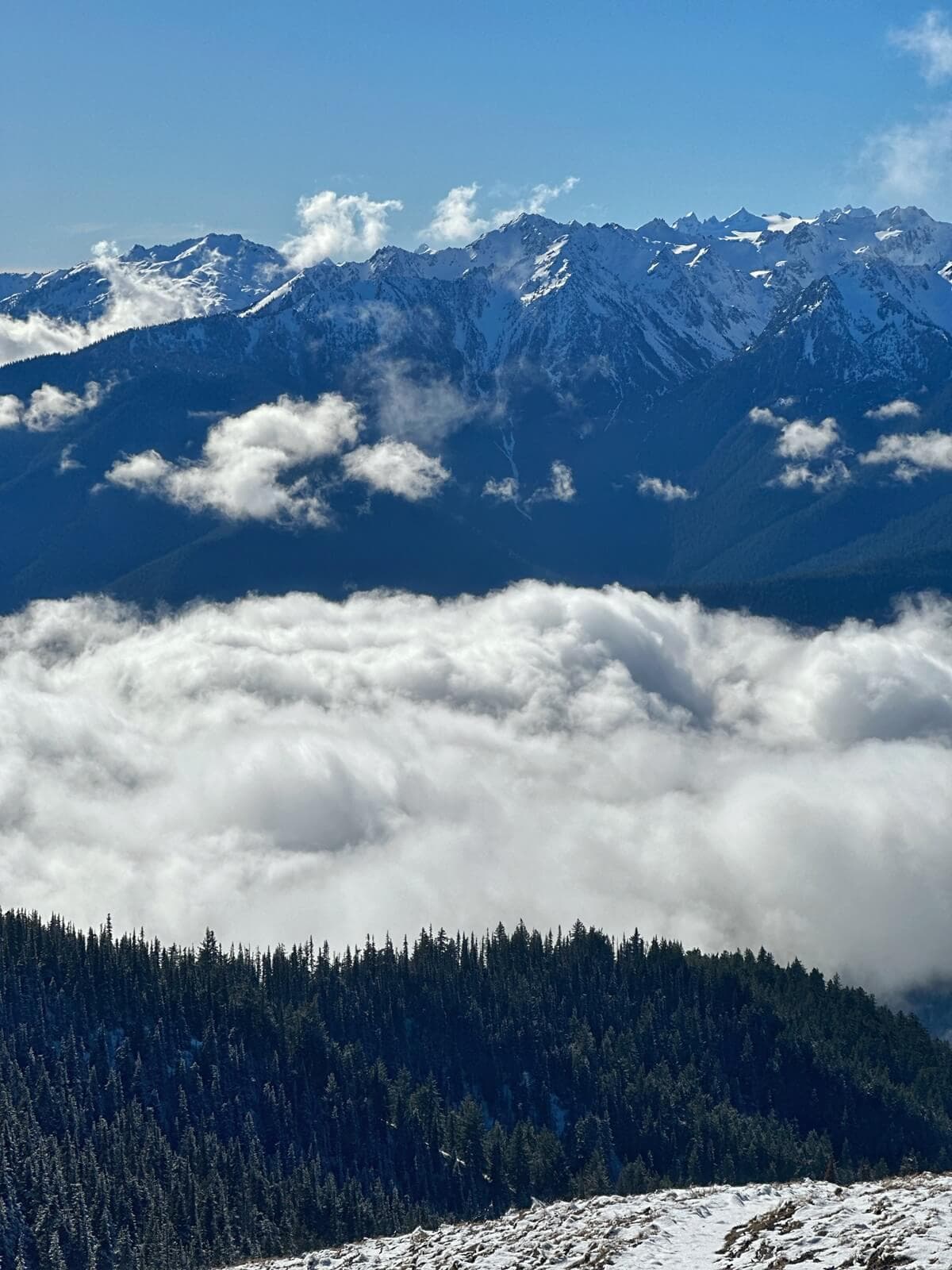
Spring visits here are all about timing. The park’s winter schedule typically lasts through the end of March, and it can feel like winter through April. Snow remains on trails into late May and even early June.
Because of this, I’ve learned that it’s best to approach visiting Hurricane Ridge in spring as a flexible option rather than a fixed plan.
I check the webcam, forecast, and road status in the days leading up to my trip and again the morning of, knowing I can easily pivot to Lake Angeles, Salt Creek Recreation Area, or Lake Crescent if clouds roll in or the road is closed.
TRAVEL TIP: The park requires tire chains through April 1st, or you can skip driving altogether and take the Hurricane Ridge winter shuttle, which generally runs on weekends until the end of March.
Need help with trip planning?
I offer custom itinerary planning services to help you save hours (or days!) of research and plan your trip with confidence.
Lake Crescent
- 30 min from downtown Port Angeles
What makes Lake Crescent shine in spring is how easy it is to experience—even when the weather is mixed.
Short, mostly flat trails start just steps from parking areas and Lake Crescent Lodge, making it an accessible destination with diverse ecosystems to see.
After a day in Port Angeles, I pulled into the Moments in Time Trail parking area next to the lodge and had the trail entirely to myself in early March. The forest here feels similar to Olympic’s rainforests, and it’s right on the shoreline.
The forest floor was messy and wild in a way you don’t see in summer, and thick coats of moss glowed bright green on alder trunks after months of rain.
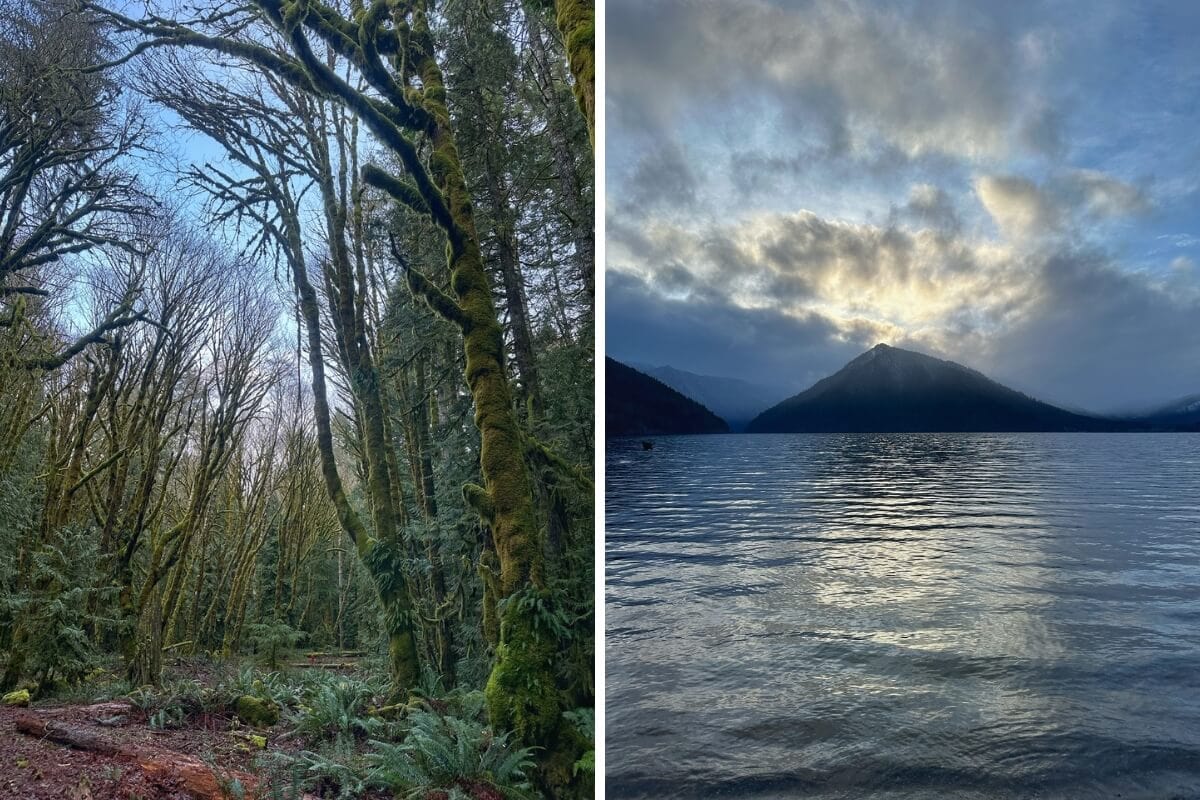
March brought moody skies and low clouds drifting across the lake and surrounding mountains, but that soft, overcast light made the scenery feel especially intimate.
That evening, I caught a spectacular sunset on East Beach just 11 minutes away.
Sol Duc Valley
- 40 min from Lake Crescent Lodge
Spring is arguably the best time to visit the Sol Duc Valley because of the snowmelt that powers the Sol Duc River and seasonal ephemeral blooms.
You can see a lot here without committing to long hikes, thanks to the many scenic stops and pullouts along the road.
One chilly April day, I had an incredible time exploring waterfalls and trails in the valley. Trillium was starting to bloom on the Sol Duc Falls Trail, where I caught views of three waterfalls on one short hike.
But my favorite moment came on the Ancient Groves Nature Trail, where bright skunk cabbage dotted a bog that I’m guessing shrinks or disappears altogether in later seasons.
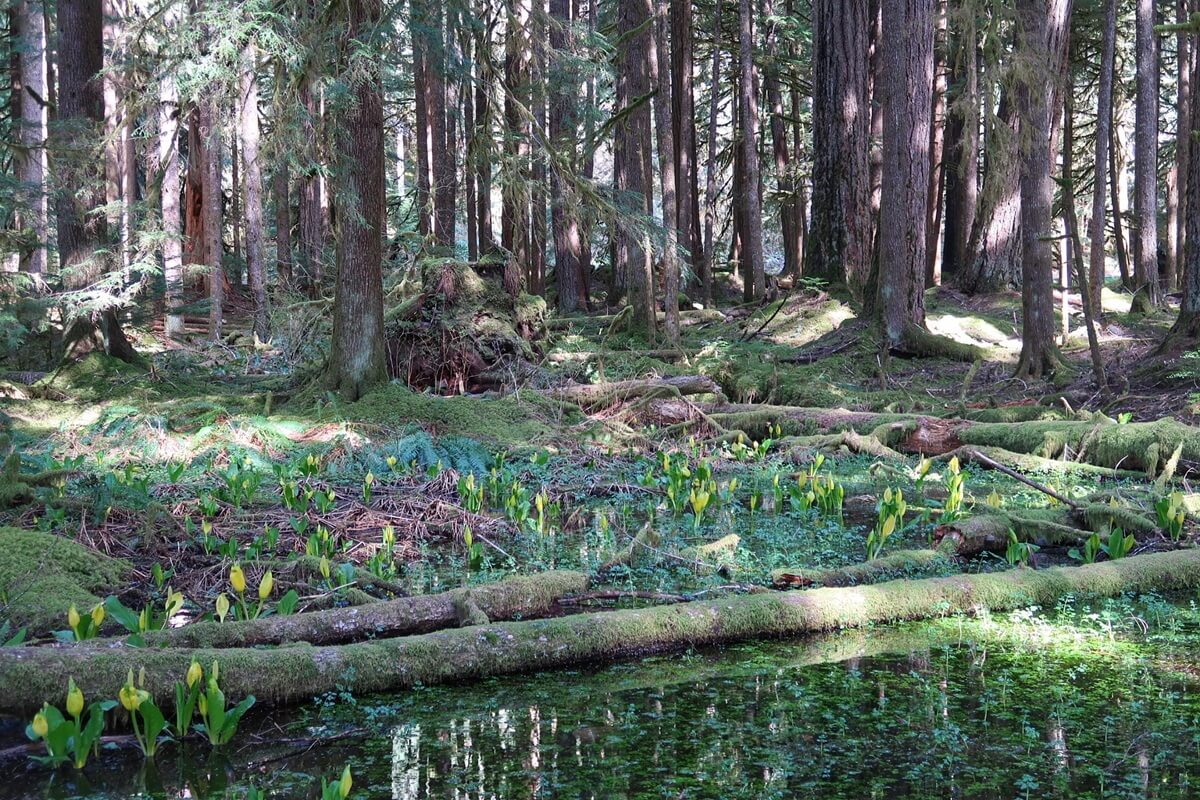
The bursts of yellow color stood out against towering trees and moss-covered ground, making the forest feel especially alive.
I ended the day along the banks of the Sol Duc River, which you can access with a short walk from the Salmon Cascades parking area.
Olympic Beaches in Spring
Visiting Olympic beaches in spring means fewer crowds to contend with and easier parking. It also means a chance to experience the ruggedness of the Pacific Coast under dramatic skies.
I prefer walking our beaches on gray days because you can really feel how wild the coast is.
That said, spring conditions demand awareness. In stormy weather, I think twice before heading out. Sneaker waves have caught people off guard. Even in good weather, I don’t turn my back on the ocean.
Rather than trying to visit every beach, most visitors choose one or two stops based on weather, tides, and where they’re staying.
TRAVEL TIP: Forks is the best base for exploring the coast and the Hoh Rainforest.
La Push Beaches
- 20 min from Forks
My favorite of all the beaches in Olympic National Park is Second Beach in La Push.
I had one of the best beach experiences of my life walking the entire length of Second Beach in late May. Colby, my husband, and I timed it just right, arriving at low tide, which gave us access to the intimate beach tucked into the north end.
Since we were staying at Quileute Oceanside Resort right on First Beach, we explored Third Beach the next day, where we saw a narrow, plunging waterfall on the cliff next to the ocean.
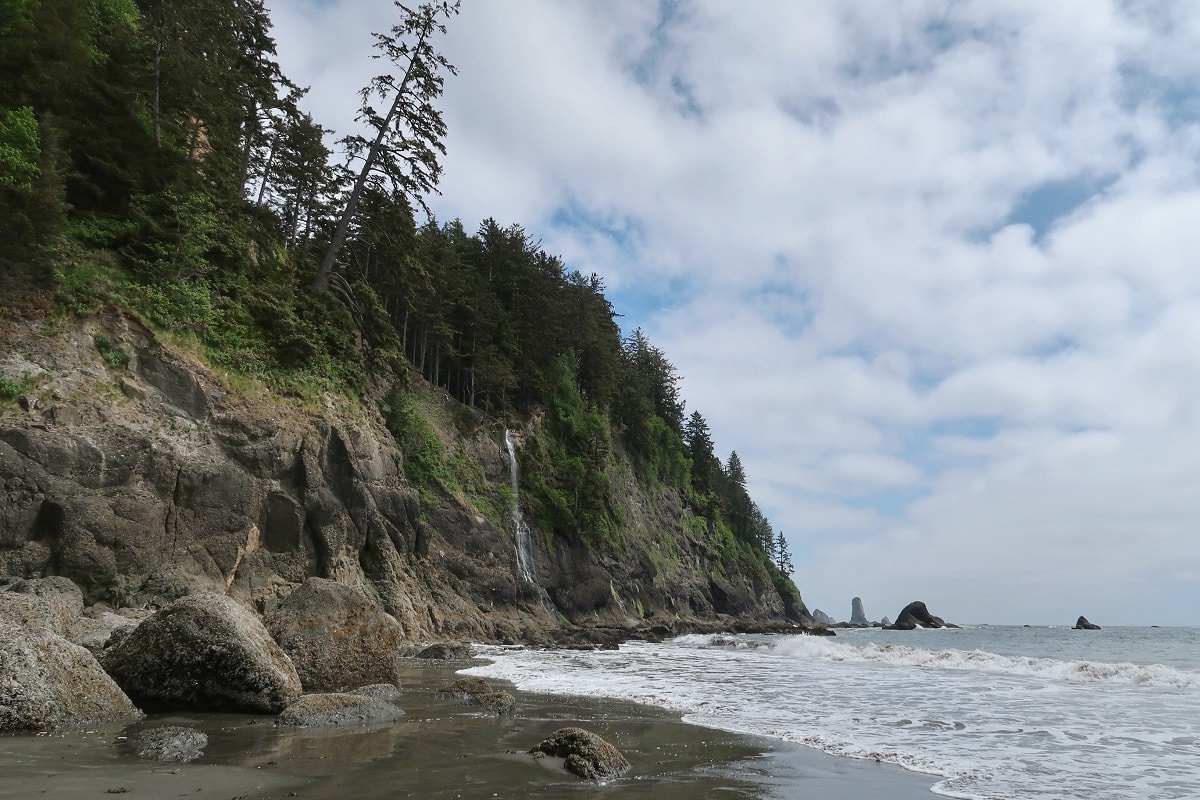
Both Second and Third beaches require a short hike, with steeper sections, to reach the beach. First Beach is easily accessible from the resort or the gravel parking lot.
Ruby Beach
- 40 min from Forks
On the late March day that we explored Ruby Beach, it was so warm I saw visitors in shorts. Cedar Creek feeds into the Pacific Ocean here, and because the tide wasn’t out, I wished I had brought my Tevas so I could cross it.
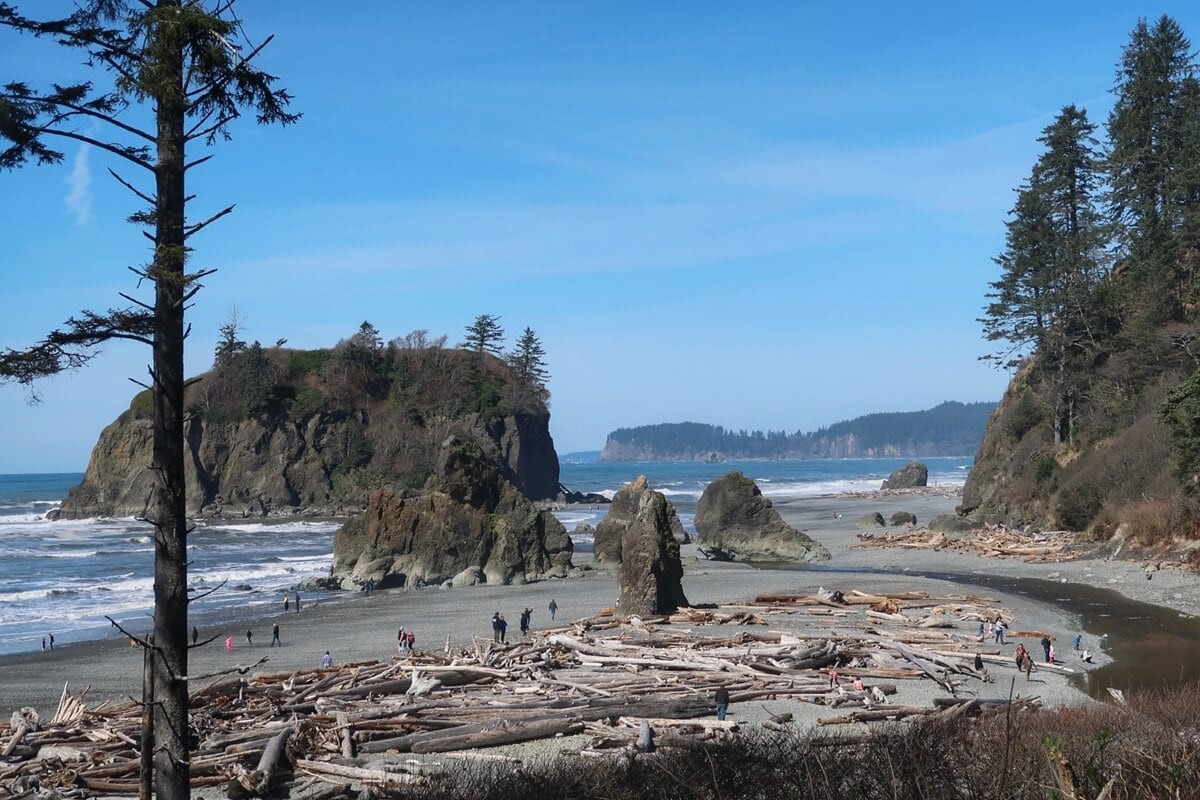
The short paved trail from the parking lot makes access easy.
Kalaloch Beach
- 50 min from Forks
One April morning after a night at Kalaloch Lodge, I had Kalaloch Beach 4 almost all to myself. I passed only a photographer on my way to the rocks at the northern end, where you’ll find some of the best tidepools on the Olympic Peninsula.
It was windy, but the tide was out, and I saw orange and purple seastars and bright green anemones.
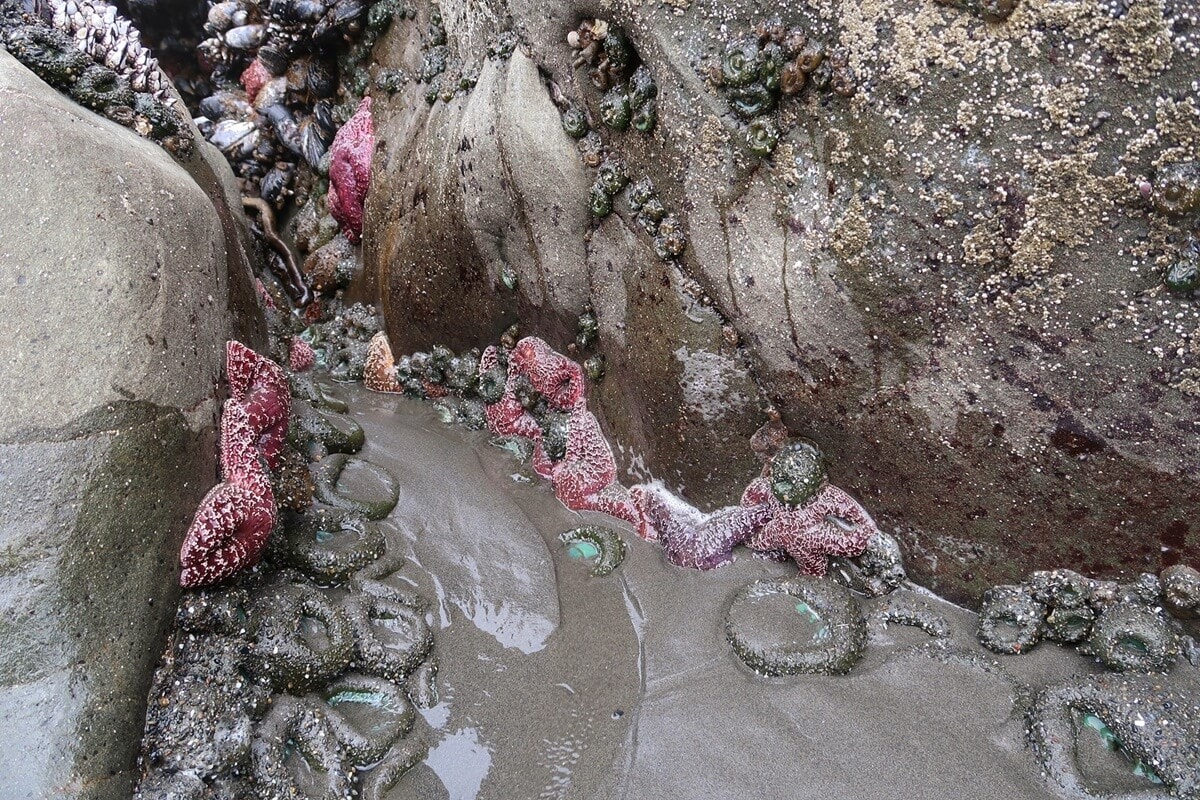
The hike to the beach is more of a walk, but you’ll navigate over rocks at the very end.
Hoh Rainforest
- 55 min from Forks
The Hoh Rainforest in spring is magical. The creeks are full from melting snow, and the maple trees unfurl new leaves with a color that’s so fresh and vivid.
Spring rain is part of the season’s experience, but you’ll get some shelter from it here as you walk the short, easy loop trails that wind beneath a canopy of ancient trees.
During a late May visit, we were captivated by hanging witch-beard moss and lichen, and the forest echoed with Pacific wren birdsong as we hiked.

Mud was minimal and easy to avoid by stepping along the edges of the Hall of Mosses and Spruce Nature Trail.
While we waited about 20 minutes to enter on a holiday weekend, visiting the Hoh Rainforest in spring generally means shorter entrance lines than peak summer season, when crowds are at their heaviest.
Quinault Rainforest
- 45 min from Kalaloch Beach
If you love waterfalls, head to the Quinault Rainforest. The number of creeks, streams, and waterfalls Colby and I encountered on the Quinault Loop Trail in late March stunned us.
And many Quinault highlights are easily reached by a short walk.
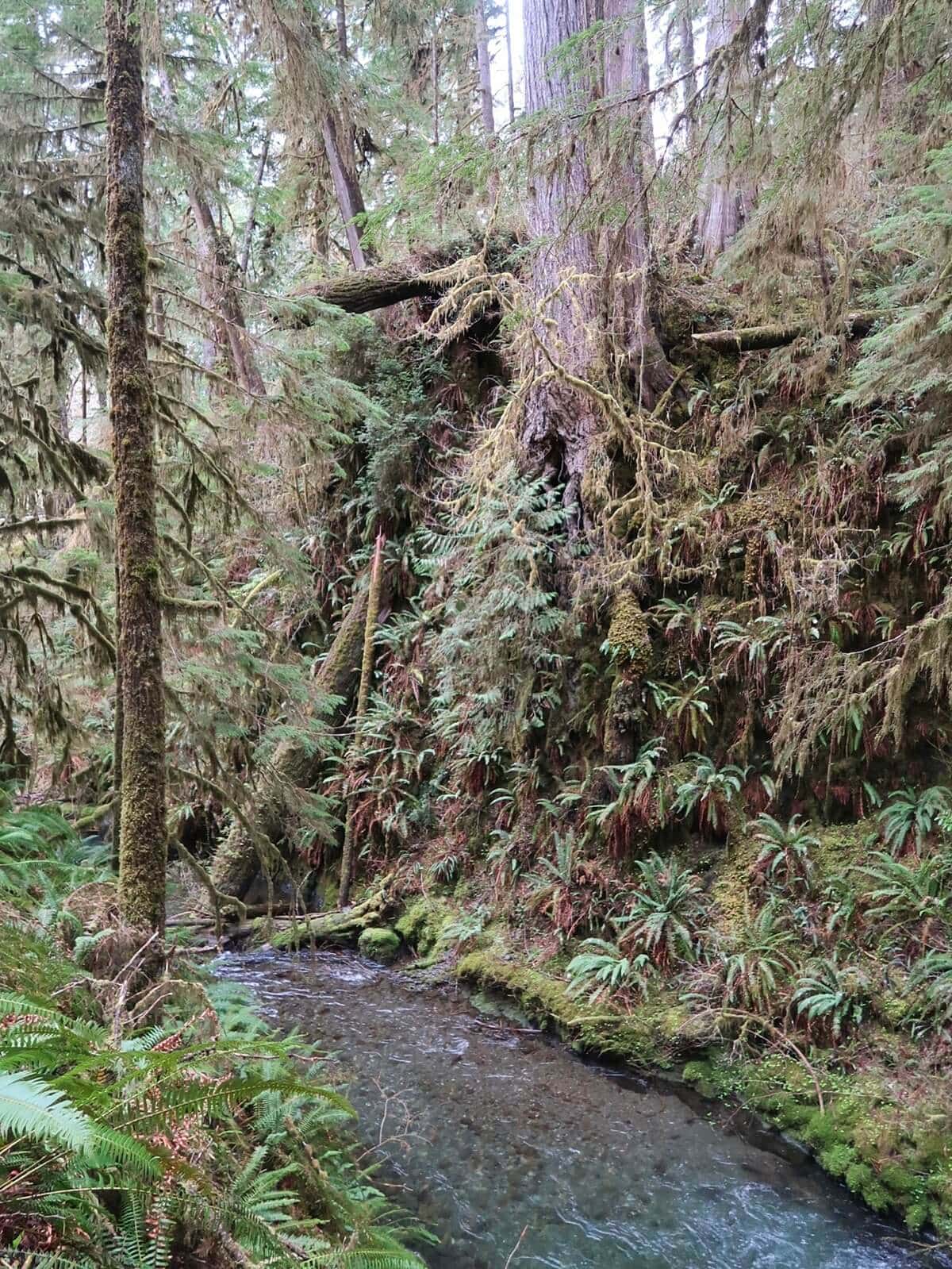
Falls Creek Falls is just a short walk from Lake Quinault Lodge, while Willaby Creek Falls is steps from the Quinault Rainforest Trail’s parking area. Merriman Falls, just a 10 minute drive from the lodge, is accessible from the road.
When I plan trips with clients, some ask if Lake Quinault is too remote to add to their itinerary. But it’s only about a 45-minute drive from Kalaloch Beach, making it a natural final stop to complete the Olympic Loop if you started in Port Angeles.
It’s also worth mentioning that Lake Quinault Lodge is my favorite place to stay on the entire Olympic Peninsula, especially when we can take advantage of off-season pricing.
Best Easy Spring Hikes in Olympic National Park
I’ve hiked every trail on this list and chose them because they’re lower elevation, relatively short, yet rewarding.
You can hike them even if it’s rainy, as long as you’re prepared with a waterproof jacket and waterproof boots or shoes.
You’ll find all of these trails on the map below to help you group stops efficiently as you move through the park.
Short, paved or roadside walks
These quick, accessible trails are great for a light stroll or to stretch your legs between scenic drives.
- Madison Falls (Elwha Valley)
- Moments in Time Trail (Lake Crescent)
Waterfall trails that shine in spring
Spring snowmelt makes these waterfalls especially dramatic from March to May.
- Marymere Falls Trail (Lake Crescent)
- Sol Duc Falls Trail (Sol Duc Valley)
- Quinault Rainforest Nature Trail (Quinault Valley)
Rainforest loops and nature trails
These trails feel primeval in spring. Expect birdsong, vivid moss, and the brightest green imaginable.
- Hall of Mosses Trail (Hoh Rainforest)
- Spruce Nature Trail (Hoh Rainforest)
- Ancient Groves Nature Trail (Sol Duc Valley)
- Kestner Homestead Trail (Quinault Valley)
- Maple Glade Nature Trail (Quinault Valley)
Weather-dependent alpine option
When the weather cooperates, this trail offers one of the best panoramic views in the park.
- Hurricane Hill Trail (Hurricane Ridge)
Spring in Olympic National Park Map
This map highlights my favorite spring hikes, waterfalls, viewpoints, beaches, and scenic stops throughout Olympic National Park—and a few beyond park boundaries.
I built it to help clients see nearby attractions, in case the weather, tides, or road conditions require them to pivot.
What to Expect from Spring Weather Month to Month
Here’s what to expect month-by-month so you can pack smart and dress comfortably for likely weather shifts.
March in Olympic National Park
March is a transition month that still feels very much like winter. Winter road closures are often still in place in March.
The Olympic Mountains remain covered in snow, and freezing temperatures can happen at lower elevations, too. I pulled over many times on the drive from Emerald Valley Inn to Lake Crescent to photograph the surrounding evergreen forests, with a light dusting of snow.
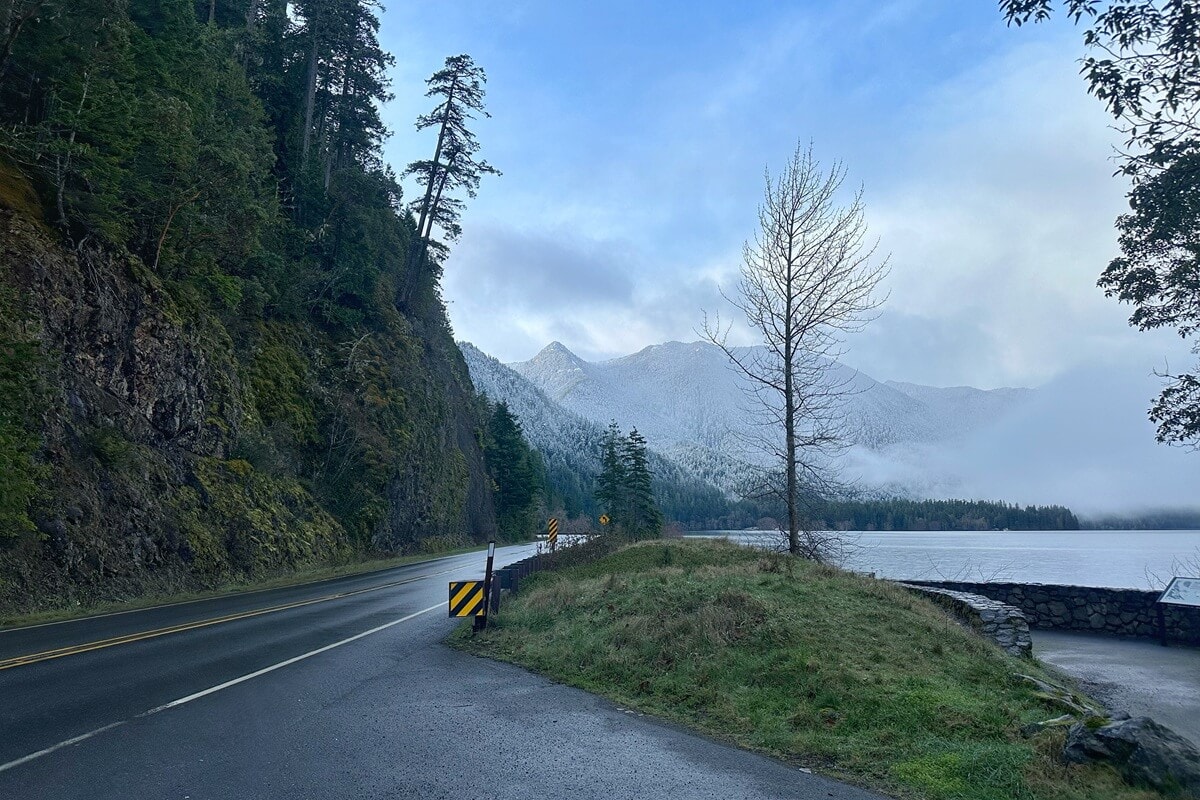
Cool temperatures and rain are the norm, but we also get sunny days. This is why I dress in layers and bring my waterproof jacket and pants on every outing.
I wear footwear that can handle wet trails, and even pack microspikes if I’m headed to higher elevations.
April in Olympic National Park
April is when it really starts to feel like spring. The rain continues throughout April, but it’s usually not as persistent or heavy as in winter.
Snow lingers in the alpine regions, but the lowlands become noticeably milder. We still get snaps of wind and cold, but we can also get periods of unusually dry and warm weather. But for us, warm in April is in the high-50s or low-60s.
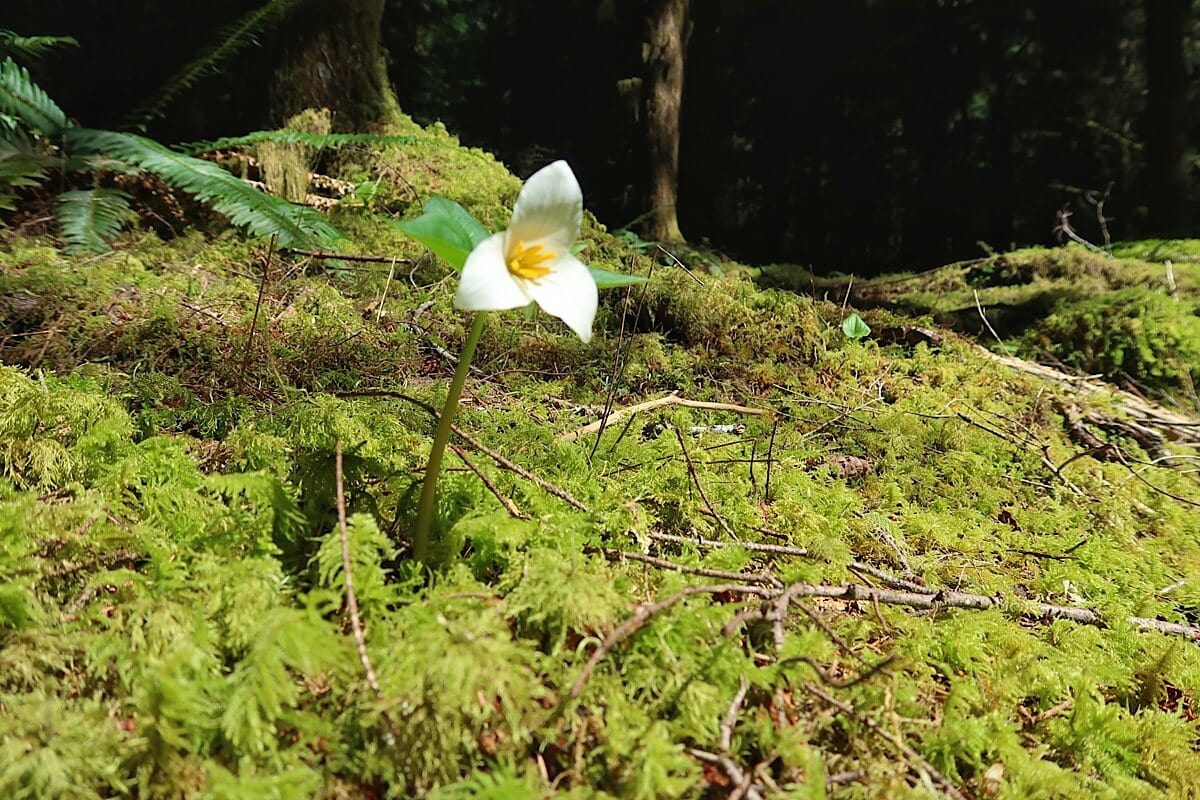
Waterfalls and rivers run high from snowmelt, and trails are generally slick.
This is the month when I trade my beanie for a sunhat and wear a thinner baselayer, but my footwear remains the same as in March.
May in Olympic National Park
May is fickle. We can get stretches of sunny days, stretches of gray days, or days with sun, rain, wind, and sun again. Actually every month of spring is like that here!
What’s nice is that the extra daylight is noticeable, and temperatures are milder. Higher-elevation trails become more accessible, typically at the end of the month.
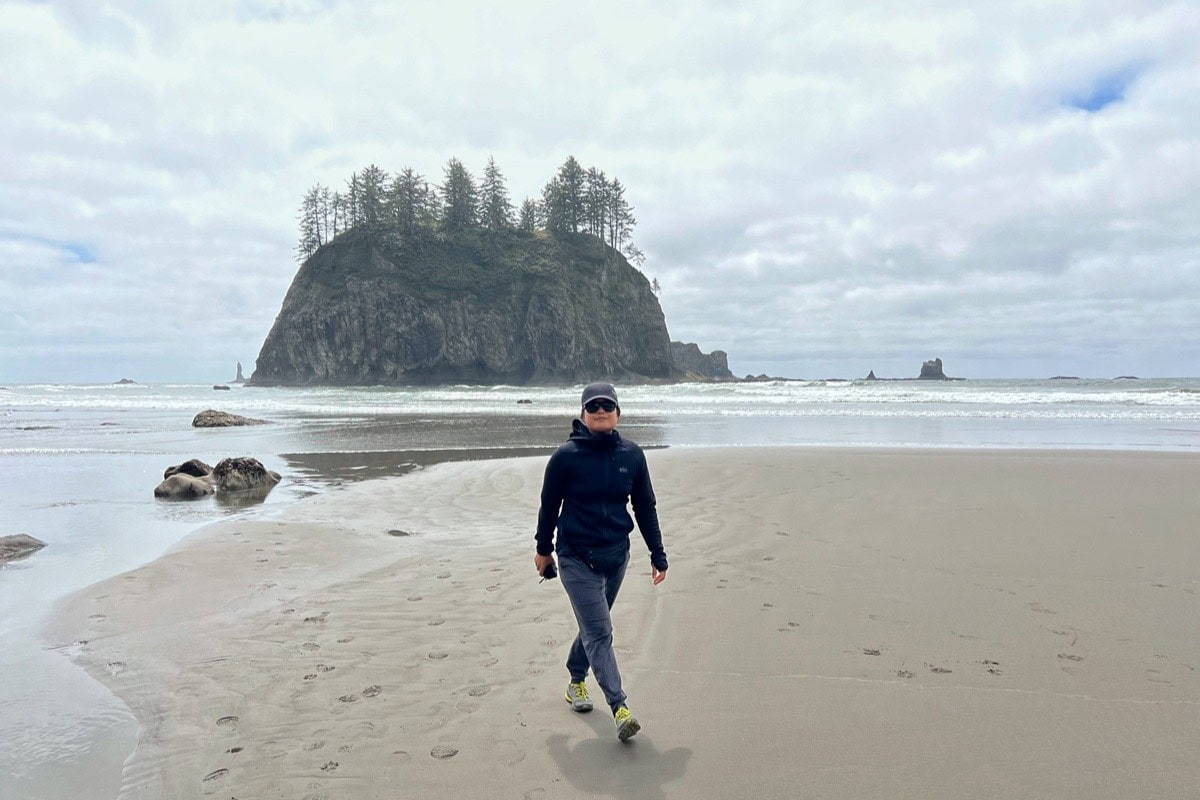
Rain is still possible and likely, but we locals don’t mind it because our trees and shrubs are budding and leafing out with that fresh green color you only get in spring.
I continue to dress in layers that keep me comfortable in both sun and rain.
Ask me anything!
Book a 15-minute call and get your most pressing question answered by a local travel expert.
Tips for Visiting Olympic in the Spring
These tips will help you make the most of your time while staying safe and comfortable.
General Travel & Safety Tips
Book lodging with location in mind, not just amenities.
Spring days are shorter than summer, and weather windows can be brief. Staying close to where you plan to explore gives you more usable time and fewer rushed drives.
Keep one “pivot” destination in your pocket each day.
Have a Plan B ready in case your itinerary doesn’t align with the weather. For one client I planned a trip with, the backup plan for Hurricane Ridge was the drive out to Neah Bay to go see Cape Flattery, where moody weather is a plus.
Time beach walks around tides, not temperature.
Our beaches aren’t for swimming, they’re for exploring. Tide charts matter more than the forecast. Low tide opens up tidepools, sea stacks, and access you wouldn’t get otherwise. When I’m tidepooling, I never pick up or step on marine life.
Check webcams the morning of, not just the night before.
Spring conditions can change overnight, especially at higher elevations. I’ve seen weather on Hurricane Ridge webcams go from clear to socked-in within hours.
Drive the speed limit on Highway 101 and park roads.
Wildlife is more active in the morning, and calves and fawns don’t move predictably. Many accidents happen because drivers speed and assume the road is empty.
Expect muddy trail edges and plan for them.
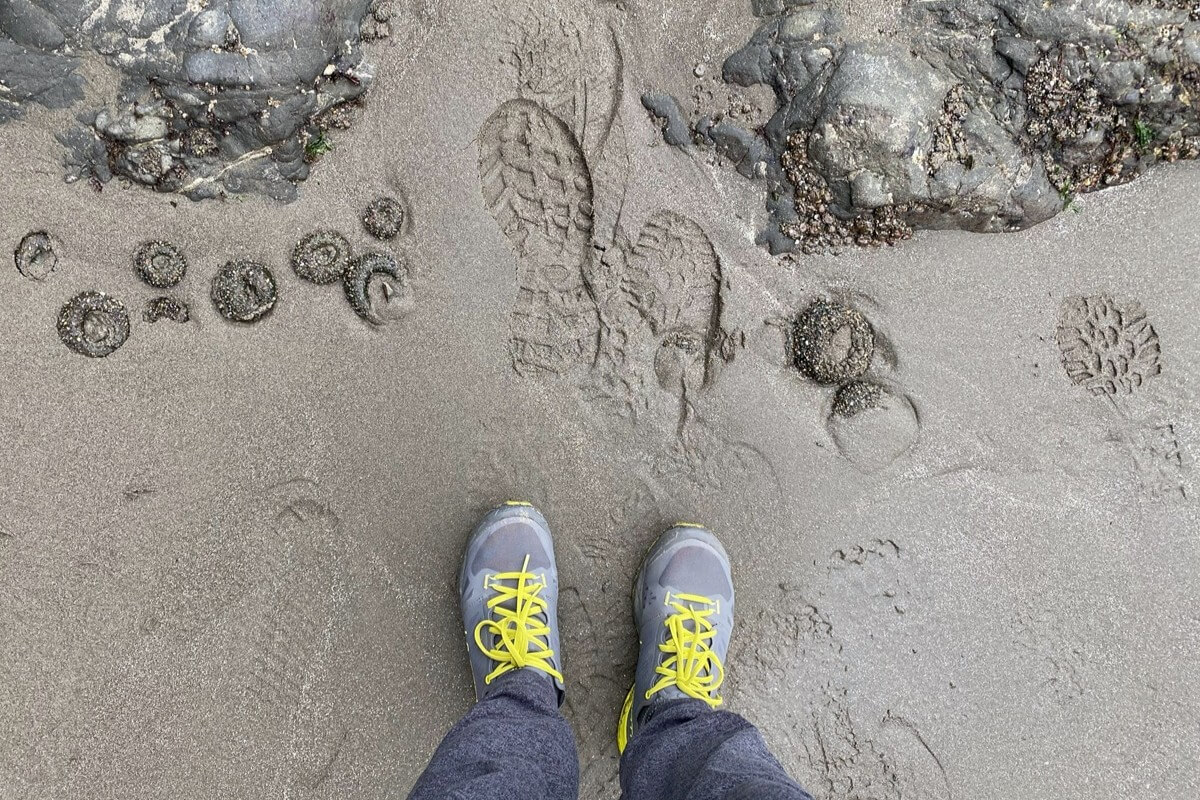
Mud is just part of the season. And some trails, like Shi Shi Beach, are muddy year-round. I wear waterproof footwear all year, but it’s essential during rainier seasons.
Gear & Clothing
Dress in layers so you can adjust quickly.
In spring, it’s common to experience rain, wind, and sun all in one day. I layer my clothes so I can easily add insulation or rain protection when needed, or peel things off when I warm up. My first layer of clothing is always synthetic or wool-based, so it dries quickly.
Pack your Ten Essentials.
Being prepared means you won’t have to turn around if a minor issue arises.
Colby has dealt with low blood sugar and hot spots on his feet, but they’ve never turned into bigger problems because I always carry extra food, water, foot care, and the rest of the Ten Essentials, even on shorter spring hikes.
I’ve also been grateful more than once for having a headlamp when a hike took longer than expected.

Packing a lightweight headlamp means you’re never caught out after dark.
Where to Stay on the Olympic Peninsula
I always recommend staying in more than one place, even on a short three-day trip. This cuts down on long backtracking drives and lets you explore each region more deeply without rushing.
Stay in Port Angeles for northern peninsula attractions like Hurricane Ridge and Lake Crescent, then move west to Forks to explore the coast and the rainforest.
Here are a few places I’ve personally stayed and recommend:
★ Terra Vista Chalet (Port Angeles)
Terra Vista Chalet is tucked away in the Elwha Valley, between Hurricane Ridge and Lake Crescent. I stayed in the Pine Room and loved hearing the sounds of the Elwha River from my balcony.
★ Emerald Valley Inn (Port Angeles)
Emerald Valley Inn is more budget-friendly, but very comfortable and clean. A bonus is that it’s next door to Granny’s Cafe, where I’ve had reliably good burgers and even better homemade blackberry pie.
★ Woodland Inns (Forks)
Woodland Inns is clean, cozy, and conveniently close to restaurants like Pacific Pizza. Our cabin was the perfect base for getting up early and driving to the Hoh Rainforest to beat the crowds.
Ready to Book Your Spring Trip to Olympic?
If you’d like local advice tailored to spring’s shifting weather, book a call with me and we can plan a custom trip for you and your group.
Prefer to DIY? I have resources for that, too:
- Here’s my 2-day Olympic itinerary – a scenic, low-stress route
- Here’s my full list of where to stay on the Olympic Peninsula – my top lodging picks
RELATED TRIP PLANNING POSTS:
➥ Plan Your Perfect Trip to Olympic National Park (Start Here!)
➥ 7 BEST Towns Near Olympic National Park Worth Visiting!
➥ 21 Places To Stay Near Olympic National Park (By a Local!)
➥ 10 BEST Summer Day Hikes on the Olympic Peninsula
➥ 13 BEST Beaches on the Olympic Peninsula
➥ 2 Day Olympic National Park Itinerary (Easy & Efficient!)
➥ Olympic National Park Day Trip (Best 1-Day Itineraries!)
➥ What to Pack for Olympic National Park (All Year!)
➥ Best Shoes for Olympic National Park Trails, Towns & Beaches
➥ Olympic National Park Visitor Center: 7 Reasons to Stop
SEASONAL TRAVEL POSTS:
➥ Fall in Olympic National Park (11 Best Things to Do!)
➥ Winter in Olympic National Park: What’s Open + 7 Best Activities
➥ Spring in Olympic National Park: Best Places to Visit in March, April & May

Skip the guesswork, stress, and hours of research—let me help you plan your itinerary!
