
Maple Pass Loop Trail: Why It’s One of WA’s Best Day Hikes

Not long after starting the Maple Pass Loop, I stopped behind two other hikers.
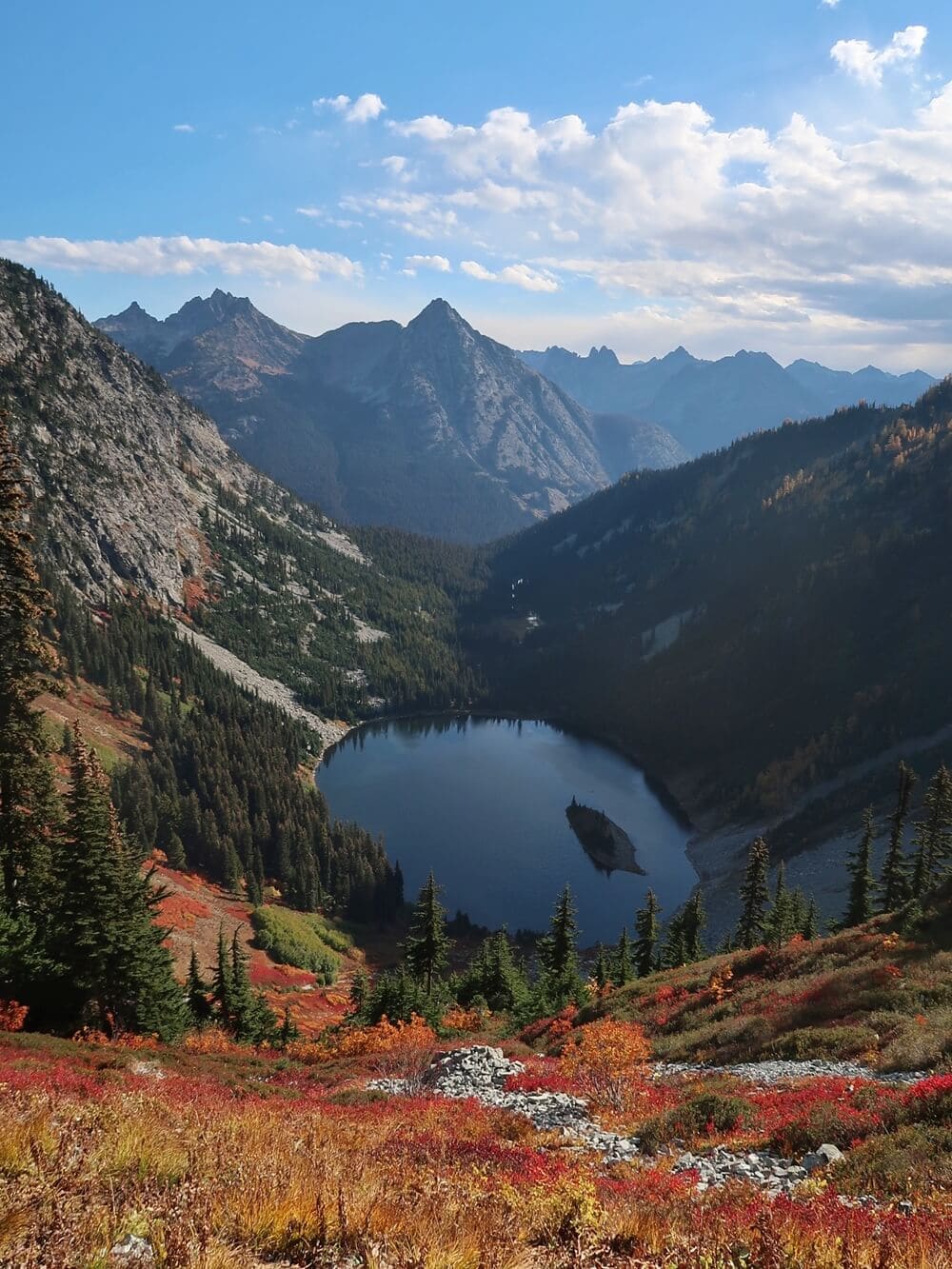
We stood quietly, watching the morning light spill across the fiery fall landscape. One woman broke the silence by saying it looked like the kind of place where dogs reunite with their owners on the rainbow bridge.
I didn’t know it then, but later I’d find myself saying out loud, “Is this Earth?”
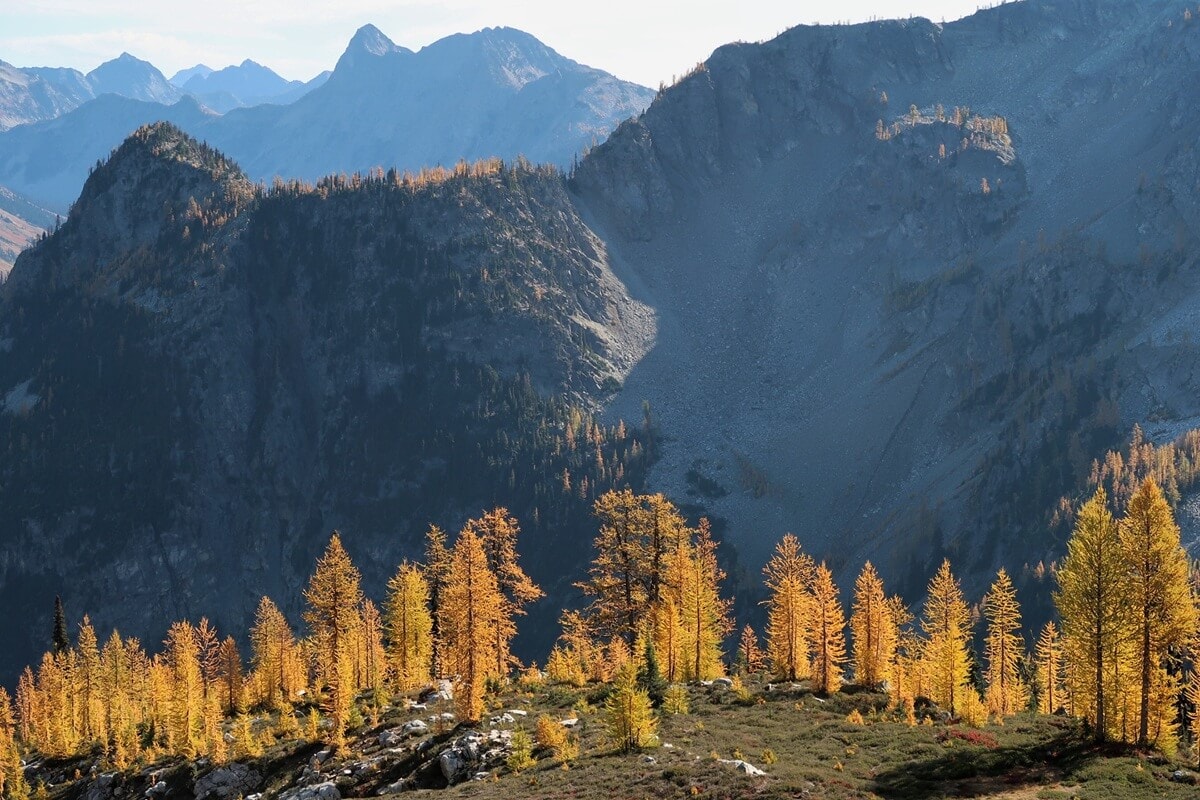
Because it’s one thing to see larches during Washington’s famous “larch madness.” It’s another to catch them glowing beneath blue skies while crimson huckleberry shrubs blanket the mountainsides.
By the time I reached the highest part of the loop, every viewpoint somehow topped the last.
If you’re wondering whether Maple Pass is worth the drive into the North Cascades, my answer is an emphatic yes.
I’ll share whether to hike clockwise or counterclockwise, what you’ll see as you climb higher, what I’d do differently next time, and why this is one of my favorite fall hikes in Washington.
Hiking the Maple Pass Trail: Know Before You Go
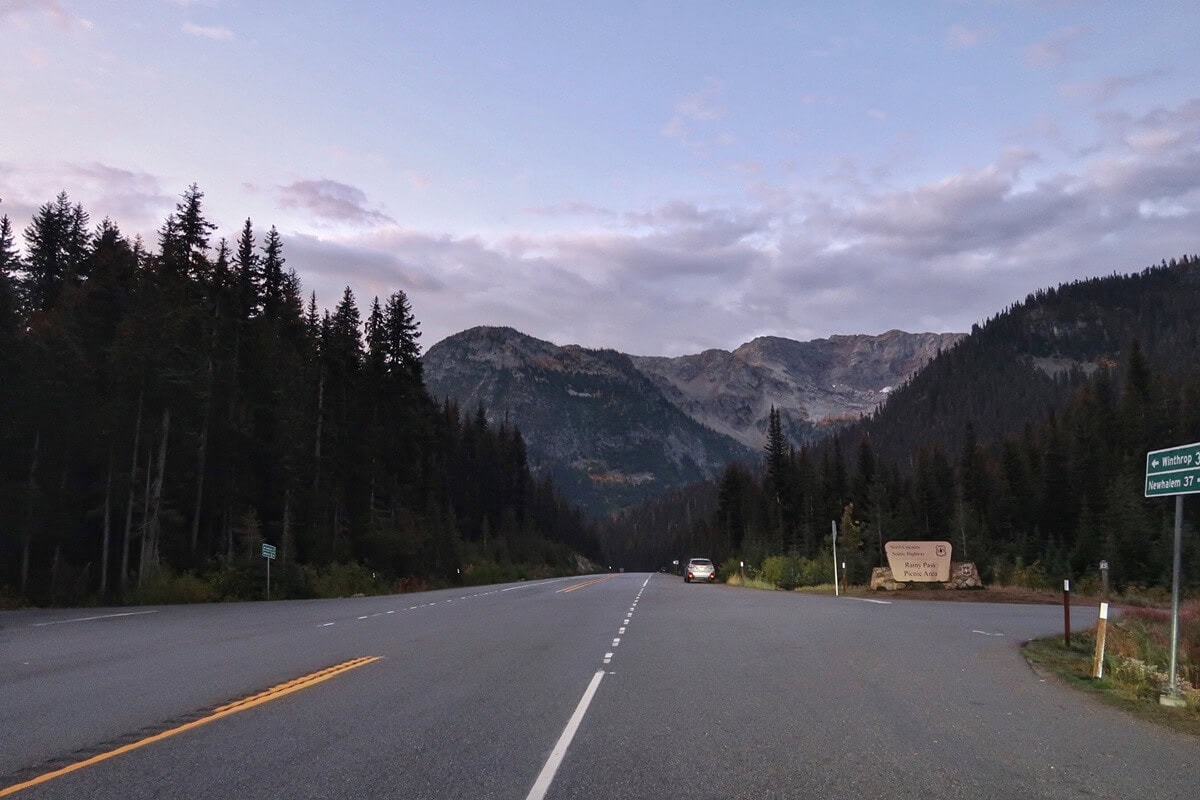
I stayed overnight in Marblemount to get an early start, and driving on the North Cascades Highway (Highway 20) in the dark was a little nerve-wracking.
Some hikers love to speed, and the wind picked up at the edge of Newhalem, where a roadside sign close to the power plant warns drivers to expect high winds.
Early light spread across the landscape and my nerves gave way to excitement once I could finally see the mountains around me.
I even stopped at a few pullouts along the highway to capture the incredible views of the North Cascades before continuing to the trailhead.
- Location: Rainy Pass Trailhead along Highway 20, about 70 minutes east of Marblemount and roughly 40 minutes west of Winthrop.
- Distance: ~7-mile loop
- Elevation gain: ~2,200 feet
- Difficulty: The elevation gain makes it a moderately strenuous hike.
- Time on the trail: My moving time was just under 4 hours, but I spent a little over 5 hours on the trail.
- Best time to visit: I hiked it in early-to-mid October for peak larches and fall color, but you’ll see wildflower-filled meadows in summer.
- Bathroom: The vault toilets were surprisingly clean.
- Permit or Pass Required: National Park Pass & Northwest Forest Pass
Start Early on the Maple Pass Loop Trail
I arrived at the trailhead at 7:05am and began hiking at 7:30am, and for long stretches I had the trail almost to myself.
The forest was quiet except for the high-pitched squeaks of pikas hidden among the rocks, and the morning light was just beginning to reach the mountains above the trees.
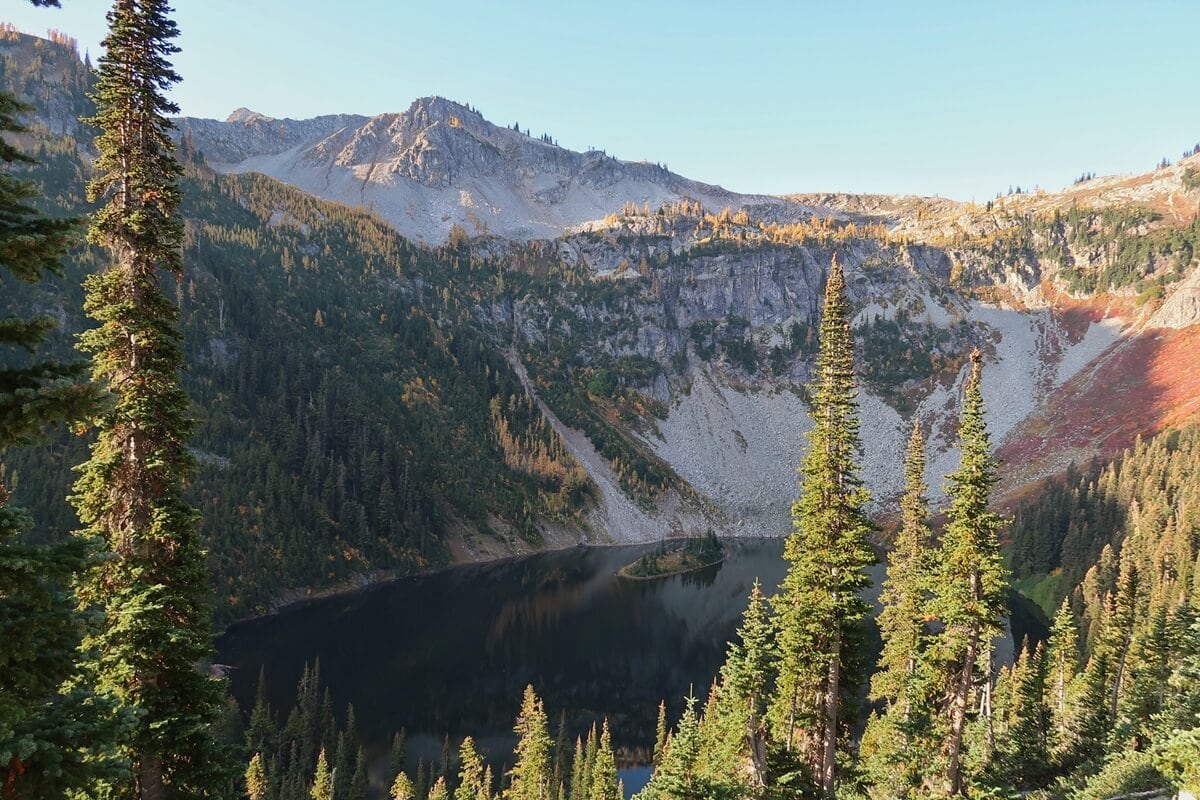
Starting early meant seeing Lake Ann before the wind arrived. The water was almost perfectly still, reflecting the golden larches along the shoreline.
I also had an easier time parking and a much more peaceful experience at the viewpoints before the busiest part of the day.
By 10am, I was regularly passing other hikers, making me even more grateful for the quiet start.
Clockwise vs. Counterclockwise Isn’t as Important as People Say
Before my hike, I read several trip reports insisting that Maple Pass, also known as the Heather-Maple Pass Loop Trail, should only be hiked counterclockwise. Others argued just as strongly for the opposite direction.
I chose to hike clockwise, and I never second-guessed my decision.
In fact, I loved how the scenery unfolded going this way.
The trail began beneath the forest canopy before revealing Lake Ann, then the first stands of sunlit golden larches appeared, and eventually I saw the sweeping alpine views that make this trail so famous.
Even the descent offered views that stopped me in my tracks, pausing to take some of my favorite photos of the day.
Whichever direction you choose, I wouldn’t stress too much about it.
The bigger factors are starting early, giving yourself plenty of time, and stopping often enough to appreciate how dramatically the scenery changes as you make your way around the loop.
Why Hiking Maple Pass Loop in Fall Is So Special
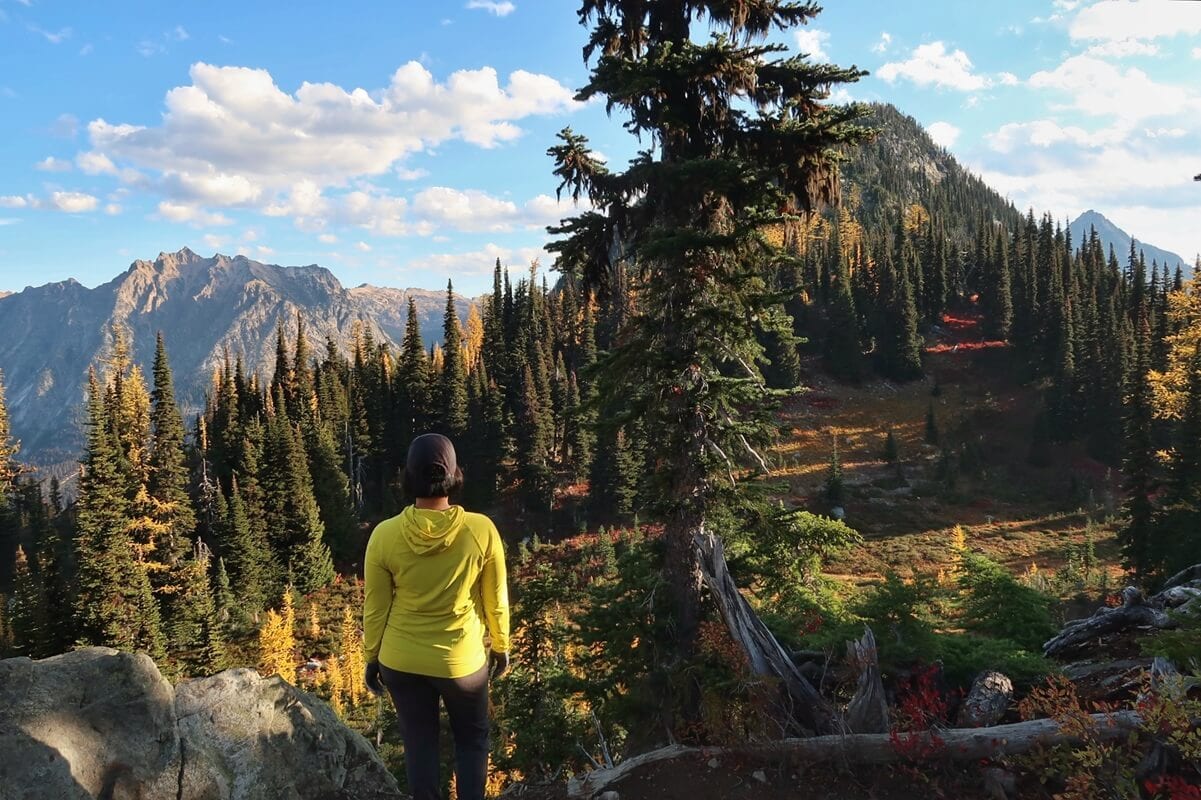
I chose to hike Maple Pass in early-to-mid October because I’d read that it was one of Washington’s best fall hikes to see larches turning yellow-gold.
My timing couldn’t have worked out better. Rain and even early-season snow were expected to move into the region within a couple of days.
One of the most vivid features of the hike was how vibrant the red huckleberry shrubs were across the mountainsides. My guess is that a hard rain would have knocked many of those leaves off, making the landscape look very different.
The golden larches may be what draw people to Maple Pass each fall, but there’s so much more to this hike.
For me, what made this hike unforgettable was seeing glowing larches alongside crimson fall foliage, turquoise lakes, jagged gray peaks, evergreen forests, and distant volcano views.
All of those colors and landscapes came together on a day when the light kept changing, making every section of the trail feel different from the last.
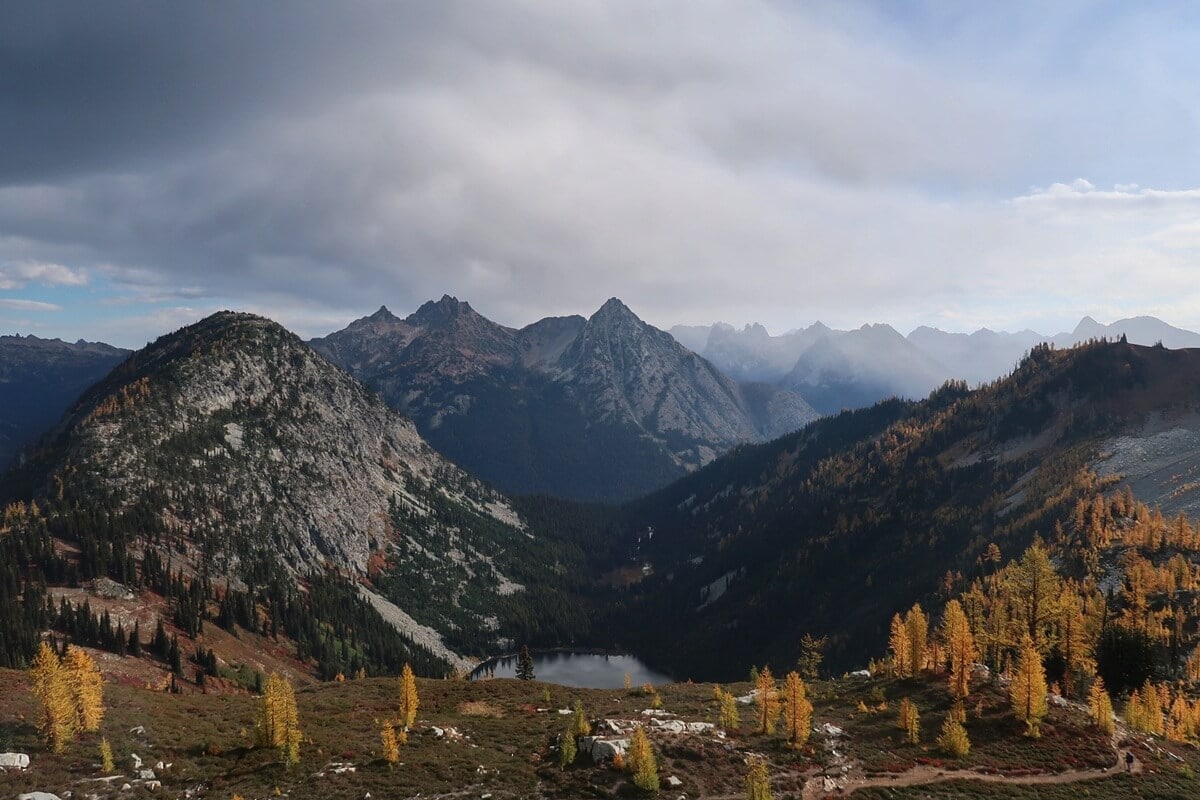
Maple Pass Is More Than a Larch Hike
The first moment I realized how special this hike was came when I saw the reflection of yellow larches in the gem-colored water of Lake Ann.
Maple Pass is about visual contrast, and it’s everywhere.
The farther I hiked, the colors became more dramatic. Jagged gray peaks framed the horizon, while evergreen forests filled the valleys below.
Even the sky became part of the landscape.
One moment it was a clear blue with the moon still hanging overhead. Later, dramatic clouds rolled through, changing the light.
It made the golden larches seem to glow even brighter against the cool tones of what felt like a landscape you’d see on the moon.
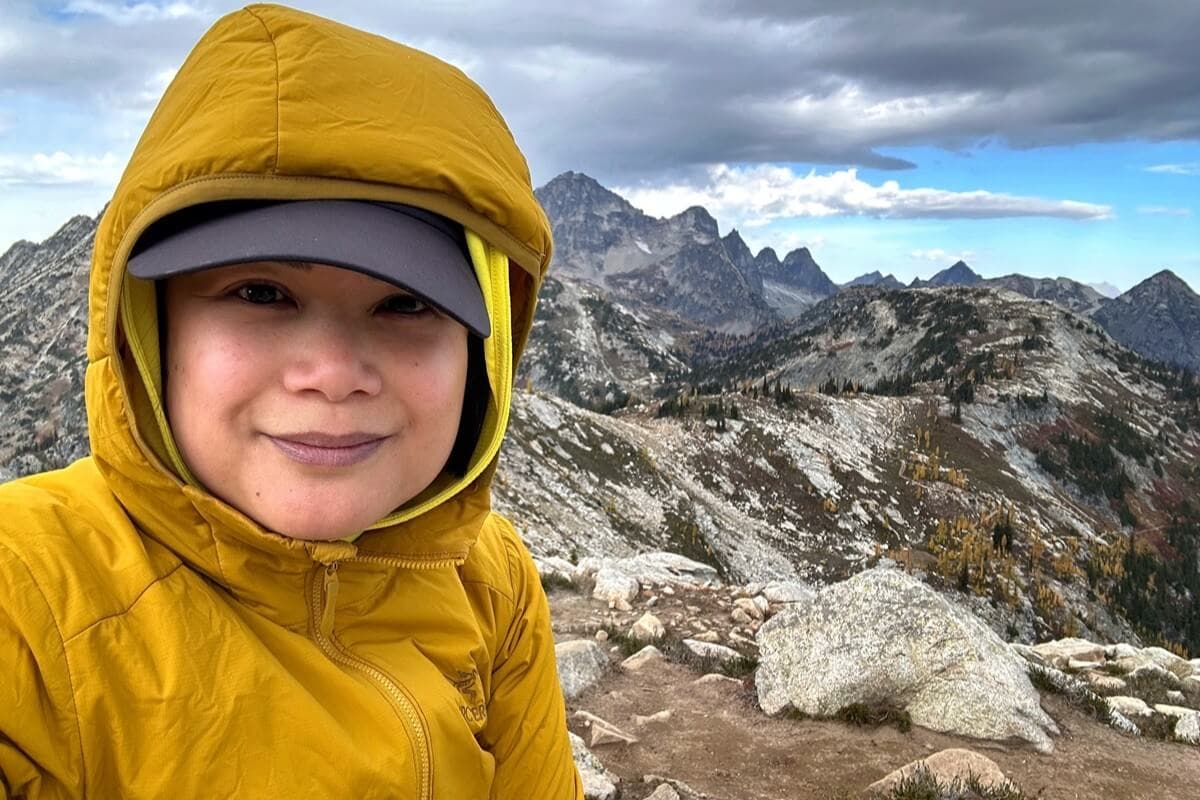
Maple Pass Gets Better the Higher You Climb
Another early wow moment was when I saw the sun finally hit the larches, making them pop.
As I continued climbing through the larch-lined trail, the wind whistled and was fierce at times, so I was glad I wore my softshell jacket and had my puffy and rain jacket in my pack.
The mountain views just kept getting better the higher I climbed.
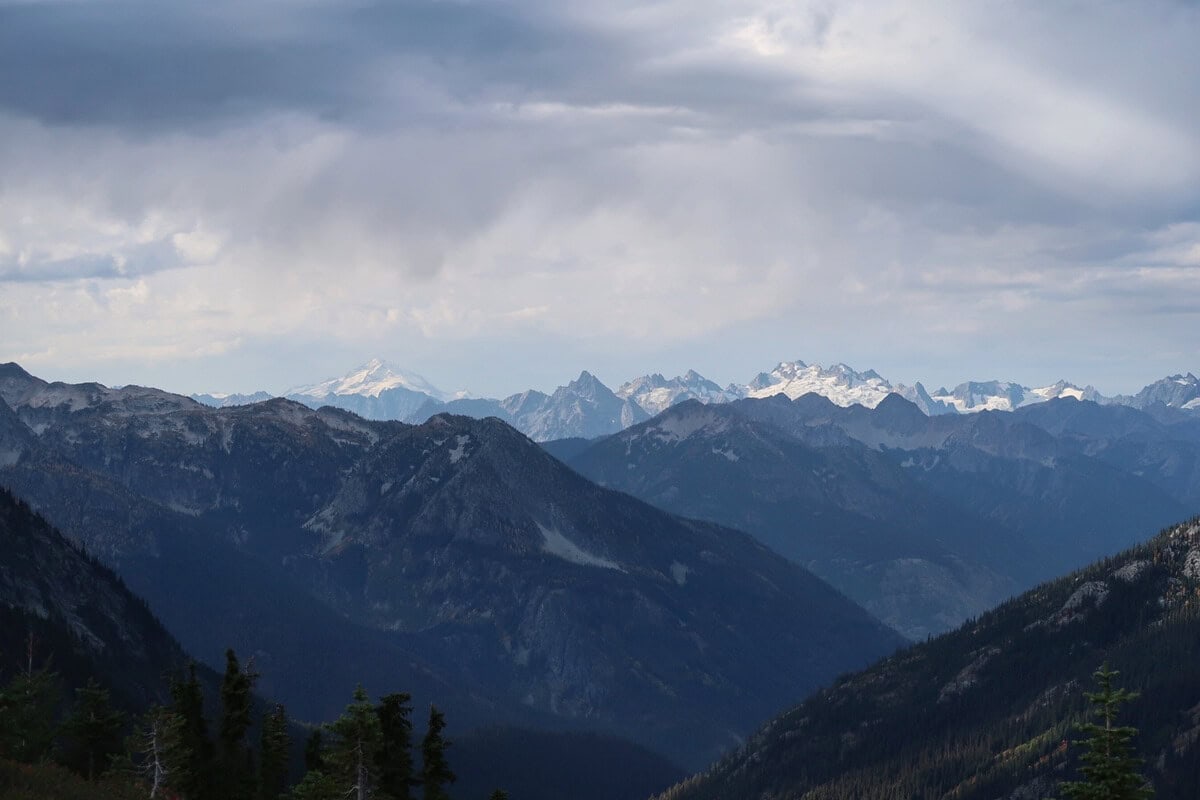
Much of the trail between Heather Pass and Maple Pass follows an open ridgeline, where panoramic views stretch in nearly every direction.
Glacier Peak stood so regally in the distance, and on the clearest stretches, I could even make out other Cascade volcanoes.
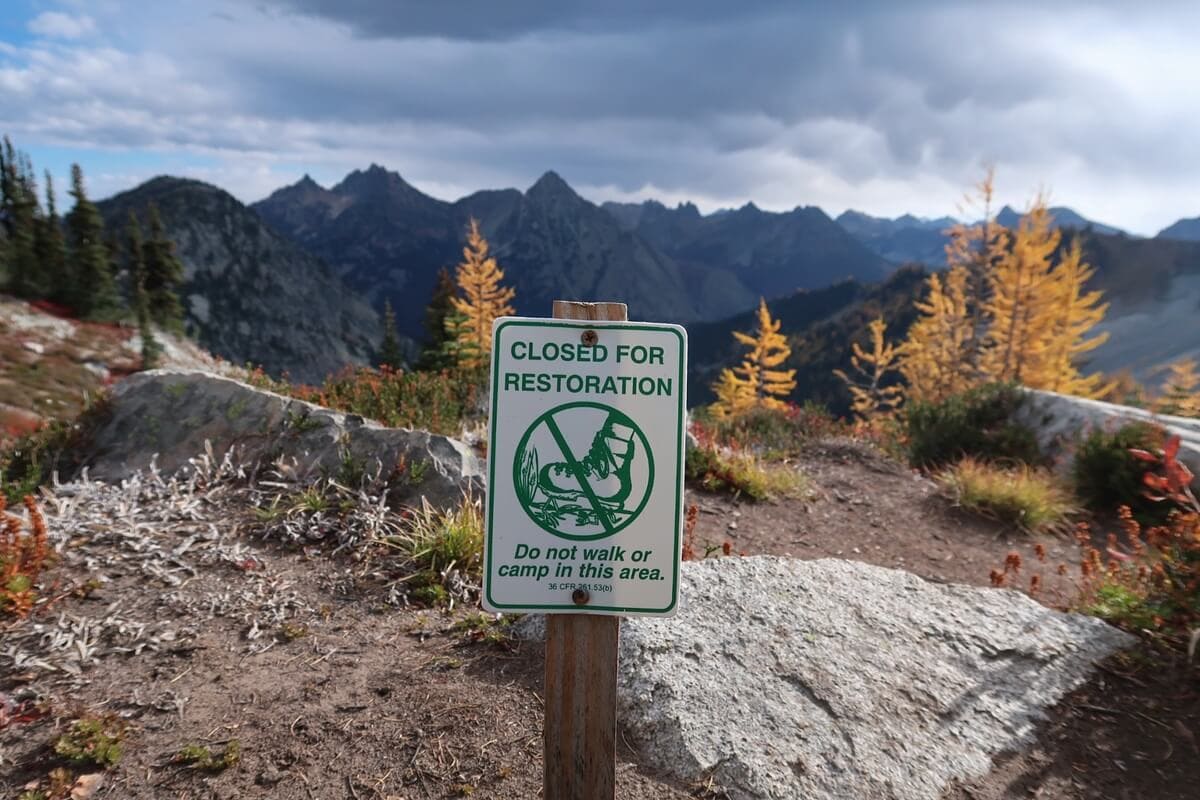
Lots of sections were roped off to protect the mountain heather currently being restored, but there were still paths you could take to really soak in the views from different vantage points.
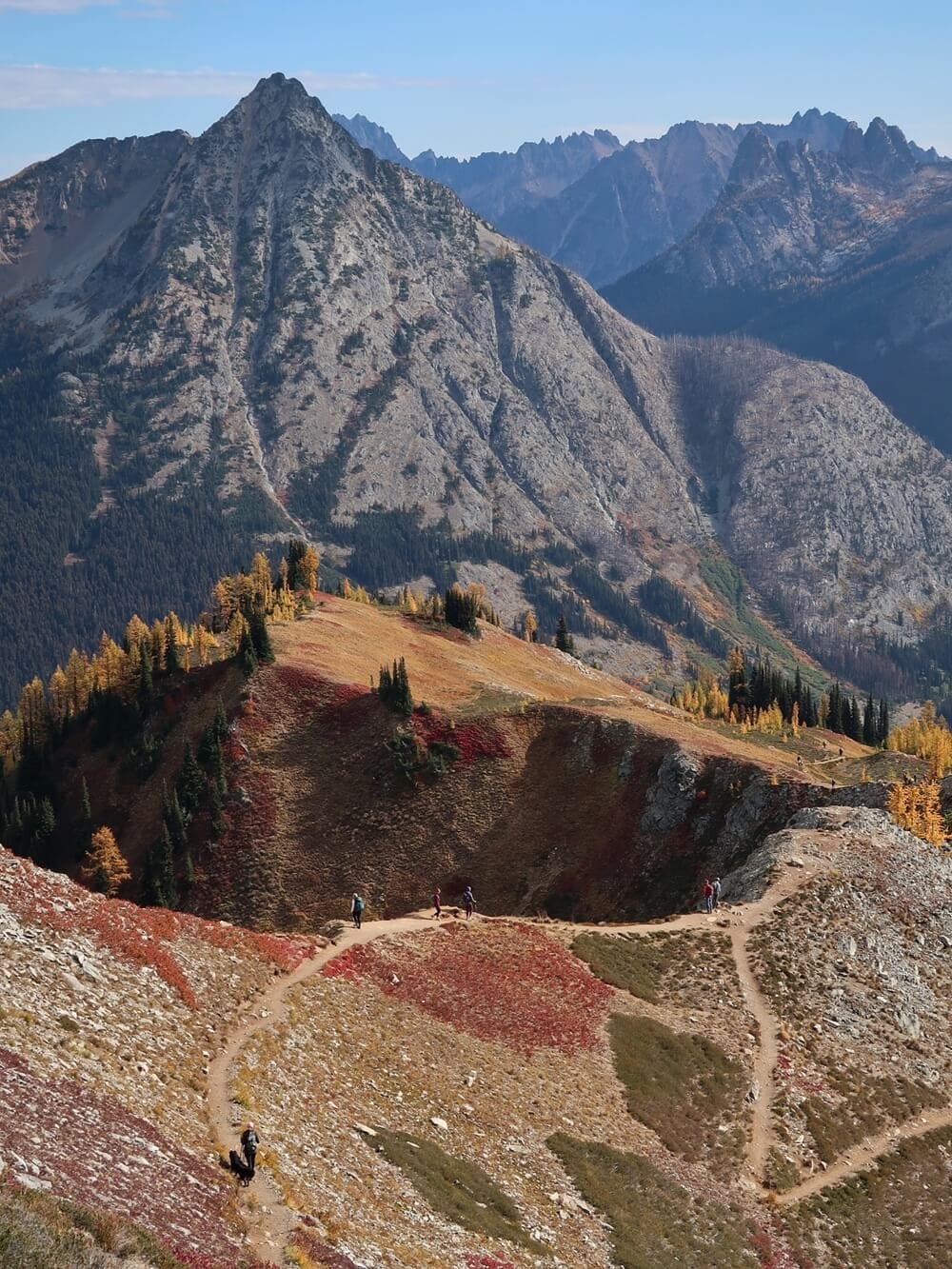
The steepest climb came just before the second “Mountain View” waypoint on AllTrails, but I took it slow.
From there, the fall colors were absolutely popping. It also offered an incredible bird’s-eye view of the hikers winding their way along the trail below.
As I continued, the clouds had parted and the sun was out again, making entire stands of larches look even more intensely golden.
When I reached Rainy Lake, I stopped again.
The turquoise water was exquisite.
I lingered for a while, watching the sunlight shimmer across the lake before continuing on.
The descent was rockier than the climb in several places, and I was grateful to have brought my trekking poles. They made navigating the uneven terrain much easier after a full day on the trail.
Maple Pass Rewards People Who Slow Down & Stop Often
My biggest piece of advice is simple and one I often give: don’t rush this hike.
Some of my favorite moments happened when I stopped walking.
I paused to listen to wildlife. I stood still as the wind whistled through the larches, watching their golden forms dance against the blue sky.
I chatted with other hikers who, like me, couldn’t believe what they were seeing.
I passed a hiker who had just moved here from Chicago and she was literally stopped in her tracks, taking in the beauty of the scene before us. We shared a quick moment of appreciation before heading our separate ways.
I came for the larches, but I left understanding why the North Cascades are called the “American Alps.”
Mixed Weather Made the Hike More Dramatic
Before my hike, I watched the forecast closely. I checked nearby Corteo Peak on Mountain-Forecast and Winthrop because mountain weather can change quickly in October.
The forecast called for sunshine, blue skies, dramatic clouds, wind, and a little drizzle.
Remarkably, it was exactly right.
Looking back, I wouldn’t have wanted a perfectly clear bluebird day. The changing weather made the hike feel more alive.
As clouds drifted in and out, the sunlight constantly changed, transforming the landscape throughout the day.
So don’t worry if you hike this trail on a day when the forecast is all over the place.
What to Wear for Maple Pass Hiking
Because of the mixed forecast, here’s what was in my backpack:
- Rain jacket
- Rain pants
- Insulated puffy
- Softshell jacket
I ended up using several of those layers throughout the day as the conditions changed — my softshell once the wind picked up along the exposed sections of trail and my waterproof layers during consistent rain.
3 Things I’d Do Differently Next Time
Knowing what I know now, I’d make a few different choices the next time I hike Maple Pass.
1. Take the Spur Trail to Lake Ann in the Morning
Especially because it’s only 0.6 mile round trip. It didn’t come up in the trip reports I read the week before, so I didn’t prepare for it to be an option.
Since I started so early, the wind hadn’t yet started up and the reflection of the surrounding larches was fantastic.
2. Linger Longer Along the Heather Pass–Maple Pass Ridgeline
By the time I reached it, the wind had picked up and the weather had started to shift, so I felt inclined to keep moving.
Looking back, those were some of the most beautiful sections of the entire hike, and I wish I had spent more time simply taking them in.
3. Hike Maple Pass in a Different Season
I’d like to experience Maple Pass in summer to see how different the landscape feels without the fall colors.
Highway 20 Stops Worth Adding to Your North Cascades Day Trip
If you’re driving all the way to Maple Pass, it’s worth building in time for a couple of scenic stops along Highway 20.
★ Washington Pass Overlook
- Getting there: Google Maps link
It’s just a short walk from the parking lot to one of the best mountain viewpoints in the state.
But while most are satisfied with the views from the overlook, I spent some time exploring the rocky landscape beyond the trail.
Doing so rewarded me with additional vantage points and a chance to soak in the scenery away from the crowds at the overlook.
★ Diablo Lake Vista Point
- Getting there: Google Maps link
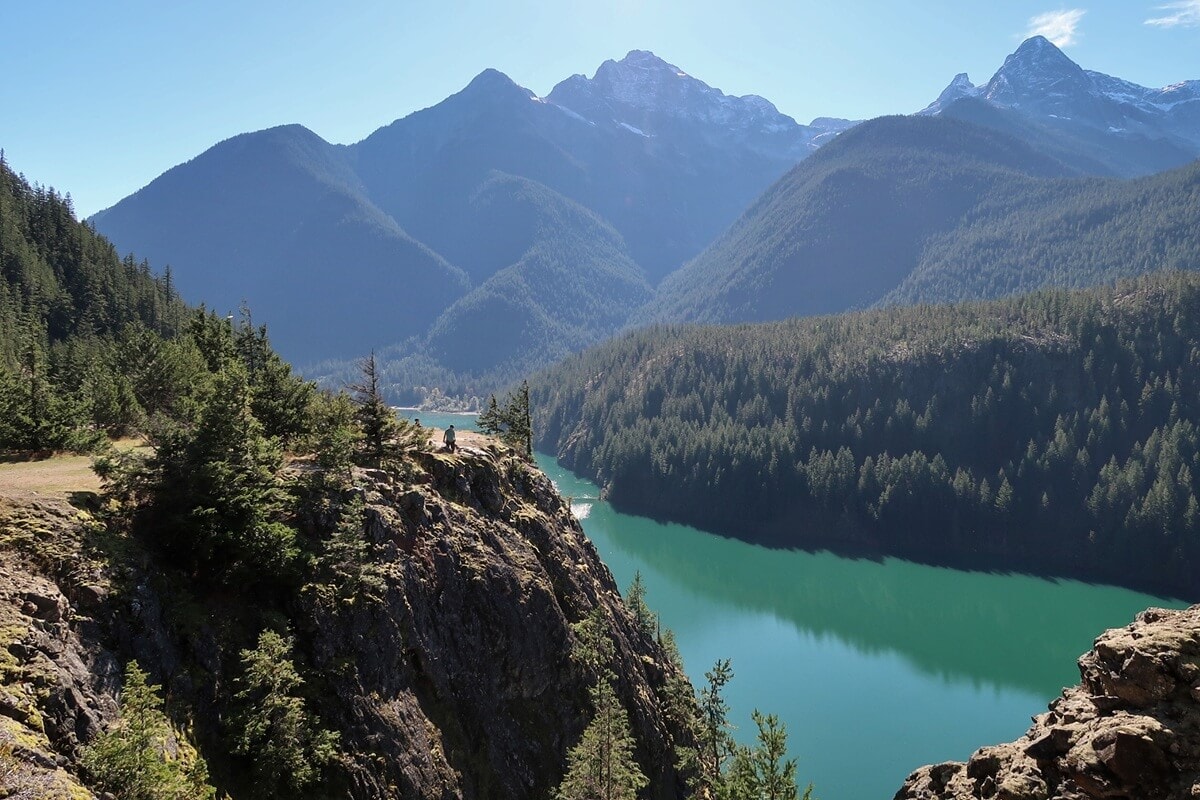
This stop offers one of the most iconic views in the North Cascades, and you don’t have to hike to enjoy it.
I marveled at the lake’s unique turquoise color and the rugged mountain peaks surrounding it.
As I took photos, I saw people posing at the edge of the rocks with a massive drop-off. To me, no photo is worth risking a fall, especially when the views from the established overlooks are spectacular on their own.
Why I’d Hike Maple Pass Again
Of all the hikes I’ve done in Washington, Maple Pass reminded me most of the Skyline Trail at Mount Rainier.
Not because the landscapes are identical, but because I kept stopping to wonder how one trail could pack so much beauty into a single loop.
I came expecting golden larches.
I got even more—turquoise alpine lakes, vivid fall color, panoramic vistas, distant volcanoes, and one unforgettable scene after another.
It’s easily one of my top five hikes in Washington, and I’d hike it again without hesitation.
If you’re planning to hike it, start early, slow down, and let the trail unfold one viewpoint at a time.

Skip the guesswork, stress, and hours of research—let me help you plan your itinerary!
