
Hurricane Ridge Snowshoe Tour Review: What to Expect & Why I Loved It


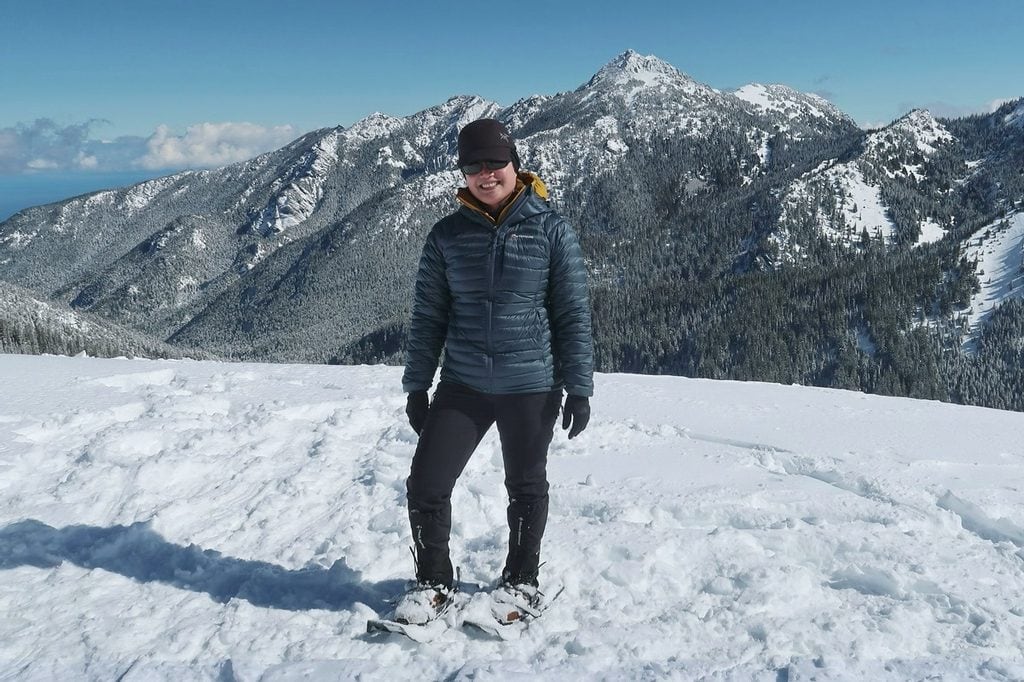
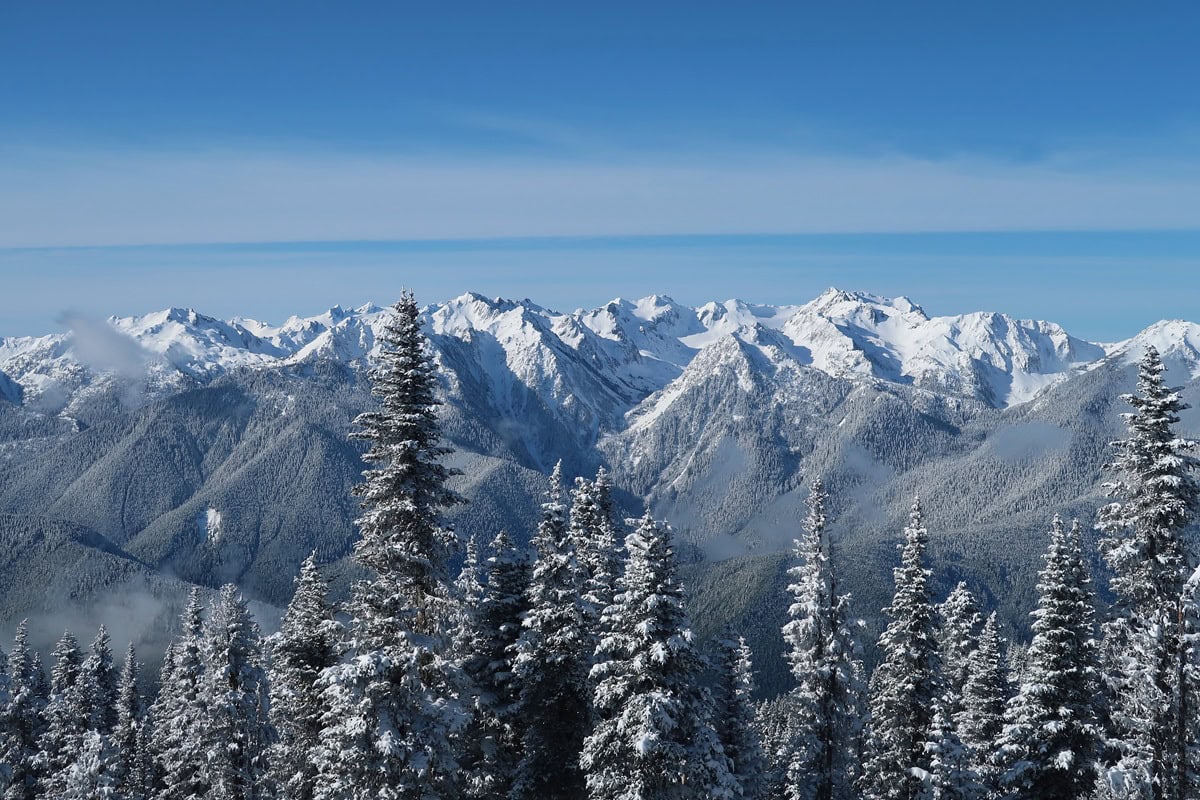
Fresh powder glittered in the sun while snow-covered Olympic peaks stretched before me in every direction.
My Hurricane Ridge snowshoe tour turned out to be one of those winter days when conditions were nearly perfect, led by a fun and knowledgeable guide who didn’t pass up the chance to step off-trail and stomp straight through untouched snow.
If you’re considering booking a snowshoe tour because you’ve never visited Olympic National Park in winter — or you’ve barely snowshoed before — here’s my take:
The actual snowshoeing is doable for beginners, but I wouldn’t recommend this particular tour to someone who is completely out of shape.
We moved at a good pace, and while I never found the terrain technically difficult, there were sections that required a decent amount of effort.
In this Hurricane Ridge snowshoe tour review, I’ll walk you through exactly what the day was like, including the transportation, gear, difficulty, route, guide experience, and who I think should — and shouldn’t — book it.
Ready to book a tour?
Experience Hurricane Ridge in winter without driving on icy roads, renting snowshoe gear, or figuring out the route on your own.
Hurricane Ridge Snowshoe Tour: What to Know
Who Should Book This Hurricane Ridge Snowshoe Tour?
This tour is a fit for beginners who want to experience Hurricane Ridge in winter without handling the gear, route, and winter drive on their own.
Who It’s Best For
I’d recommend this tour if you:
- Are new to snowshoeing but comfortable being active for several hours
- Are visiting Hurricane Ridge for the first time in winter
- Don’t want to drive the icy road yourself
- Don’t own snowshoes or poles
- Want a guide who can teach you about Olympic National Park along the way
I especially appreciated that our guide, Oscar, pointed out everything from hare tracks and glaciers to river drainages and winter hazards I wouldn’t have noticed on my own.
Who Should Skip It
I’d skip this tour if you want a very slow or low-effort introduction to snowshoeing.
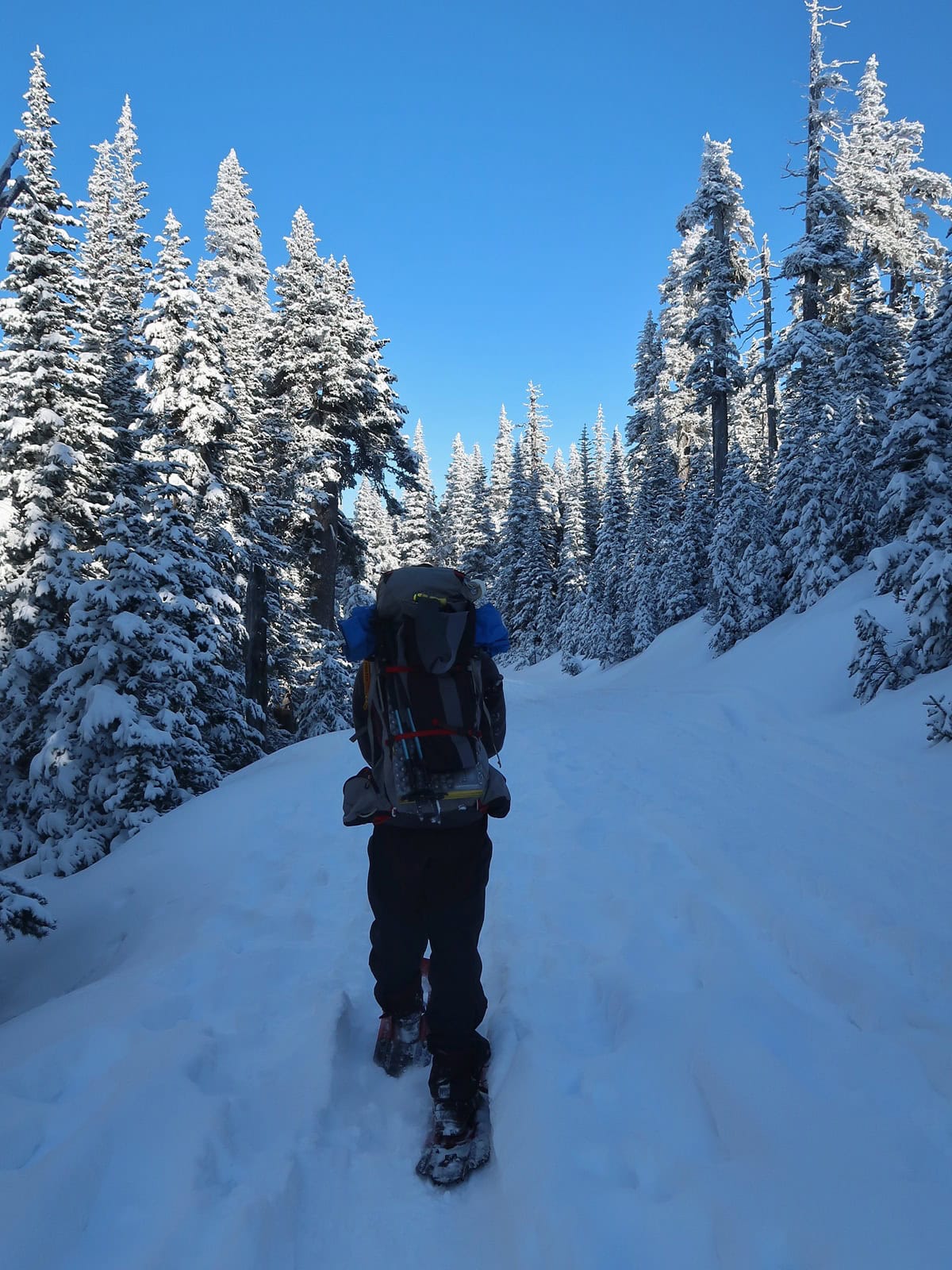
Our route didn’t have a huge amount of elevation, but we moved at a brisk pace, and breaking trail through deep powder took extra effort.
I’d also skip it if you’re an experienced winter hiker or snowshoer who already knows Hurricane Ridge and would rather explore independently.
If you’re reasonably fit but have never snowshoed before, this tour is a great fit. Based on my experience, your general fitness matters more than previous snowshoeing experience.
My Olympic National Park Snowshoe Tour Experience
Finding the tour meeting point was easy. Olympic Hiking Co. provided clear directions as well as a phone number to call if I had trouble finding them.
The starting point is located on Marine Drive rather than in downtown Port Angeles.
As soon as I pulled into the parking lot, a woman holding a clipboard greeted me with a smile and directed me to a parking spot.
Check-in was straightforward. She asked for my name and national park pass, then checked if I needed to fill my water bottle and whether I’d brought sunglasses and sunscreen.
Those questions immediately gave me confidence that they were paying attention to what people need on the mountain rather than simply checking names off a list.
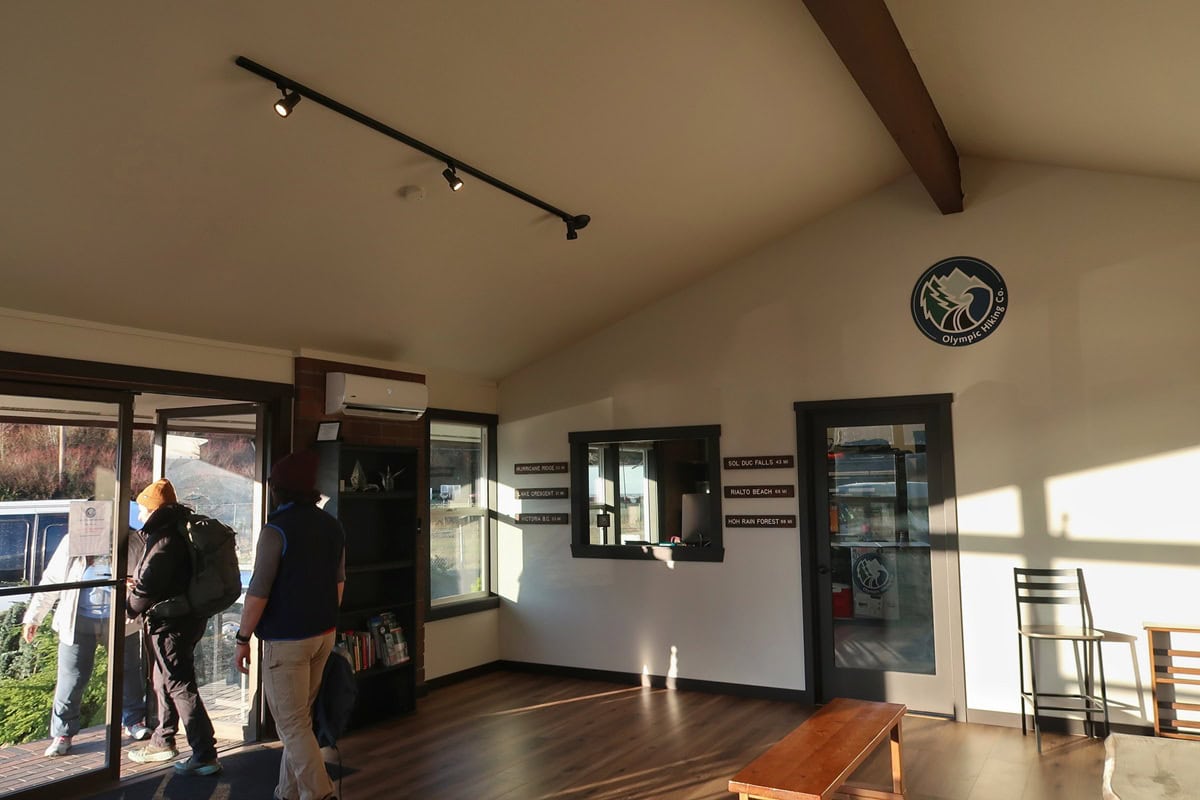
Inside, the space was simple and practical, with benches, tables beside the windows, maps on the walls, a clean bathroom, and somewhere to refill my water bottle.
Everyone was friendly, and we chatted casually while waiting to leave.
How Big Is the Snowshoe Tour Group?
My tour had only three people, which the staff told me was unusually small, especially considering how good the day’s forecast was.
Because there’s usually ten people on a tour, we each had a lot of space once we climbed onto the shuttle.
Our small group size made it easy to ask questions, stop when something interesting appeared in the snow, and talk with our guide, Oscar.
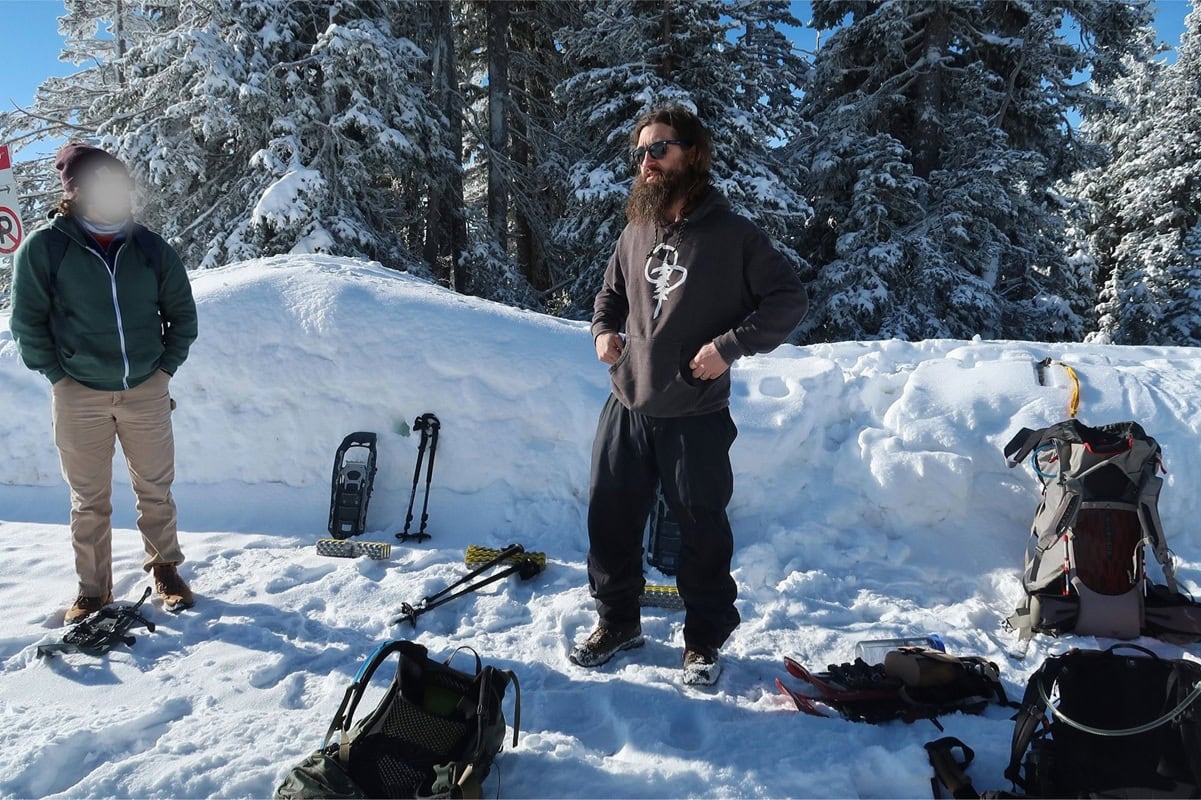
He gave us all the information we needed as the shuttle climbed up Hurricane Ridge Road, but I appreciated that he didn’t spend the entire ride performing a rehearsed monologue.
We had time to relax, look out the windows, and enjoy the drive.
What Gear Does the Tour Provide?
One of the biggest advantages for a first-time snowshoer is that you don’t have to go out and buy snowshoeing equipment just to see whether you like the activity.
The tour provided the essential snowshoeing gear we needed, including:
- Snowshoes
- Trekking poles
- Sitting pad
My snowshoes were clearly well-used — there was some wear along the upper edge — but that was cosmetic. They felt safe, and more importantly, they performed well.
My straps stayed secured throughout the entire tour.
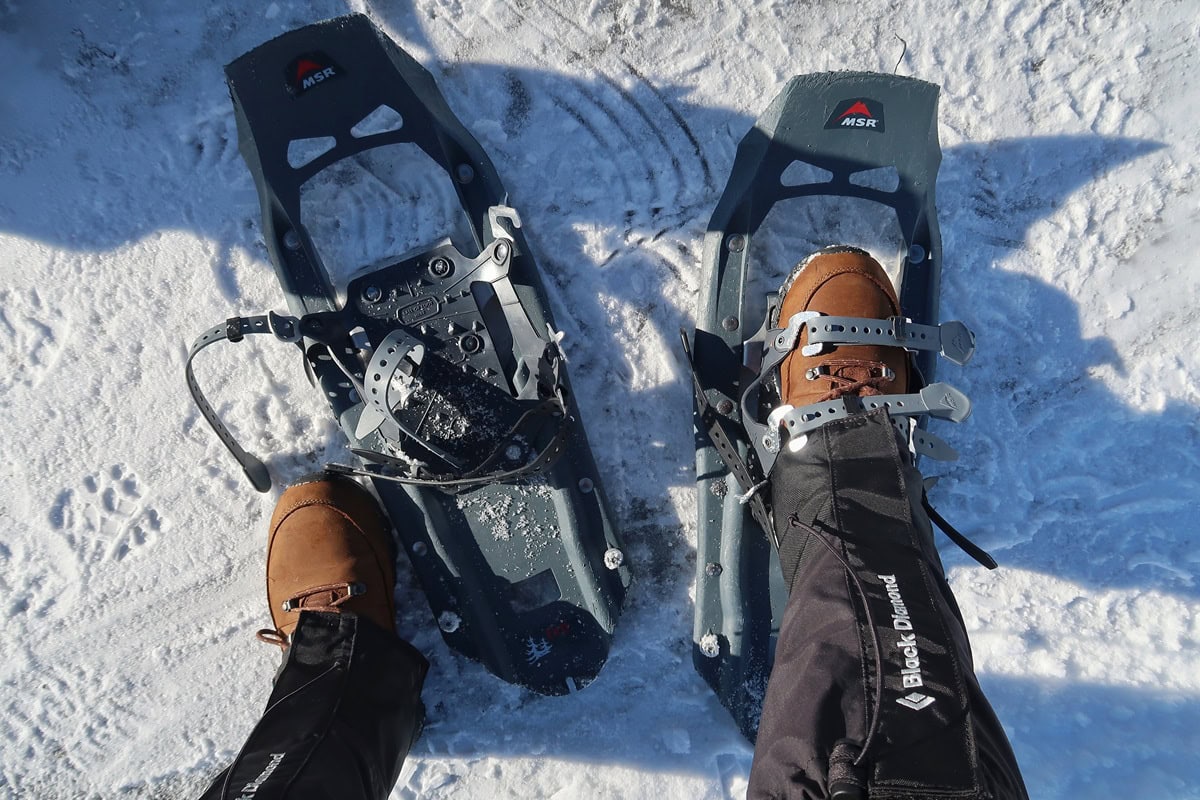
I brought my own trekking poles rather than using theirs, and I was glad I had them for balance when the snow got deeper.
I did use the sitting pad when we stopped on the snow. It worked perfectly fine, although I regretted not bringing my Helinox chair when it was time to sit down for lunch.
What Extra Gear Should You Bring?
The tour company will tell you exactly what to wear and bring in an email.
But I’d absolutely add toe warmers to your packing list if your feet tend to get cold.
One member of our group started getting cold feet and asked how cold her toes should feel. I had a spare pair of toe warmers in my bag and offered them to her.
She told me later that they helped a lot.
I wore wool socks and my insulated Icebug boots to make sure my feet stayed warm.
What Is Hurricane Ridge Snowshoeing Actually Like?
This was easily some of the softest, powderiest snow I’ve ever snowshoed through.
We started on relatively flat and slightly downhill terrain, surrounded by fresh snow that glittered in the sunlight like tiny diamonds.
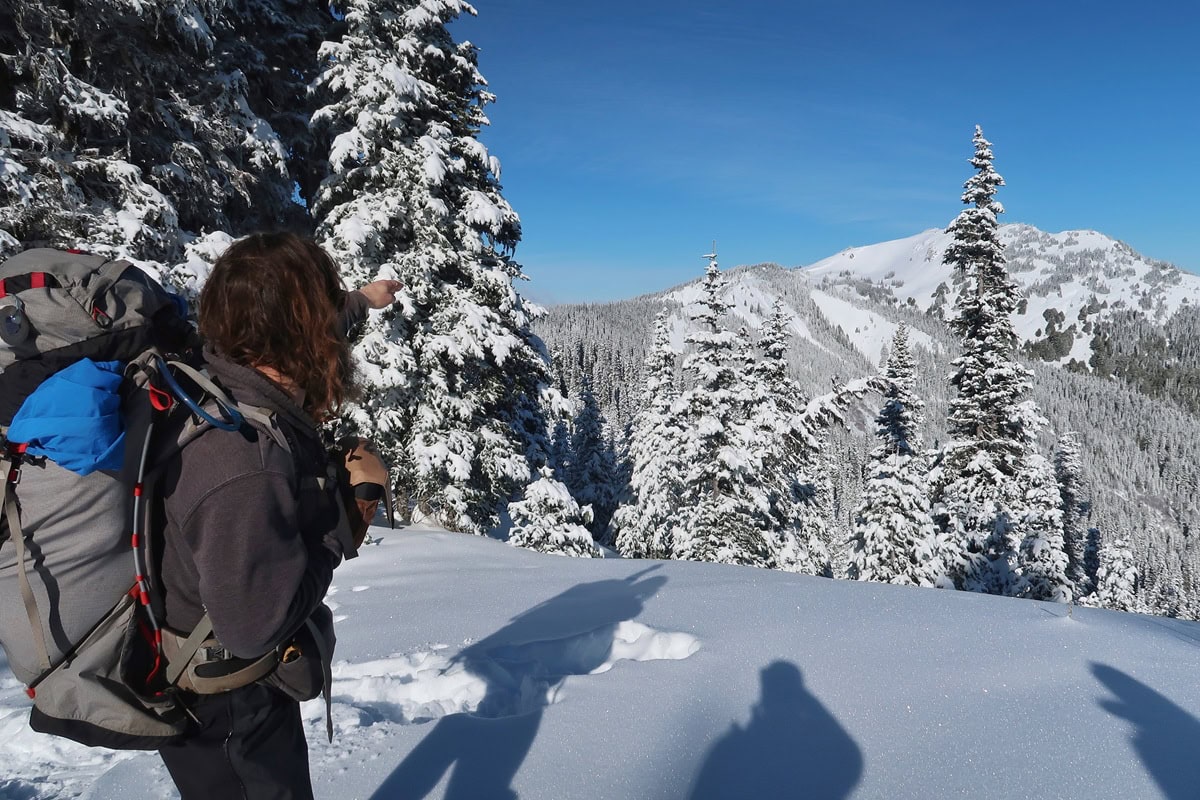
Later in the day, the top layer became a little more crystallized, but the snow underneath remained soft rather than turning hard and crunchy.
One of my favorite moments happened early in the day.
Oscar encouraged us to step away from the existing tracks and stomp directly through untouched powder so we could experience what moving through fresh snow actually felt like.
It was noticeably more work on my glutes.
It was also ridiculously fun.
Instead of simply following someone else’s compacted path all day, we got the feeling of breaking trail through genuinely fresh snow. In some places, our snowshoe tracks sank 6 to 12 inches into the powder, so I was glad that I had put on my gaiters.
Where Do You Snowshoe at Hurricane Ridge?
Our group didn’t snowshoe all the way to the top of Hurricane Hill because that would have made our route too long for the time available.
Instead, we broke right off the main track up a hill to a smaller summit and viewpoint.
The final push was the steepest section of our day.
Our guide led us up a side section where we got to break through fresh snow again on the way to the top.
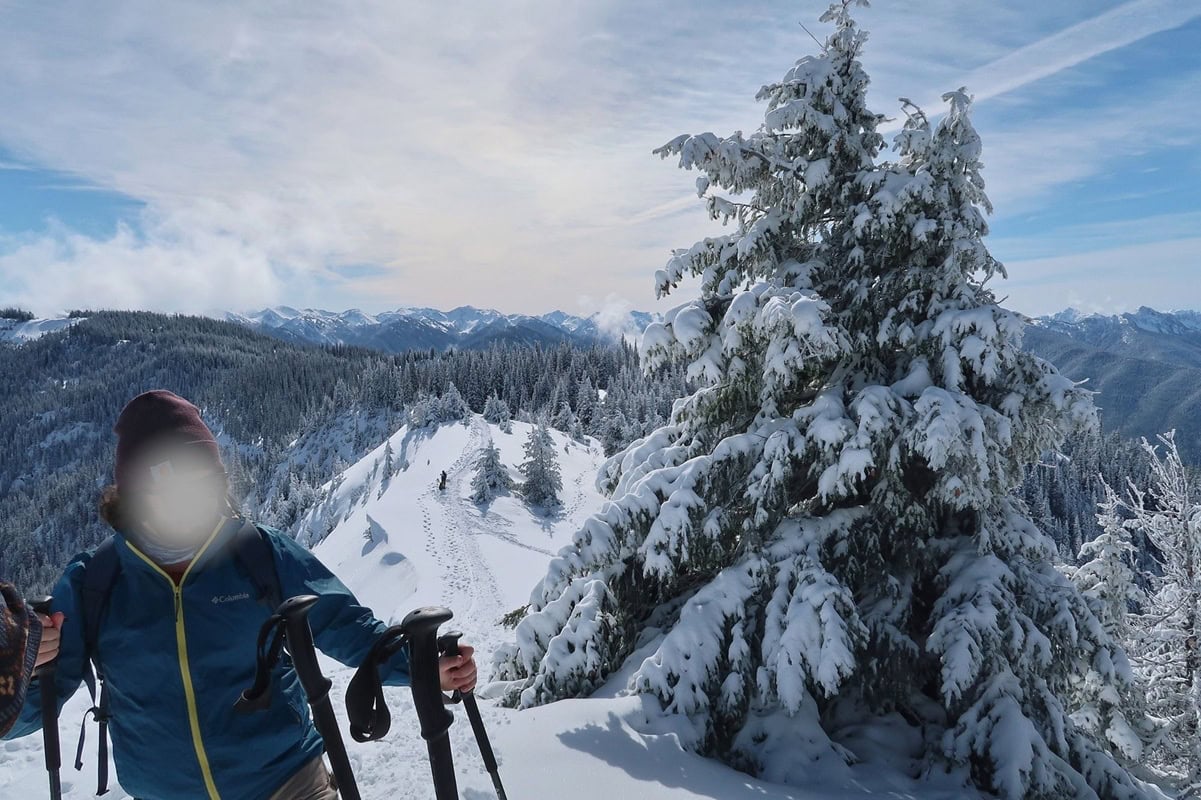
That extra effort paid off.
Our lunch spot had 360-degree views of the surrounding winter landscape.
After snowshoeing through powder and learning about the landscape we’d been crossing, we were sitting in the snow surrounded by Olympic Mountain views.
Oscar put down a larger pad that we could use and pulled out hot water, cups, and drinks.
I then immediately made the rookie mistake of putting my cup directly into the snow, where my lovely hot cider became considerably less hot in a matter of minutes.
Don’t do that.
After lunch, he offered to take photos of us, which was a thoughtful touch.
Throughout the day, he came across as authentically generous rather than someone performing the requirements of a tour guide.
What Do You See & Learn Along the Way?
I hadn’t expected the natural history side of the experience to be as memorable as it was.
Our guide knew the surrounding river drainages and which direction they flowed. He could identify the valleys and geographical features we were looking at based on our position.
During the drive, he made sure we knew when we’d have the best view of Mount Olympus and pointed out its glaciers when they were visible.
At one stop, he told us about an early expedition through the Olympic Mountains and the enormous challenges the explorers faced after setting out during winter.
Standing there and looking at the actual terrain they crossed made that story land differently than it would have if I’d read it on an interpretive sign instead.
We also stopped where the wind creates enormous snow formations around the trees. Covered in white, they looked almost artificially flocked.
More importantly, he showed us a cornice and explained how far back we needed to remain from its edge.
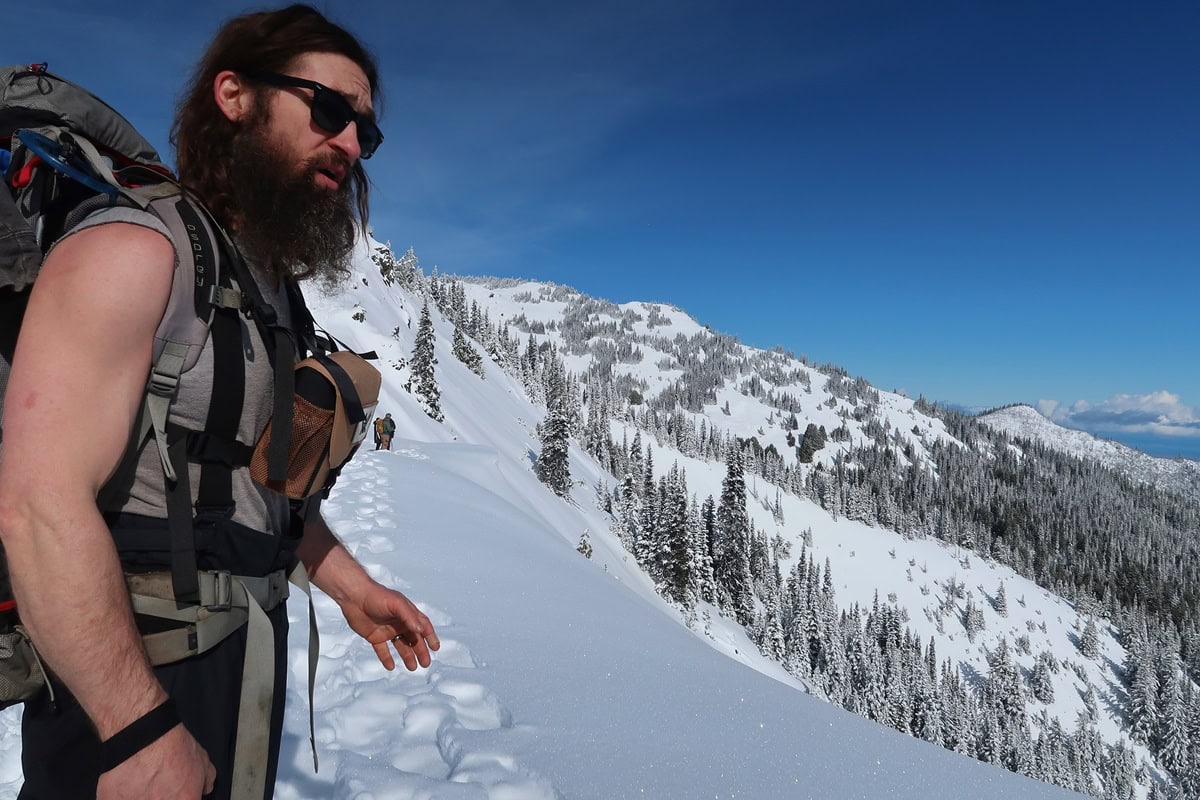
That was the kind of winter-specific knowledge I appreciated having a guide for.
What Was the Return Trip Like?
The way back wasn’t just a retracing of every step we’d taken.
At one point, Oscar took us on a short off-trail detour through the trees, where he spotted more hare tracks.
Animal tracks had become a recurring theme of the day. He clearly enjoyed finding and pointing them out, and his enthusiasm made me start looking for them too.
I also saw plenty of ravens around Hurricane Ridge.
Some landed right at the tops of the snow-covered trees. Against all that white, the huge black birds looked particularly dramatic.
Because we returned to the shuttle early, I separated from the rest of the group so I could spend some time exploring Hurricane Ridge independently.
Ready to book a tour?
Experience Hurricane Ridge in winter without driving on icy roads, renting snowshoe gear, or figuring out the route on your own.
Is This Snowshoe Tour Good for Beginners?
I think a beginner can absolutely do this tour, but I wouldn’t recommend it to someone who doesn’t exercise regularly.
We didn’t gain a huge amount of elevation, and nothing we did required advanced snowshoeing skills. However, our pace was brisk enough that I wouldn’t describe the experience as an easy stroll through the snow.
My impression is that Oscar looked at the age and ability of our unusually small group and adjusted accordingly.
We were supposed to return to the shuttle around 2pm, but we were back by approximately 1:15pm. I actually really appreciated the extra 45 minutes because it gave me time to explore the ski and tubing areas.
I suspect a larger group would have taken the full allotted time to complete the tour.
If regular hiking, walking, or general cardio exercise is already part of your life, I wouldn’t be intimidated by this tour.
But if you rarely exercise and are imagining a very slow sightseeing walk in snowshoes, this may be more of a challenge than you expect.
Is the Hurricane Ridge Snowshoe Tour Worth It?
For the right traveler, absolutely.
I loved that I didn’t have to figure things out for myself.
I didn’t have to worry about driving the icy road to Hurricane Ridge.
I didn’t need to own or rent snowshoes.
I had someone there to check my gear, identify the landscape around me, point out animal tracks I probably would have walked straight past, explain winter hazards, and lead us through fresh powder to a beautiful lunch spot.
And because Oscar knew the area so well, I came away understanding more of what I was looking at rather than simply having a collection of pretty mountain photos.
That said, if you’re interpreting ‘beginner snowshoe tour’ to mean ‘requires no fitness whatsoever,’ I wouldn’t book it on that assumption.
But if you’re an active traveler who’s never snowshoed before — especially if this is your first winter visit to Olympic National Park — this guided experience takes a lot of uncertainty out of the day.
And when conditions line up like they did for me, Hurricane Ridge under fresh snow is spectacular.
If you want to experience Olympic National Park in winter without buying snowshoe gear or tackling the trip to Hurricane Ridge entirely on your own, check current tour availability below.
