
Hall of Mosses Trail: Why We Didn’t Rush This Short Hike


The Hall of Mosses Trail in the Hoh Rainforest is one of the most popular easy hikes in Olympic National Park—and one of the most iconic rainforest hikes in Washington.
But don’t make the mistake of rushing through it.
Because if you do, you’ll miss the details that make the rainforest feel alive, like seeing the subtle variations of green foliage that make the forest feel like living art, or the way the sunlight filters through the trees.
We spent 1.5 hours on this trail when we could have hiked in half the time.
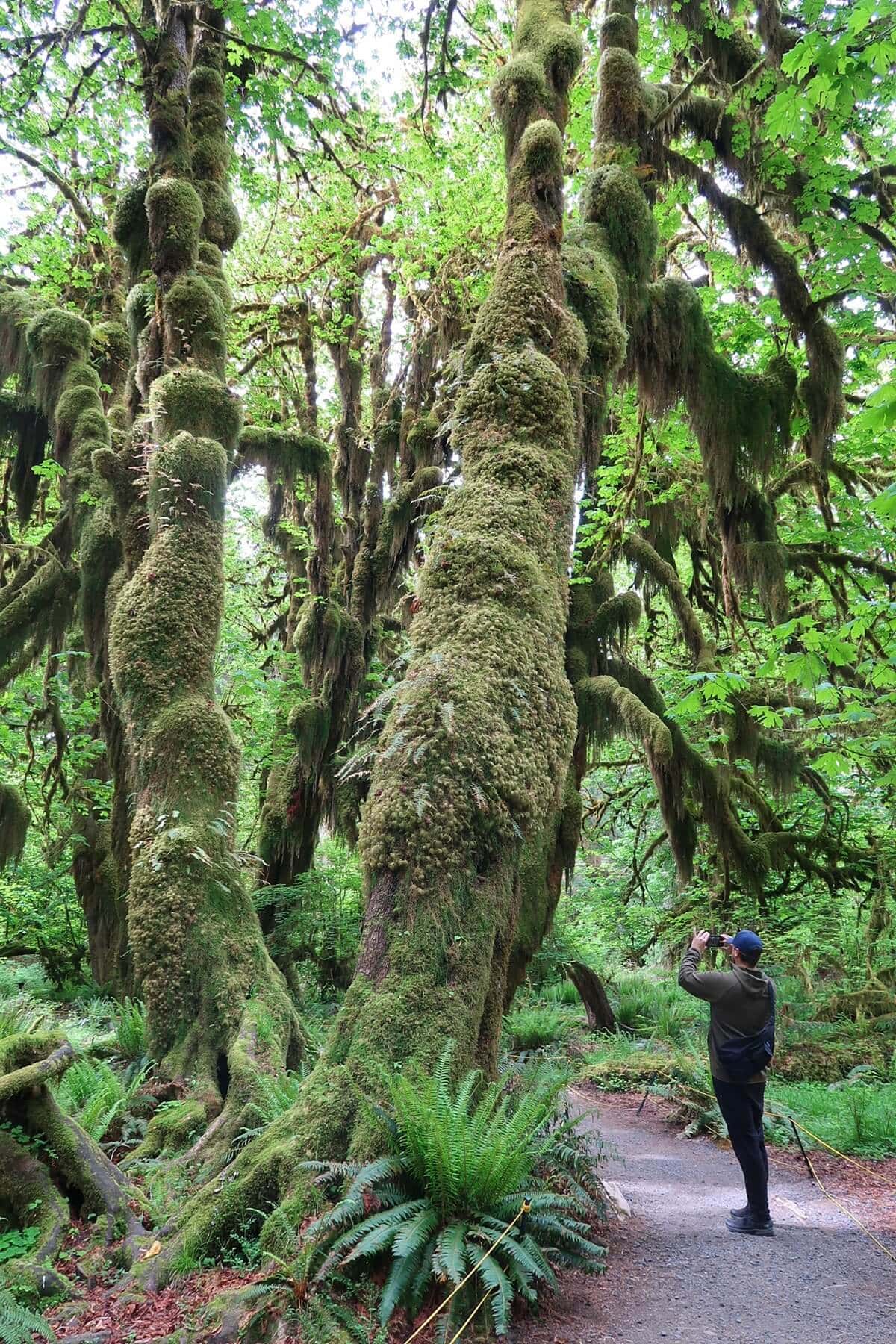
We stopped often to look up into the canopy, marvel at the branch structure of lichen-covered bigleaf maples, and notice small details along the forest floor.
And honestly, that’s the best way to experience the Hall of Mosses.
If it’s your first time visiting Olympic National Park and you’re not sure if this trail lives up to the hype, I’ll share everything I experienced on our late May hike and why spring and early summer are possibly the best times to hike it.
Hall of Mosses Hike Quick Guide
- Location: Hoh Rainforest in Olympic National Park
- Closest Town: Forks
- Trail length: 1-mile loop
- Elevation gain: Minimal
- Difficulty: Easy
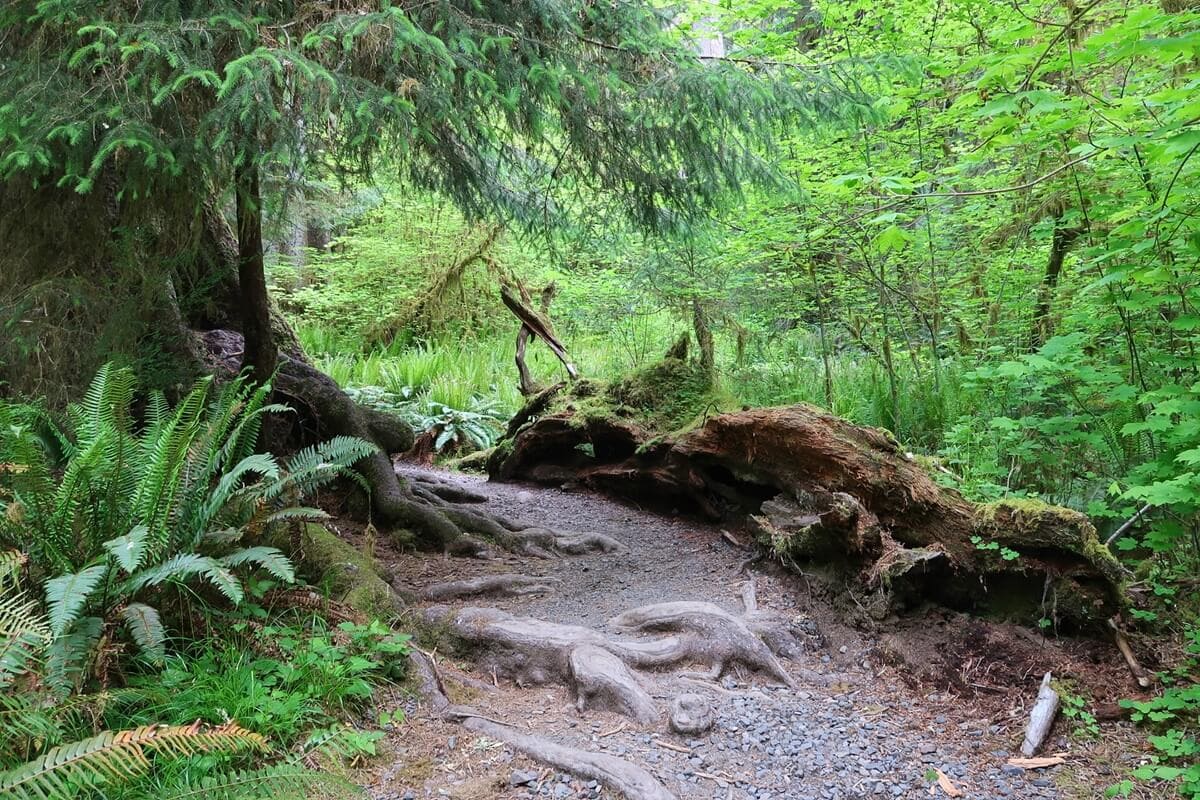
- Accessibility: Dirt trail with tree roots
- Cell Service: Limited
- Restrooms: Available at the Hoh visitor center and campground
- Best for: First-time visitors, families, photographers, and anyone wanting a classic Olympic National Park rainforest hike without a long trek
- Time needed: The trail can be done in 30 minutes, but there’s a lot to stop and look at.
- Hoh Rainforest Entrance: Peak season lines can stretch over a mile. If the lot is full, you might have to wait up to 2 hours to get in. Arrive before 8am or after 4pm in the summer when daylight lasts until 8pm.
Where to Stay Near the Hall of Mosses
Most visitors stay in Forks when visiting the Hoh Rainforest, about 50 minutes away. We’ve stayed there too, but we’ve also stayed at Hoh Valley Cabins, which are only about 23 minutes from the trailhead.
If you want to be closer to the Hoh entrance and avoid some of the early morning drive, Hoh Valley Cabins are much more convenient—but they book up quickly.
➥ Check availability at Hoh Valley Cabins.
Don’t Expect Peak Green Conditions in Late Summer
I want to set expectations honestly here.
If you visit the Hoh Rainforest late in the summer after weeks of hot, dry weather, it may not look quite like the vibrant emerald-green photos you’ve probably seen online. Especially because a lot of those photos were probably enhanced.
Some of the moss can start browning or looking less lush by mid-summer, especially during unusually dry years.
We visited in late May after a warm, dry stretch, and even then I noticed hints of moss turning brown.
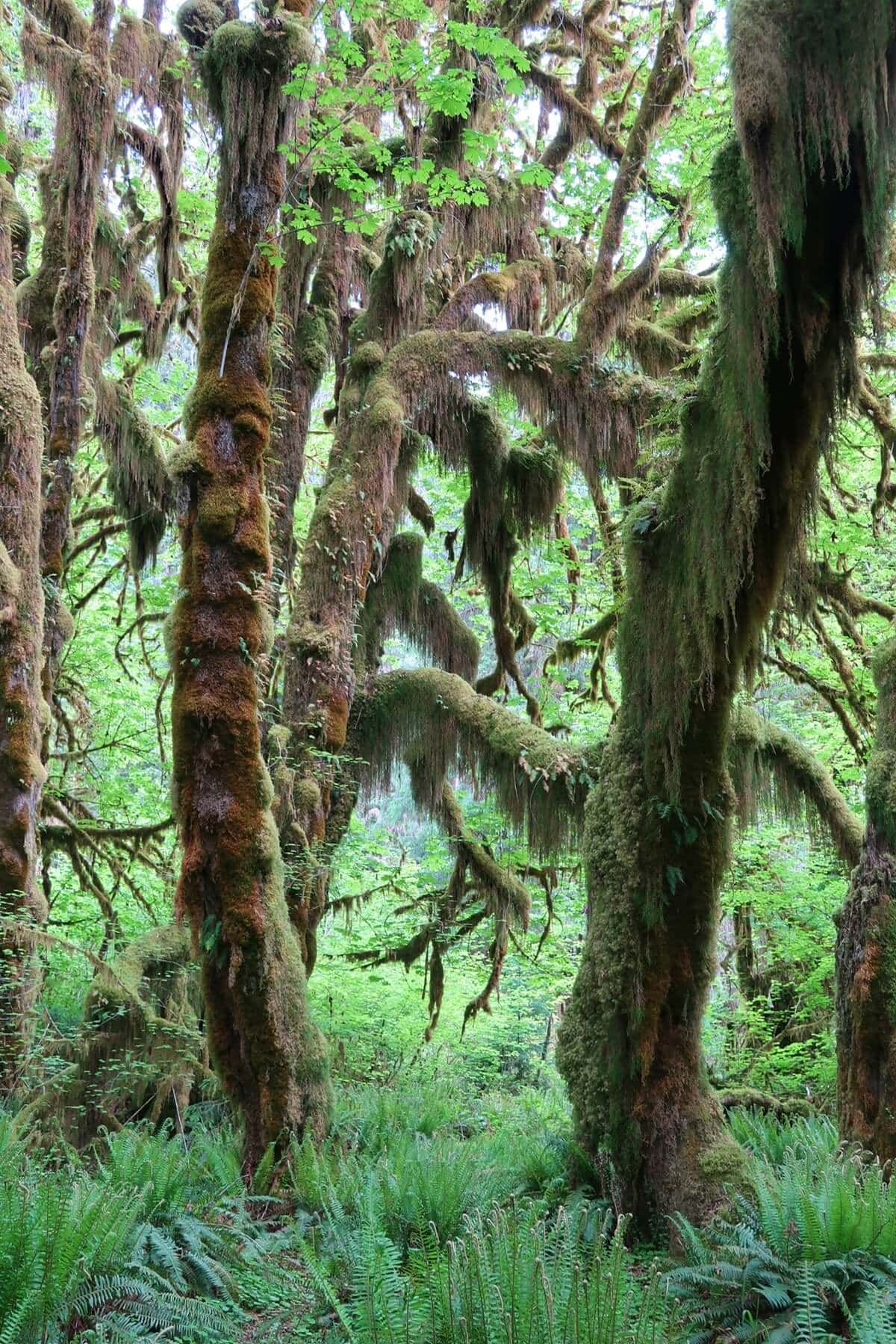
So I can understand why some visitors feel underwhelmed if they arrive expecting every inch of the forest to look deep green like they’ve seen in photoshopped photos.
If seeing the Hoh Rainforest at its lushest is important to you, spring and early summer are usually the best times to visit. But fall is also enchanting.
Crossing Taft Creek Feels Like Entering Another World
The trail begins by crossing a bridge over Taft Creek.
We lingered here, looking down at the water below and taking photos of the incredible scenery in both directions. The creek was incredibly clear, with a bluish-gray streambed that gave the water an ethereal feel.
Under the surface, aquatic plants swayed gently in the current while fallen trees stretched across the creek nearby.
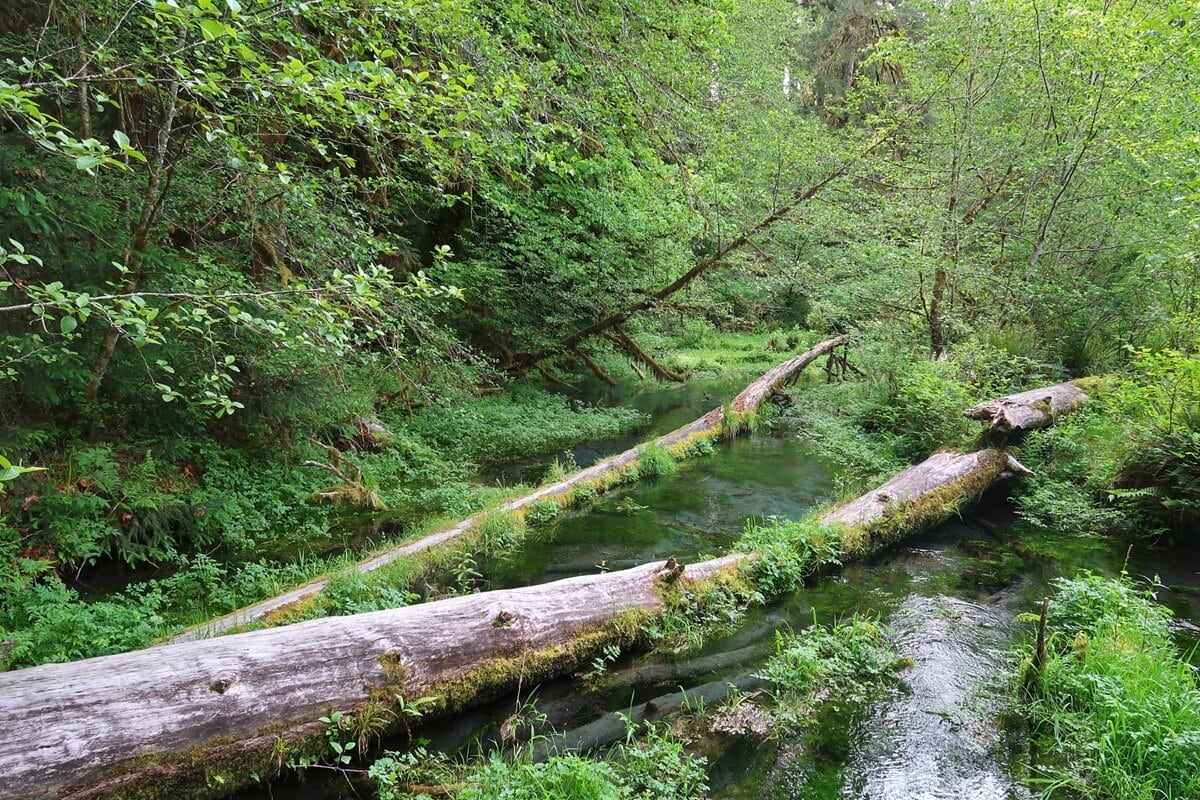
It immediately felt different from a typical forest trail.
After crossing the bridge, the trail climbs slightly uphill. Slow down here and look to your right as you ascend. I remember stopping completely to look at the bright new maple leaves glowing against the darker evergreen backdrop.
The layers were striking. Moss climbed the trunks while overlapping shades of green filled the canopy above us.
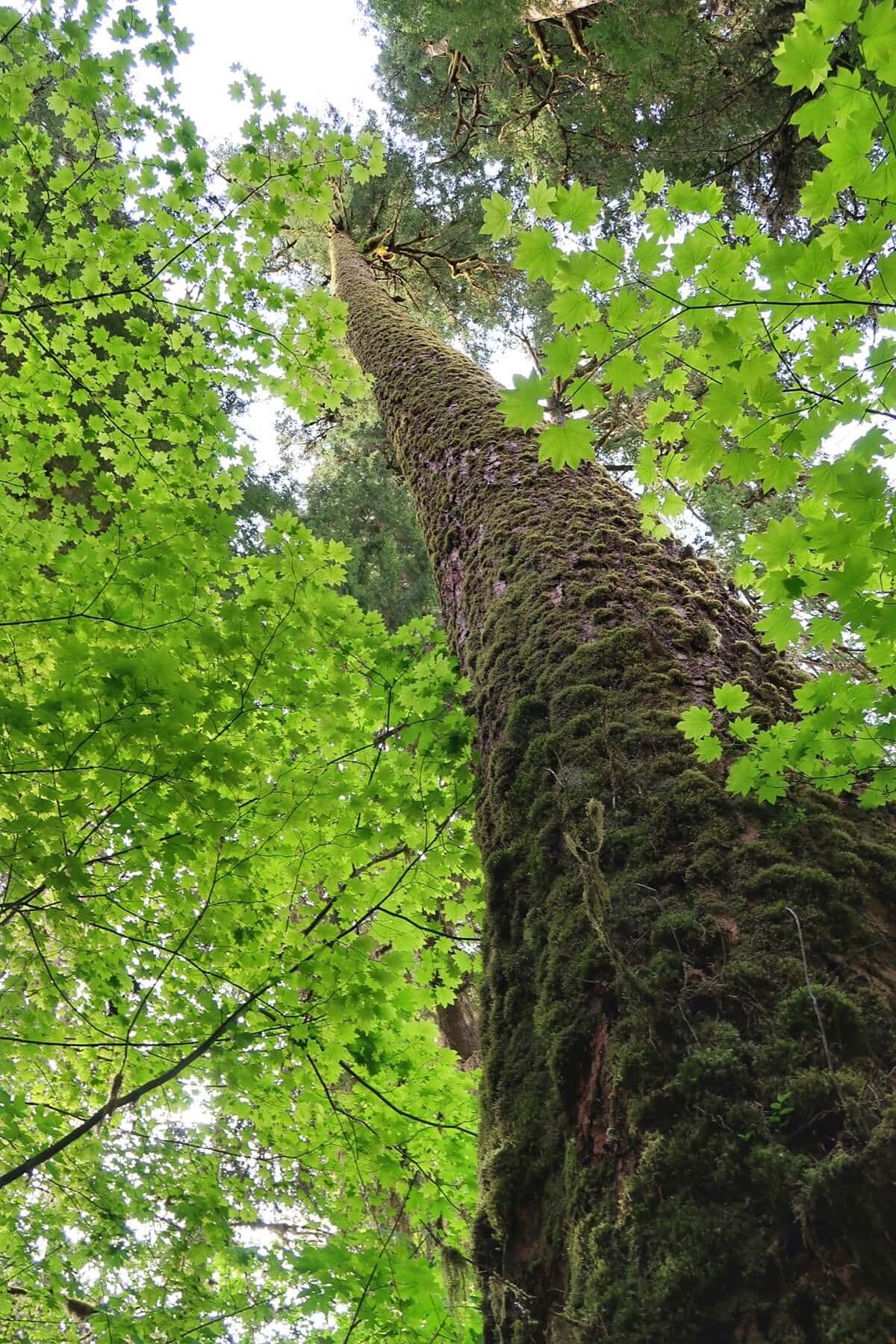
That moment is when I realized we were on the trail at likely the best possible time.
Because the rainforest was still saturated from winter rain, and the new leaves and fern fronds glowed with that vivid green color you only get in spring.

get clarity & confidence
Stop second-guessing your itinerary.
Let’s build a custom trip that gets you the most from your time and money.
The Hall of Mosses Is Best Experienced Slowly
The Hall of Mosses is a short Hoh Rainforest loop trail, and after the short uphill section, you’ll see the sign directing hikers left.
From the start of the loop, this rainforest hike begins revealing itself in sections, almost like walking through a series of natural gallery rooms.
The bigleaf maples are the star of this hike, but we also paused at a section featuring a cluster of shorter evergreen trees shaped almost like perfect Christmas trees, their blue-green needles tipped with fresh spring growth.
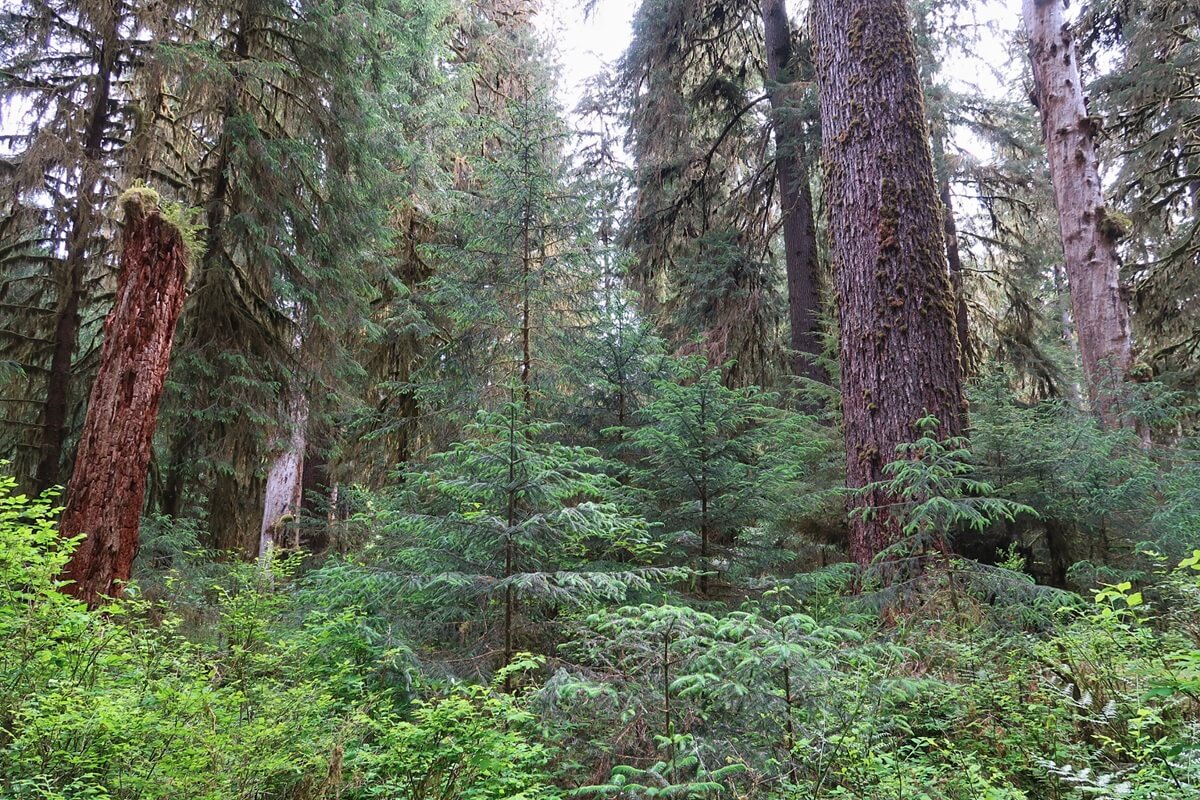
We probably stopped every ten feet because there was always something new to notice.
That’s my biggest recommendation for this hike: stop moving sometimes.
Look down at the forest floor. Notice the layers of roots, ferns, moss, oxalis, and decaying logs all packed together beneath the trees.
Watch how the color of the moss changes depending on whether sunlight reaches it or clouds move overhead.
This trail feels completely different when you slow your pace down.
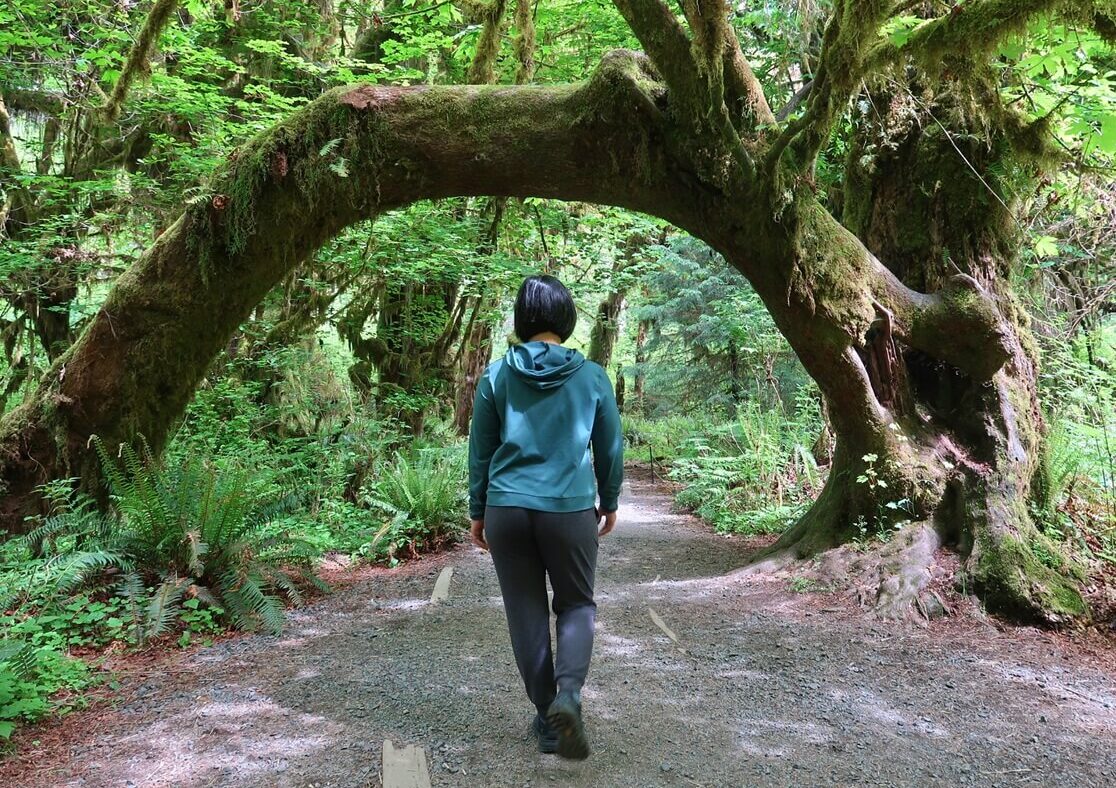
The Hall Beyond the Moss-Covered Tree Archway Lives Up to the Hype
One of the most memorable and photographed sections of the trail was on the other side of a tree archway, nature’s invitation into a hallway of sorts.
As you walk among the massive bigleaf maples with their Dr. Seuss-like branches, you can’t help but feel like you’re somewhere special.
The way the witch’s hair lichen hangs and droops is fascinating.
This was the section where we took it the slowest. I ended up taking some of my favorite photos of our entire two-day trip here.
And surprisingly, despite visiting on a busy holiday weekend, there were still moments where almost nobody else was around.
What struck me the most about the Hall of Mosses Trail was the scale of the trees and the impressive way they’re grouped together—and how you’re immersed in all of it.
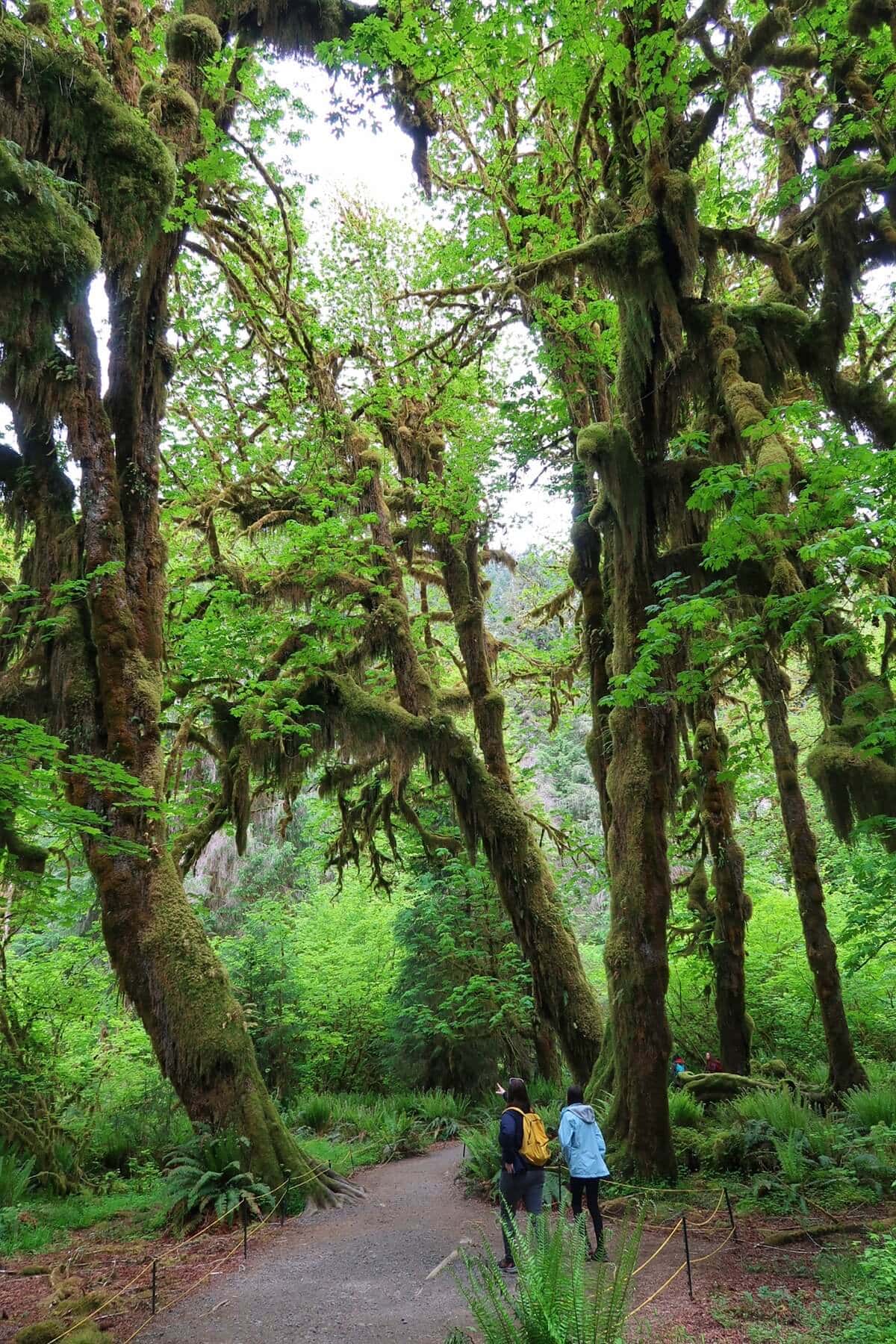
Even though some of the moss had already started browning after an unusually warm, dry spring weather, the forest still felt incredibly lush.
Nurse Logs & Giant Stumps Make the Forest Feel Ancient
One of the coolest things to look for along the Hall of Mosses Trail is the number of nurse logs throughout the forest.
You’ll see mature trees growing directly out of fallen logs, with roots spreading over the decaying wood beneath them. In some places, the trees form long rows along the old logs.
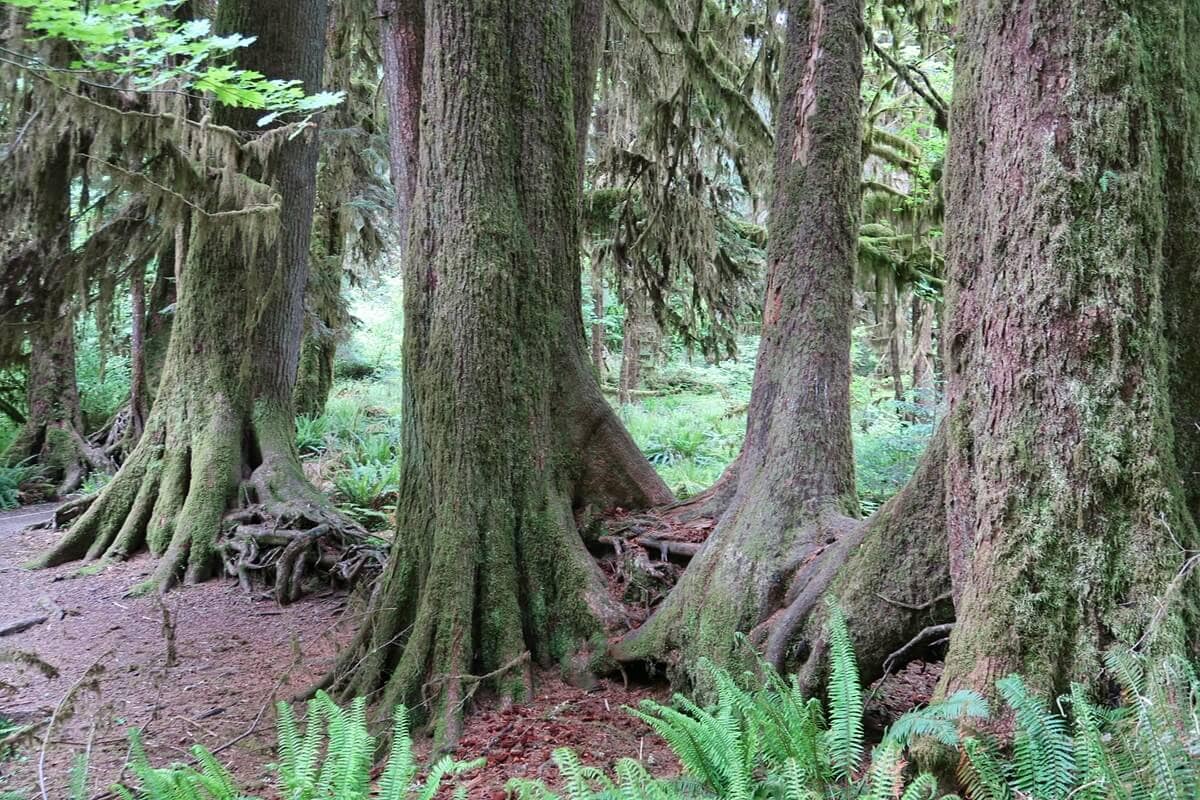
Continuing on the trail, we entered an area where the forest felt and looked very different from the first half. Here, we saw cut tree stumps.
Colby actually tried counting the tree rings on one stump, but lost track because the tree was so old and massive.
Elsewhere, giant tree trunks formed hollow spaces underneath that almost looked cave-like.
The forest constantly shifts as you walk the loop, which is part of what makes this short trail so interesting.
Sunlight Completely Changes the Atmosphere Here
One of my favorite moments happened when sunlight briefly broke through the clouds and reached the forest floor.
The moss and oxalis suddenly glowed against the darker forest floor.
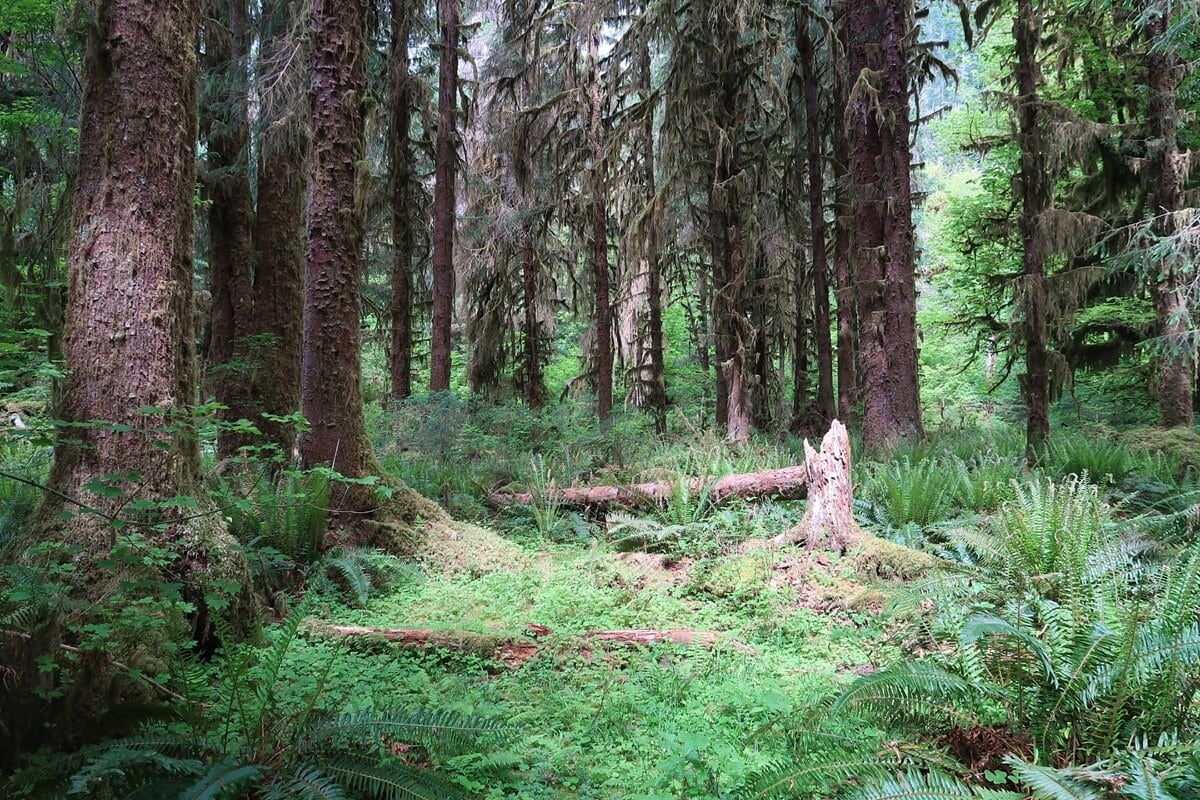
It only lasted a few moments before the light softened again, but the entire forest looked different when the sun appeared.
Colby ended up taking a whole series of photos because the lighting kept changing so quickly.
That’s another reason this trail feels so dynamic. Moisture, cloud cover, and sunlight constantly change the look and feel of the rainforest.
No two sections of the hike ever really felt the same, just like hiking this trail in two different seasons will give you two different experiences.
get LOCAL INSIGHT
Want quick clarity?
Get clarity on one key decision and walk away knowing your plan actually makes sense. Sessions start at $40.
Hall of Mosses Hiking FAQs
Is the Hall of Mosses Trail Worth It?
Absolutely, especially in spring when fresh green growth and saturated conditions make the rainforest feel especially vibrant and alive. But I think people enjoy this trail most when they take the time to appreciate what makes it unique.
If you rush through trying to complete the loop quickly because you want to get to the next stop off the Highway 101 loop, like Lake Crescent or the Sol Duc Valley, you may not fully understand why the Hall of Mosses is so famous.
How Long Does the Hall of Mosses Hike Take?
Most people can hike the Hall of Mosses Trail in about 30 minutes since the loop is only around 1 mile long. But as I’ve said already, don’t rush it. We spent around 1.5 hours on the trail because we kept stopping to look at the details.

When Is the Best Time to Hike the Hall of Mosses?
After visiting in late May, I’d say spring and early summer are ideal times to experience the Hall of Mosses Trail. The rainforest still feels saturated from winter rains, and the fresh spring growth creates that vivid green look people imagine when they picture the Hoh Rainforest.
Fall offers a completely different feel, with the forest floor blanketed in leaves.
What Should You Bring to the Hall of Mosses Trail?
Even though this is a short hike, I’d still come prepared for rainforest conditions and expect to encounter some mud.
Here’s what to bring:
- waterproof shoes or hiking boots
- a rain jacket, even if you end up leaving it in your car
- a camera or phone with plenty of storage space
- layers for changing temperatures, especially during shoulder seasons
- patience for parking delays which can happen during peak summer season
Plan Your Trip to the Hoh Rainforest in Olympic National Park
If you’re researching things to do in the Hoh Rainforest, the Hall of Mosses is usually the first trail people recommend.
The combination of lichen-covered maples, nurse logs, and shifting light makes the rainforest feel almost surreal in the right conditions.
This trail isn’t about big elevation gain or dramatic overlooks.
It’s about atmosphere, texture, scale, and light.
Because we slowed down enough to notice the details, it was my husband’s favorite stop on our Olympic National Park weekend trip.
If you’re planning your own Olympic National Park itinerary, these guides can help you decide where to go next:
- Hoh Rainforest vs Quinault Rainforest
- Where Should You Stay in Olympic National Park?
- A Day in the Sol Duc Valley (Best Hikes & Waterfalls)
RELATED OLYMPIC RAINFORESTS POSTS:
➥ Day Trip to the Hoh Rain Forest: Hikes & Best Attractions
➥ Hall of Mosses Trail: Why We Didn’t Rush This Short Hike
➥ Is the Quinault Rain Forest Worth Visiting? 5 Reasons to Go!
➥ Why Maple Glade Rain Forest Trail is Quinault’s Best Hike
➥ Merriman Falls: A Roadside Gem on the Olympic Peninsula
➥ Lake Quinault Lodge Review: Why It’s Worth the Drive
