
Day Trip to the Hoh Rain Forest: Hikes & Best Itinerary


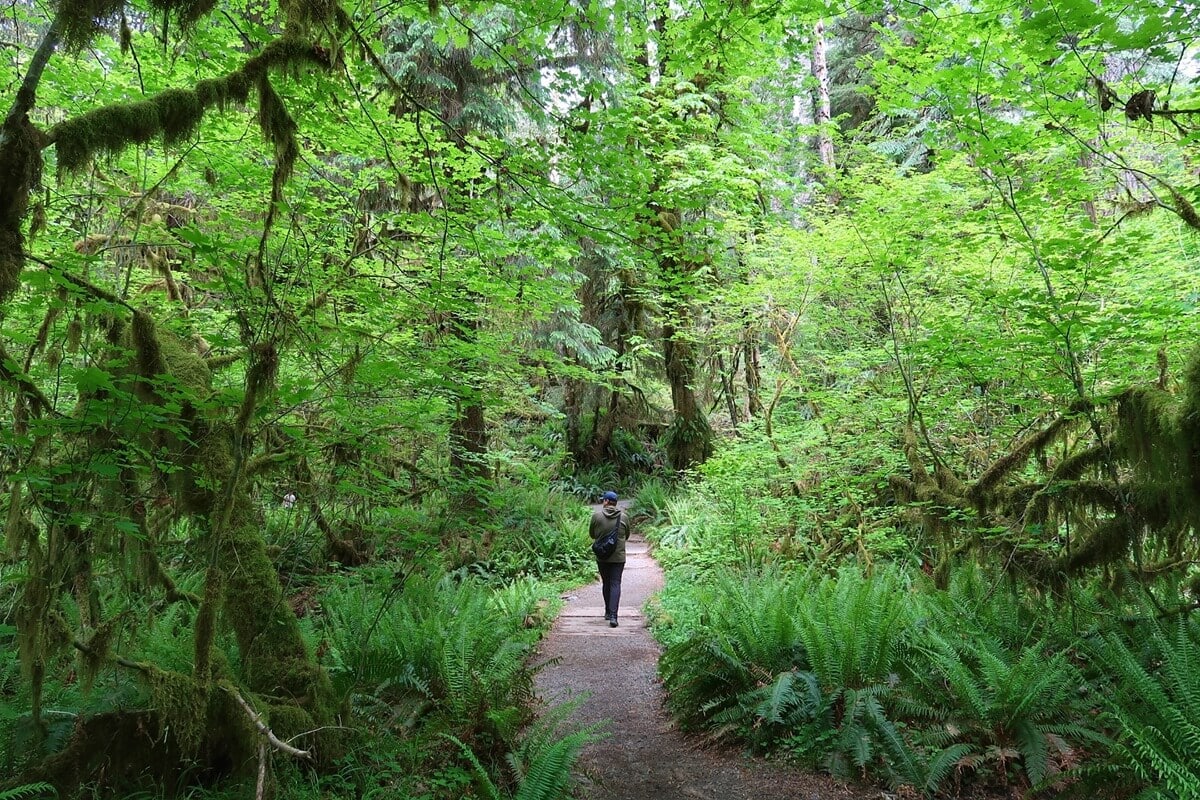
Every visit to the Hoh Rain Forest in Olympic National Park leaves me in awe.
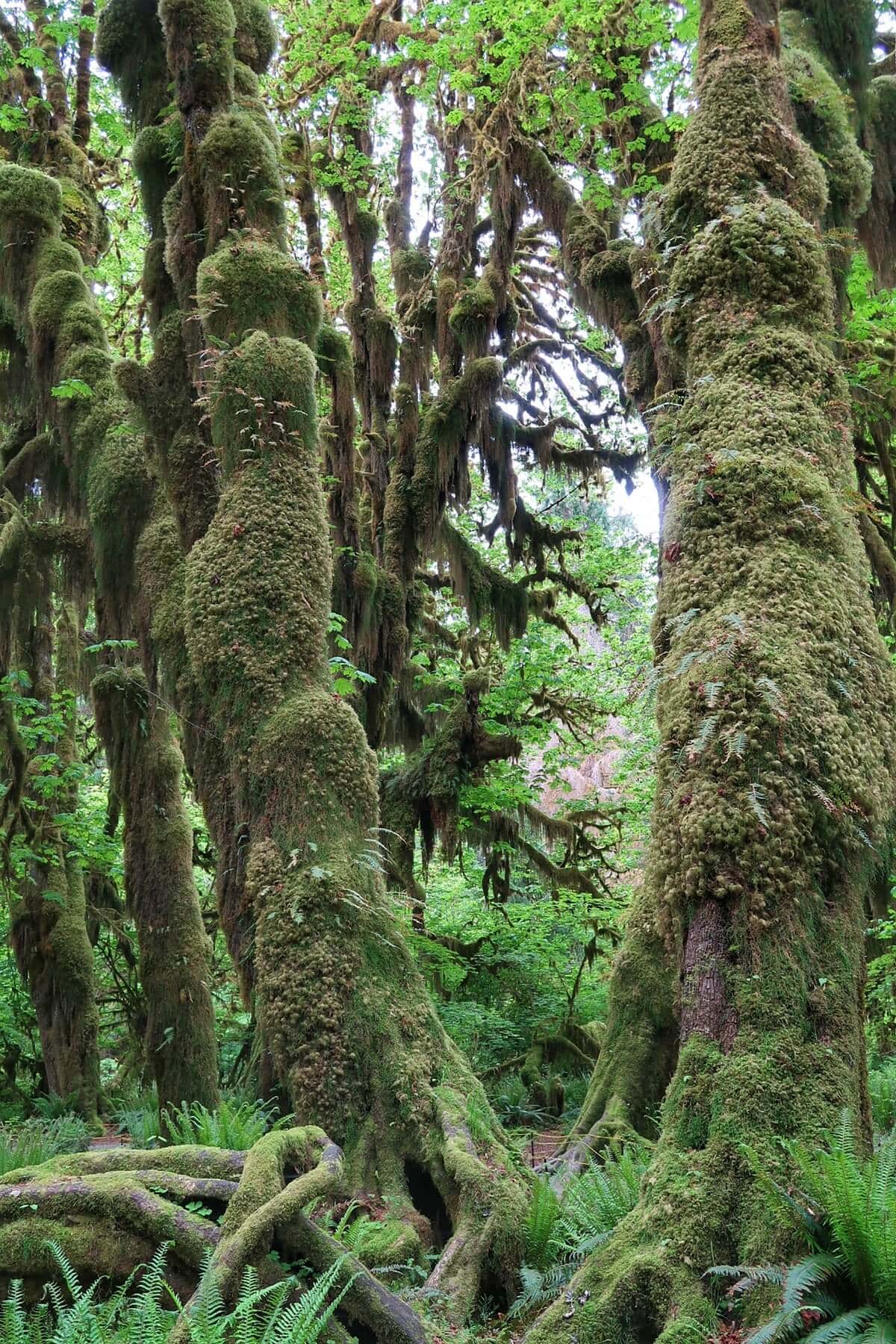
Standing among giant maples on the Hall of Mosses Trail—so uniquely shaped and exquisitely grouped together—feels like stepping into a museum of trees.
It’s not just these trees that make the Hoh a must-see destination. On our last visit, we were captivated by the sunlight filtering in, lighting up the forest carpet of moss, oxalis, and the beautiful decay of organic matter.
That’s the kind of magic that makes it worth waiting in line for. But with so many top attractions spread out across the Olympic Peninsula, a Hoh Rainforest day trip takes some planning.
We stayed in Forks for an early start and spent the rest of the day exploring Olympic’s wild beaches—an unforgettable combo.
I’ll share our itinerary from our May outing, plus insider tips for what to do before and after your visit to this stunning rainforest.
Quick Guide to Visiting the Hoh Rain Forest
- Open year-round: Yes
- Best time to visit: Spring and early summer. I like hiking Hoh Rain Forest trails when the forest floor is still saturated, the maples have leafed out, and the hanging moss is still green. Fall is excellent, too, with golden foliage and the sound of elk bugling.
- Closest town: Forks
- Best place to stay: Book Hoh Valley Cabins 9 – 12 months in advance of your trip for the shortest drive time.
- Park pass required: Yes—either an America the Beautiful Pass or an Olympic National Park pass.
- Restrooms: Available at the Hoh Rain Forest Visitor Center and campgrounds.
- Food: Pack snacks (you can pick them up at the Forks Thriftway) because you can’t buy food at the visitor center. And the wait times at Hard Rain Cafe on Upper Hoh Road can be long.
- Cell Service: Limited
- Pets: Not allowed on Hoh Rain Forest trails.
- Wildlife: Roosevelt elk, black bear, cougar, black-tailed deer, spotted owl, bald eagle, osprey, great blue heron, salmon, and banana slugs.
- Essential gear: Waterproof hiking shoes, a moisture-wicking softshell jacket, and seasonal layers.
Timing & Crowds: Insider Tips
Peak season lines can stretch over a mile long, and if the lot is full, you might have to wait up to 2 hours to get in. Aim to arrive before 8am or visit on weekdays or early evenings in the summer.
Note that the signs telling you wait times may not be accurate. I recommend getting out of the car and talking with the people in front of you.
When we arrived on a holiday weekend Sunday morning, the sign said the wait would be an hour—but we got in within 30 minutes.

get clarity & confidence
Stop second-guessing your itinerary.
Let’s build a custom trip that gets you the most from your time and money.
Hoh Rainforest Hikes & Stops (Day Trip Itinerary)
Here’s how we made the most of our day trip, including which trails to hike, where to stop, and how much time to allow.
We left Woodland Inns in Forks later than I’d planned—almost 8am—and reached the entrance gate at 8:45am. Even that early on a holiday weekend, we had to wait 30 minutes before getting in.
TIP: If you need a restroom while waiting in line, there’s one close to the ranger gate.
Parking
Two rangers directed traffic near the parking areas, and we found a spot near the campground. Even though the park was metering cars, we saw about six empty spots near our truck.
After using the campground bathrooms, we walked past the visitor center, eager to hit the Hall of Mosses Trail.
Hall of Mosses Trail (30 – 60 minutes)
- Difficulty: Easy
- Hike length: 1.1 mile loop
- Elevation gain: 82 feet
If you’re looking for the best things to do in the Hoh Rainforest, hiking the Hall of Mosses Trail is at the top of the list.
We spent 1.5 hours on the trail, though you could easily walk it in 45 minutes. I saw some folks walk through without really looking, but trust me, this trail’s beauty is best experienced at a slow pace.
The hanging moss, the massive trees, and the way the light filters through and lights up the forest floor—it’s magical.
And though parking was full, we experienced moments of solitude, even along the pathway lined by the trail’s most impressive trees.
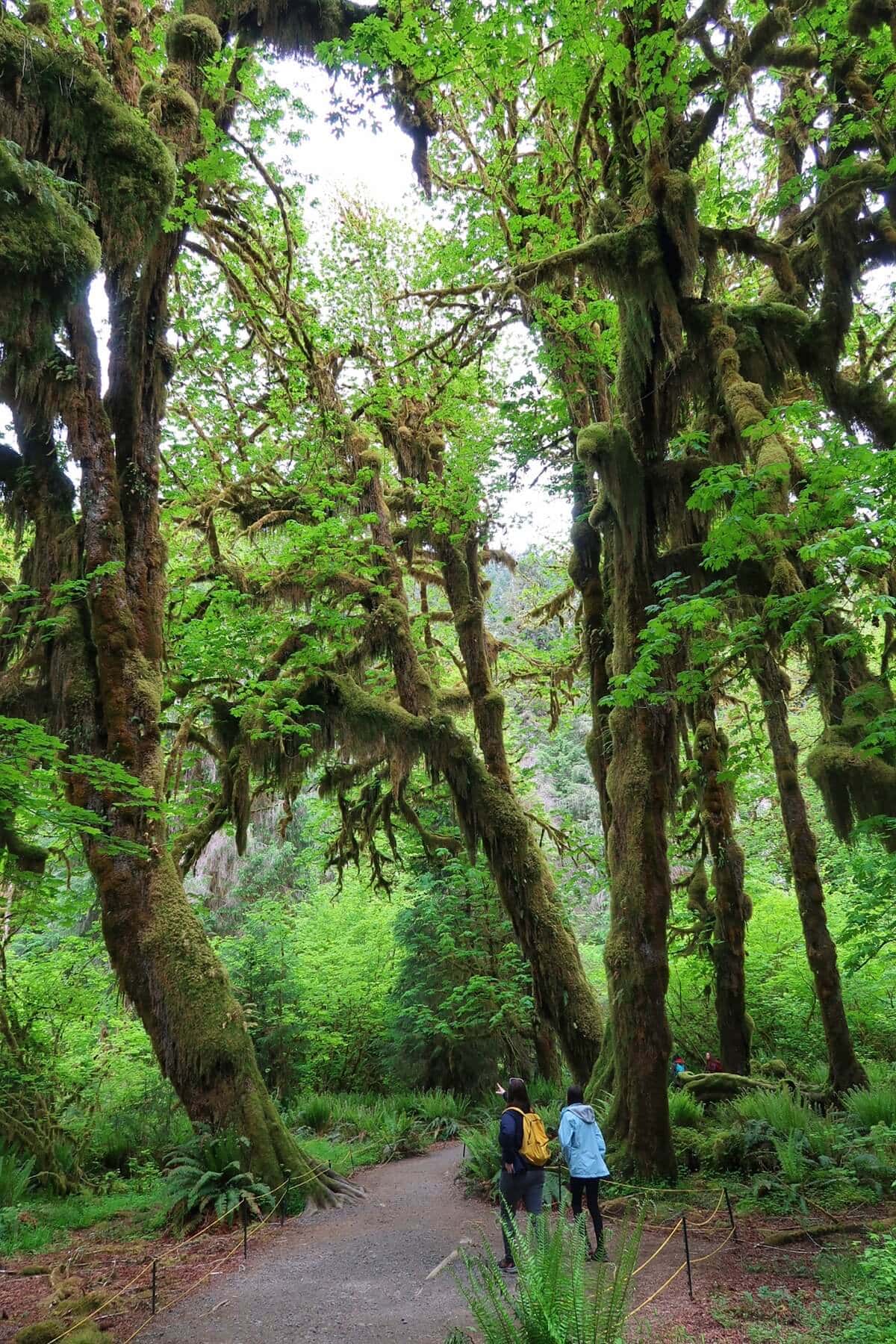
TIP: May is a spectacular time to visit because swordfern fiddleheads have unfurled and the maples have leafed out. It’s also not as hot as summer, when things can dry out.
Hoh Visitor Center (20 minutes)
We filled up our water bottles outside before heading in.
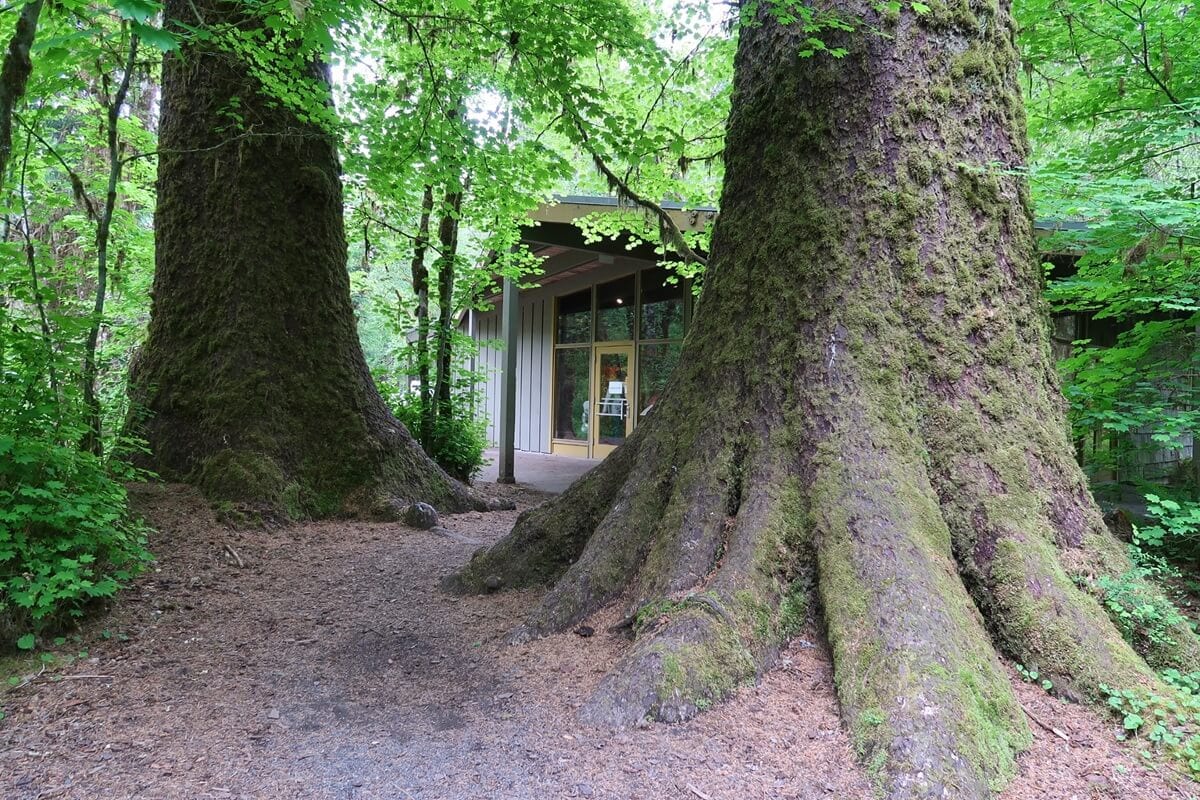
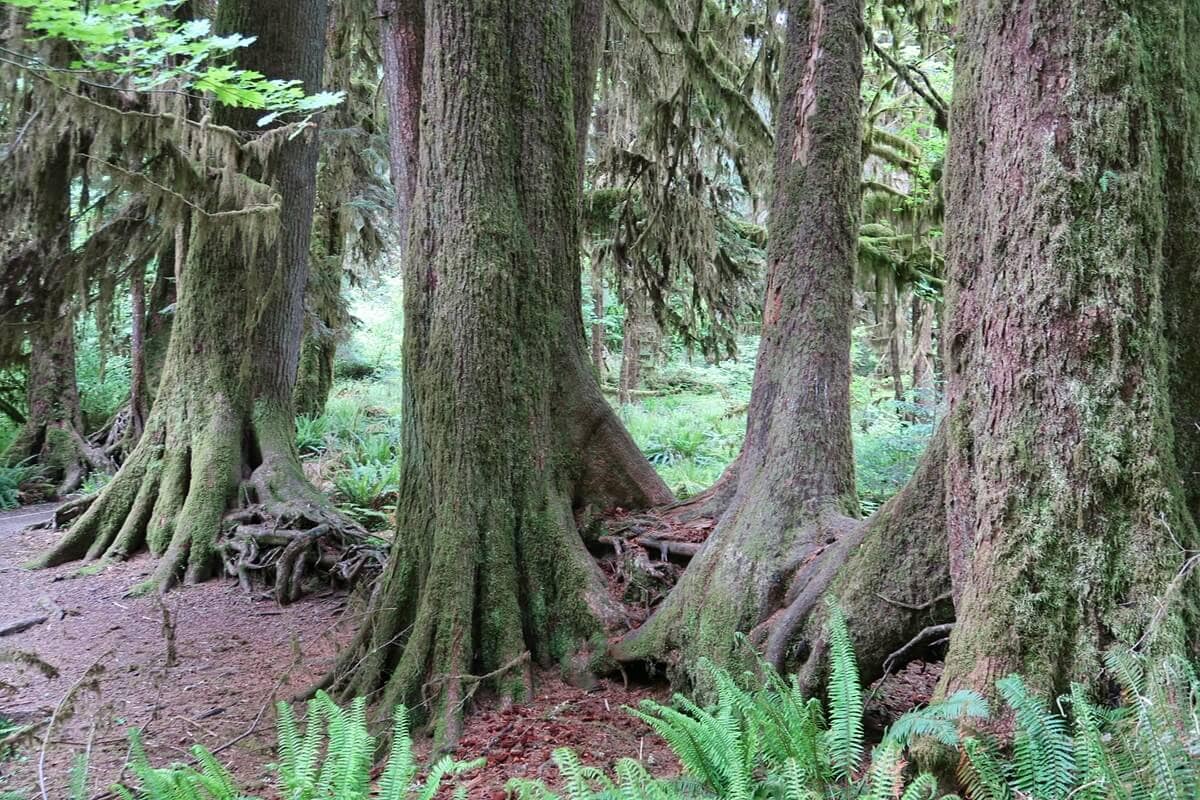
Inside, we checked out all the excellent exhibits—including one that explains how nurse logs eventually become impressive colonnades, captured in the photo below.
Stop here to talk to a ranger, pick up a map, or buy a souvenir to support national parks.
Spruce Nature Trail (30 – 60 minutes)
- Difficulty: Easy
- Hike length: 1.3 mile loop
- Elevation gain: 16 feet
We hiked the Spruce Nature Trail after the visitor center. While it’s often overshadowed by the Hall of Mosses, it’s stunning in its own way, with a spectacular creekside view.
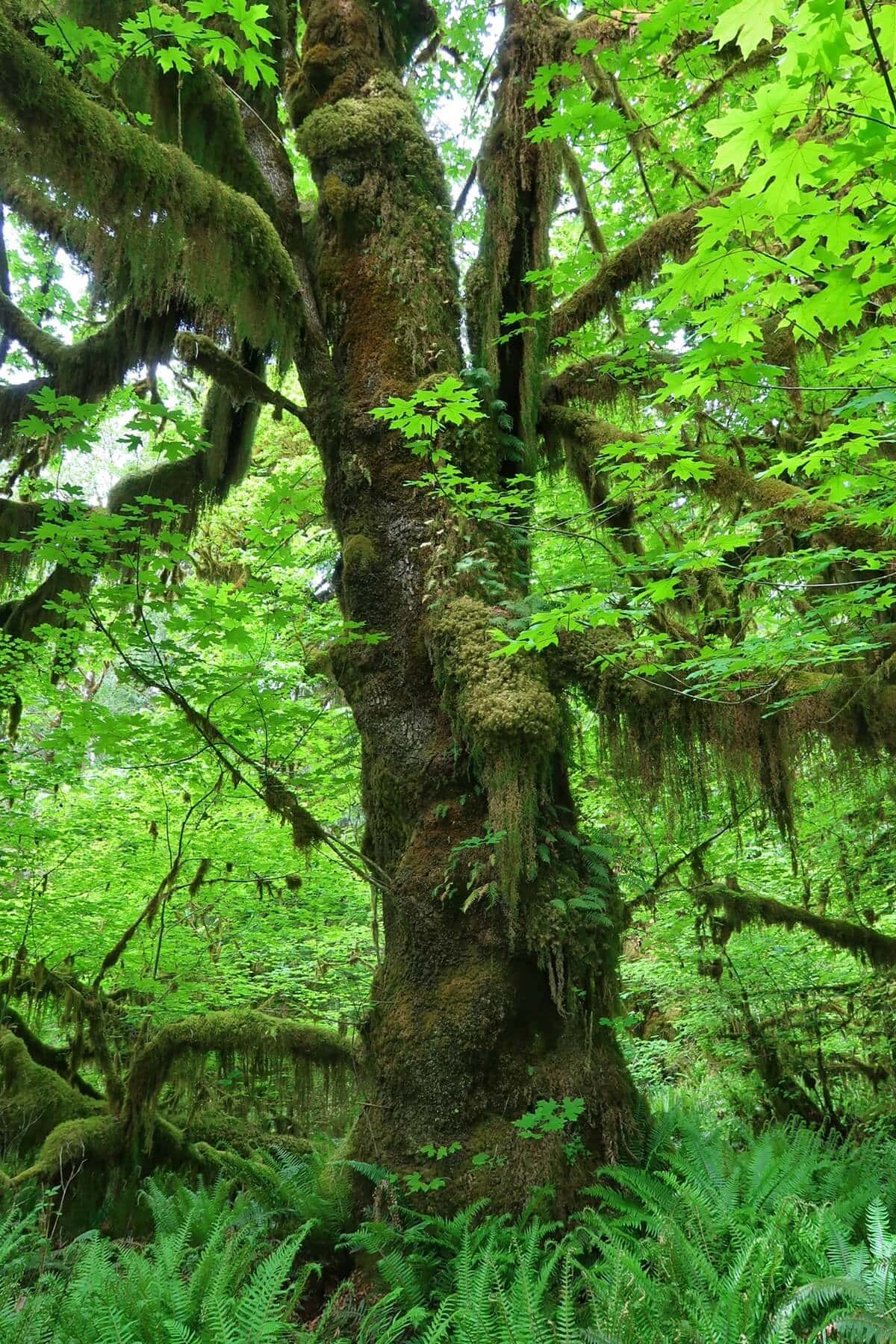
Surprisingly, I captured some of my best photos on this trail—including striking, mossy bigleaf maples that stood alone rather than in clusters.
Hoh River Trail to Mineral Creek Falls (4 – 5 hours)
- Difficulty: Moderate
- Hike length: 6 – 7 miles
- Elevation gain: 300 feet
On our 2021 trip, we hiked the Hoh River Trail to Mineral Creek—a gorgeous hike that I highly recommend.
While the entire trail will take you to Mount Olympus’s Blue Glacier, you can turn around at any time.
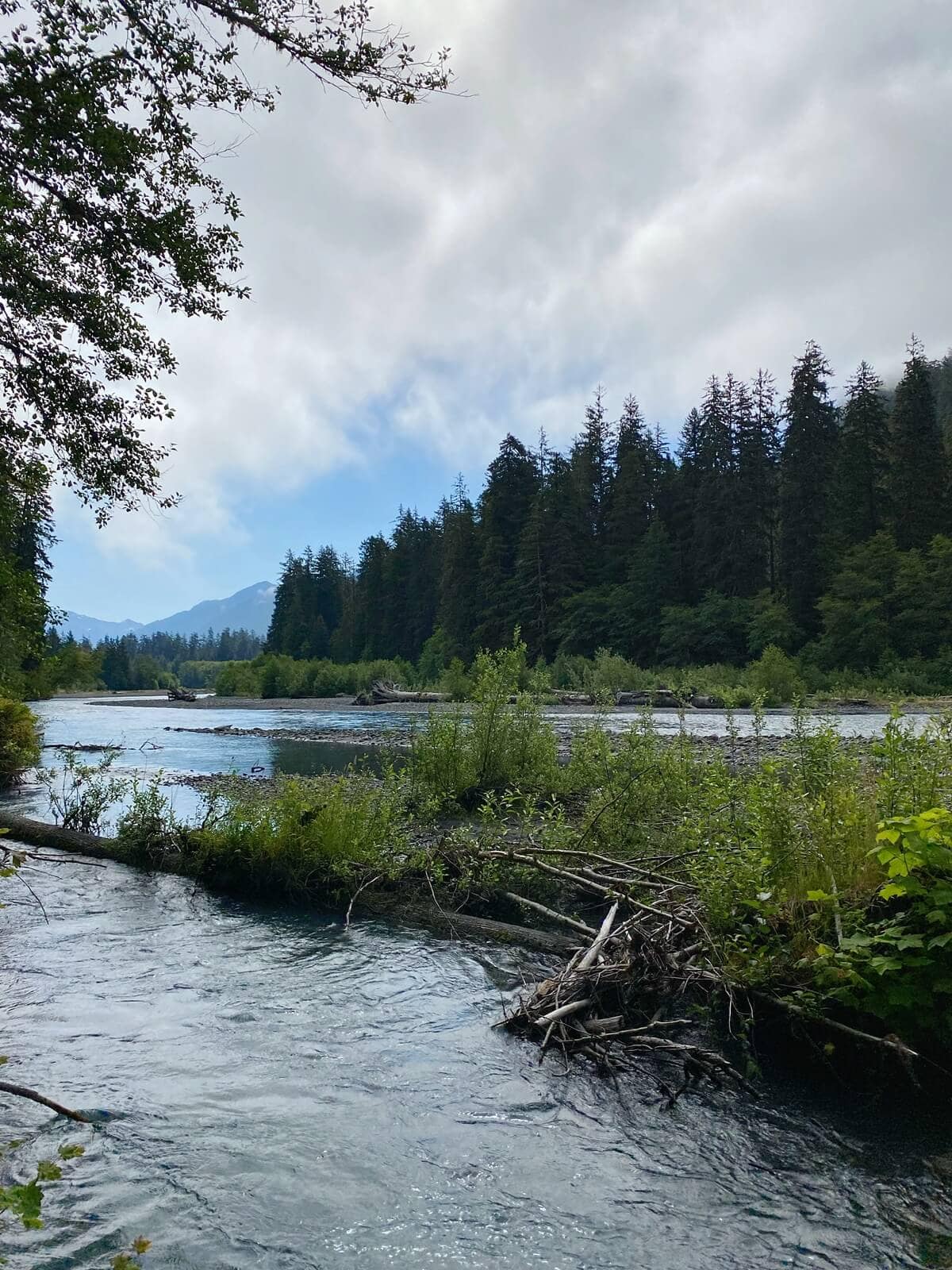
We pulled off the trail at Mineral Creek to enjoy views and eat lunch, but there’s a great viewpoint of the Hoh River near the beginning of the hike, where you can step down to the riverbank for photos or just enjoy the view.
Hard Rain Cafe
As we exited the park gate to start our drive to Kalaloch Lodge, I logged the length of the car line to enter, which was almost a mile long.
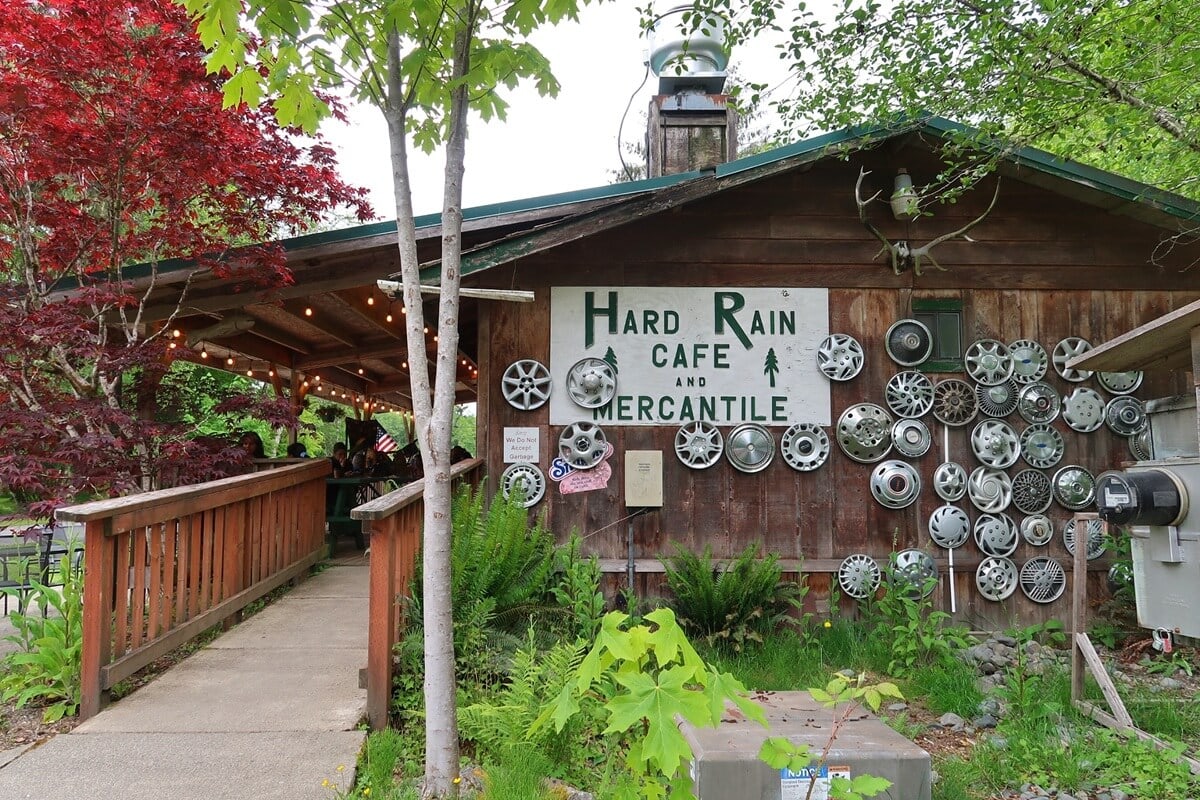
We had worked up an appetite, so we stopped at Hard Rain Cafe & Mercantile on Upper Hoh Road, just outside the park.
It’s the only post-hike stop for food, but since it was a holiday weekend, the wait was over an hour long. We grabbed a coffee and kept moving.
Olympic National Park Beaches
Olympic’s rugged beaches on Highway 101 are the perfect stops after the rainforest.
Turning onto Highway 101 from Upper Hoh Road, it’s not long before you’re on the Pacific Coast Scenic Byway, one of the prettiest drives on the Olympic Peninsula.
We passed Ruby Beach on our way south to Kalaloch Lodge, hoping to arrive in time for lunch at the Creekside Restaurant before it closed for lunch at 2:30pm.
Check out the section on beaches below for my favorite coastal stops.
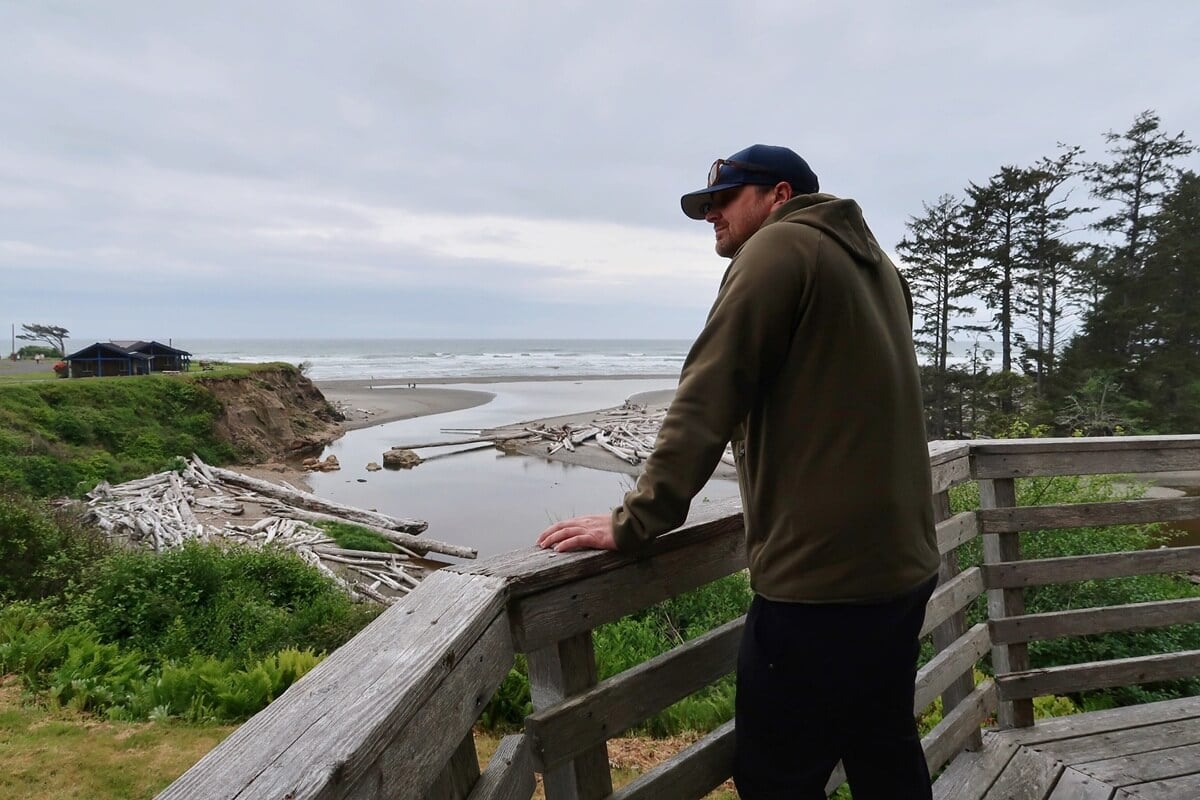
TIP: Dining options are limited outside of Forks. Keep your car stocked with drinks, snacks, and shelf-stable meals.
Why the Hoh Rain Forest is Special
The rainforest rests within a glacier-carved valley, with the Hoh River snaking through the valley bed and the Olympic Mountains in the distance.
Inside the visitor center, I saw a display documenting rainfall that’s already fallen this year. By December, nearly 12 feet will have soaked the forest floor.
Rain is what makes this place so remarkable. Everywhere you look, depending on when you visit, you’re surrounded by a wet, lush, and vividly green temperate rainforest.
Newly leafed maples practically glowed green during our late May trip. The landscape felt alive, with the birdsong of Pacific wrens accompanying us as we hiked.
Hoh River
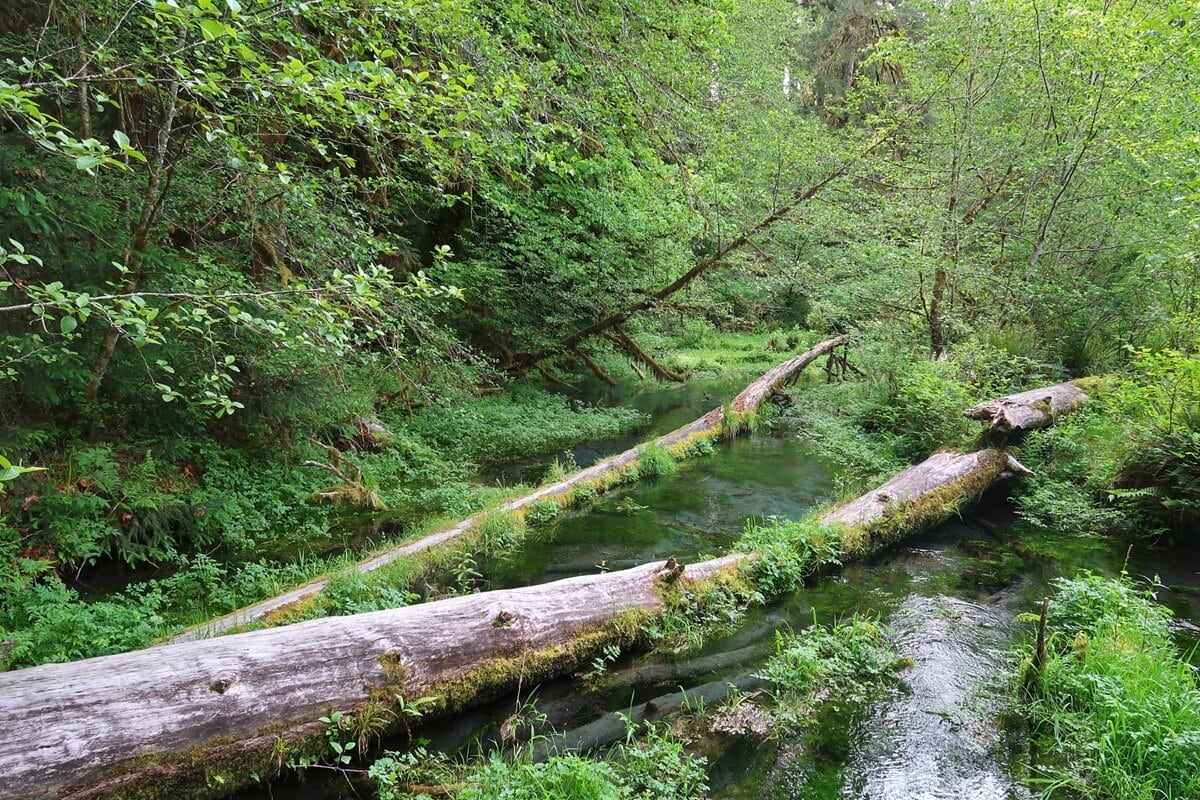
One of the first things that struck me was the bluish-gray color of the streambed beneath the wooden bridge at the start of the Hall of Mosses Trail.
The Hoh River is the lifeblood of the rainforest, fed by the Hoh and Blue glaciers near Mount Olympus, Olympic’s highest peak. Sediment from the glaciers flows into the river and its surrounding waterways, giving them that distinctive milky blue hue.
It’s this constant interplay of rain, glaciers, and moving water that shapes the rainforest into the wonder it is.
Old-Growth Trees
Sitka spruce, Western red cedar, Western hemlock, and Doug fir trees grow remarkably tall. Moss and lichen-draped bigleaf maple branches stretch overhead like the arms of a Dr. Seuss character.
Some are more than 500 years old.
Every inch of the forest feels ancient and timeless—like a living museum of green.
Roosevelt Elk
Finally, there’s the wildlife.
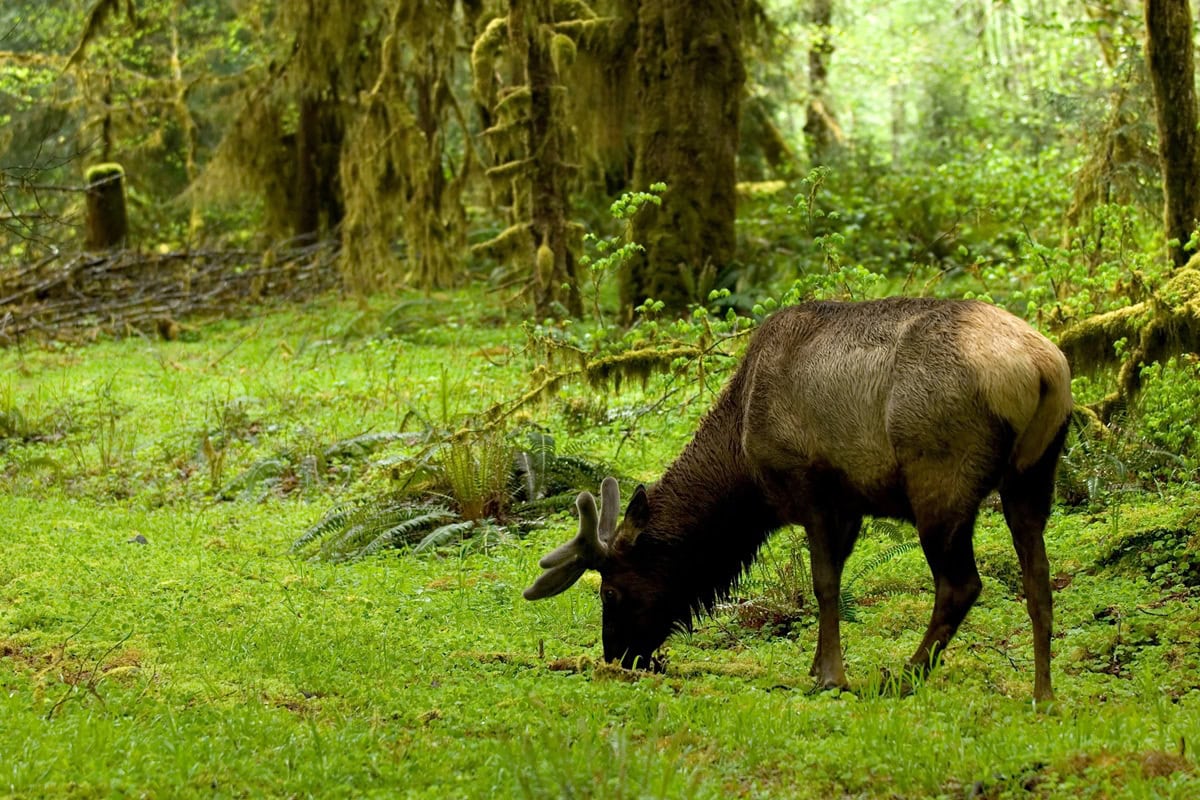
I’ve seen herds of elk in Dosewallips on the eastern side of the park, on the way to the Quinault Rain Forest, and in groomed fields along the drive to Forks. But I’ve yet to see one in the Hoh, where an estimated 500 elk live.
That said, it’s easy to see signs of them in the clear sections of the forest, where they graze on salmonberry that grow everywhere alongside the trails.
Hoh Camping & Backpacking
While this post is focused on day trips, many visitors fall in love with the Hoh and return for a longer stay.
Every time we leave the parking lot, Colby and I talk about coming back to camp.
Camping
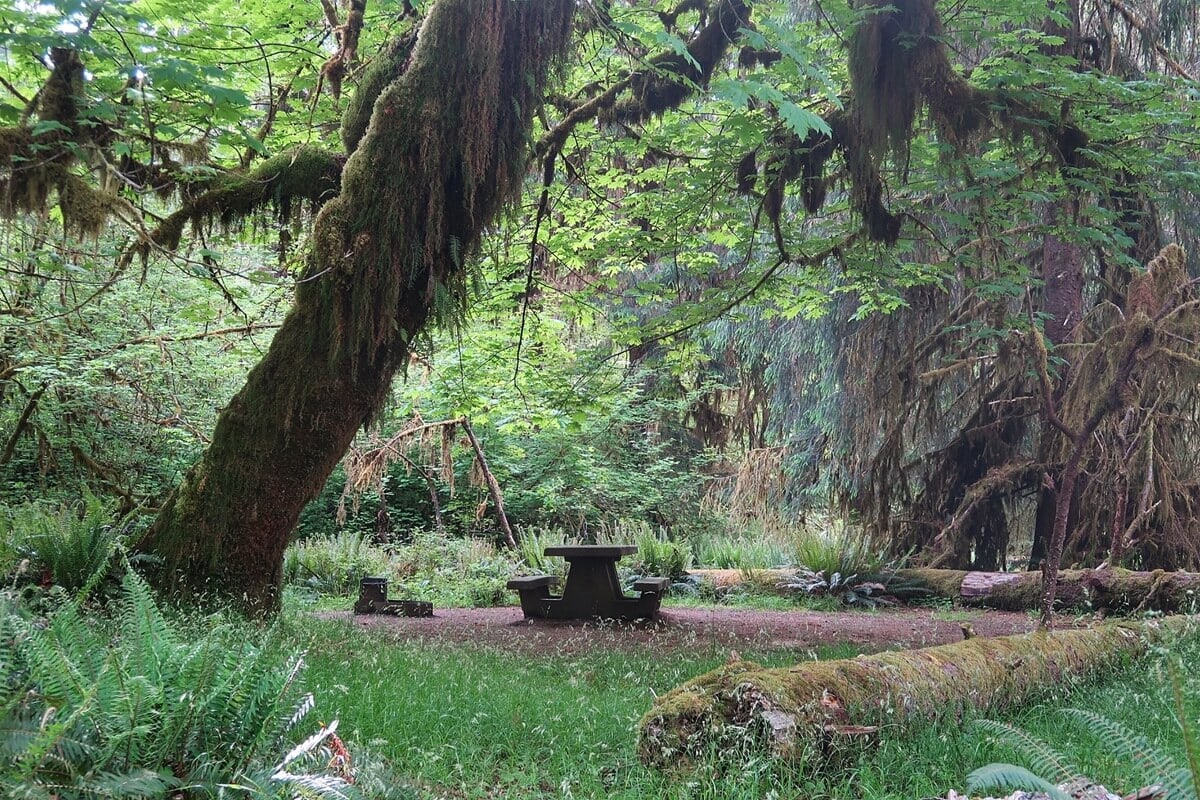
I was impressed by the size of the campsites in the Hoh Campground. They were well-maintained, and the bathrooms were clean.
Sites are nestled among the trees, just a short walk from the visitor center and trailheads.
Book a site on Recreation.gov.
Backpacking
The Hoh River Trail is a classic backpacking route in Olympic National Park. Backpackers who make it to Glacier Meadows (around 17 miles one-way) will hike through primeval forest and see Mount Olympus glaciers.
Reserve a wilderness permit online or at the Port Angeles visitor center.
get LOCAL INSIGHT
Want quick clarity?
Get clarity on one key decision and walk away knowing your plan actually makes sense. Sessions start at $40.
Nearby Olympic National Park Attractions
If you’re visiting the Hoh, you’re already on the western side of the park, home to the park’s wild beaches.
These stops make a great addition to your day trip.
La Push Beaches
We’ve been traveling to La Push beaches for over a decade, staying at Quileute Oceanside Resort on First Beach, which sits on tribal land.
Second Beach (my favorite) and Third Beach are part of Olympic National Park and require short, forested hikes before you arrive at the driftwood-strewn beaches.
Ruby Beach
Ruby Beach is probably the most famous beach in Olympic National Park, thanks to the iconic view you get from the trail down to the sand.
It’s especially photogenic at sunset and a great stop if you’re short on time—plus, it’s the closest to the Hoh.
Kalaloch Beach
This stretch of wild coastline is home to the famous Tree of Life—a tree clinging to a bluff with its roots exposed by years of erosion.
Kalaloch Lodge offers lodging and a restaurant, making it a convenient lunch or dinner stop if you’re continuing on Highway 101.
I’ve stayed here twice, and its location high on a bluff is remarkable.
➜ Book a stay at Kalaloch Lodge to experience Olympic National Park’s signature combination of rainforests and beaches and wake up to dramatic coastline views.
How to Get to the Hoh Rain Forest
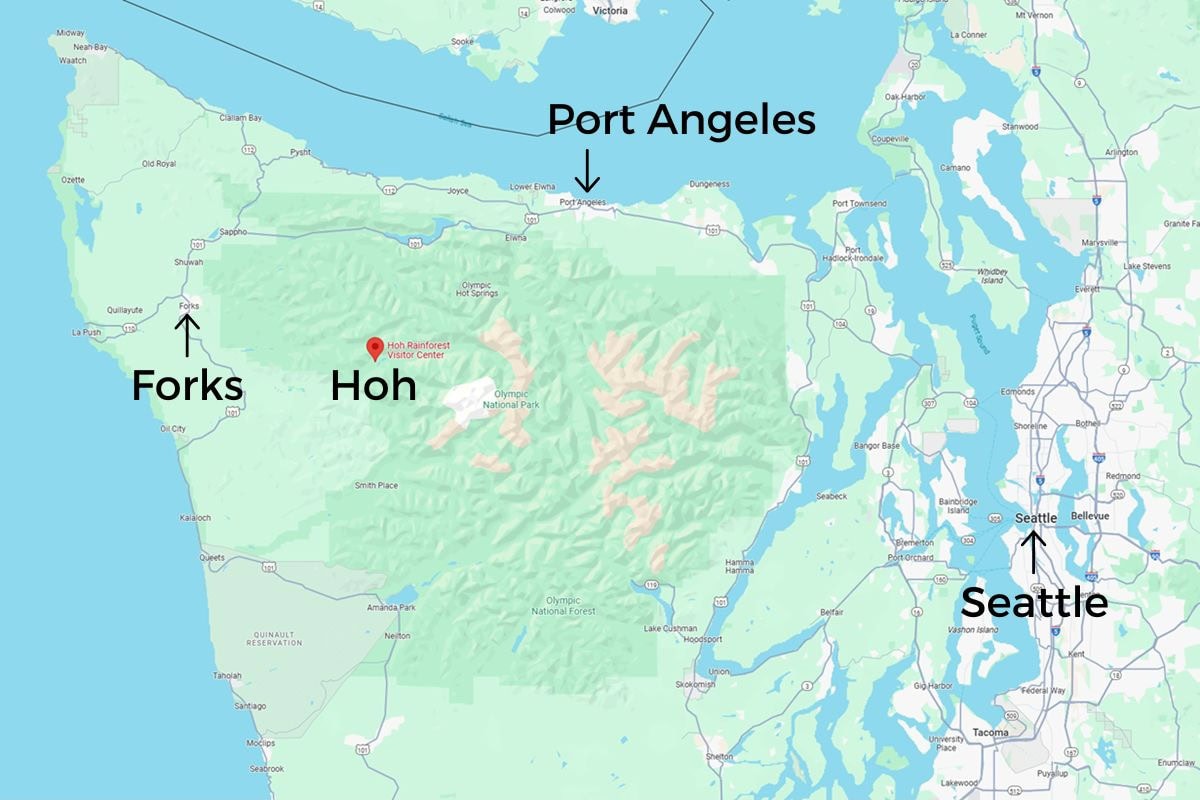
The Hoh Rain Forest is a two-hour drive from Port Angeles and a little under an hour from Forks.
From Highway 101, you’ll turn onto Upper Hoh Road, which takes you straight to the visitor center and trailheads.
The road is paved but can be winding and narrow in spots, so take your time and enjoy the epic river views.
When to Visit the Hoh Rain Forest
The Hoh Rain Forest is a year-round destination, but each season brings its own magic. Here’s what to expect:
- Spring: The forest floor is lush and green, with maple leaves unfurling and moss at its brightest in early spring.
- Summer: Reliably good weather brings the biggest crowds, and moss may dry out by August.
- Fall: As summer crowds fade, golden leaves, mushrooms, and salmon returning to spawn make Olympic National Park in fall feel extra special.
- Winter: Rainy and cool, but fewer visitors mean you may have parts of the rainforest to yourself.

What to Pack for a Day Trip
The weather in the Hoh Rain Forest is cooler than other parts of the park, so pack layers and a rain jacket—even in summer.
Here’s what I keep in my pack:
- Bug spray in summer
- Snacks and water
- The Ten Essentials when hiking to Mineral Creek
- My camera—this place is a photographer’s dream!
I wear waterproof hiking shoes (trails can be muddy and rooty).
Best Hoh Rain Forest Lodging
The best place to stay is the Hoh Valley Cabins, just 25 minutes from the ranger gate. We stayed in a cabin one July weekend, and it was cozy and surprisingly well-appointed.
There are only four cabins, and they book up fast, so reserve early.
Where to Go Next?
After a day of hiking in the rainforest, continue your Olympic National Park adventure on the Highway 101 Loop.
From here, you can head north toward Port Angeles to visit Hurricane Ridge or south toward Kalaloch and eventually the Quinault Rain Forest.
Need help with trip planning? Start here.
Or, if you’d like to save hours of research and skip the guesswork, I can build or review your itinerary.
Happy hiking!
RELATED OLYMPIC RAINFORESTS POSTS:
➥ Day Trip to the Hoh Rain Forest: Hikes & Best Attractions
➥ Hall of Mosses Trail: Why We Didn’t Rush This Short Hike
➥ Is the Quinault Rain Forest Worth Visiting? 5 Reasons to Go!
➥ Why Maple Glade Rain Forest Trail is Quinault’s Best Hike
➥ Merriman Falls: A Roadside Gem on the Olympic Peninsula
➥ Lake Quinault Lodge Review: Why It’s Worth the Drive

Skip the guesswork, stress, and hours of research—let me help you plan your itinerary!
